Showing posts with label social networking. Show all posts

Wednesday, August 18, 2010

Black hat peer-to-peer

If you've ever heard the term 'SEO' bandied about you're likely familiar with the concept of 'black hat' and 'white hat' SEO (Search Engine Optimisation).
The good guys wear the white hats - and the bad guys don't.
Just as I expect a whole industry of 'twitter follower optimisation' snake oil salesmen to rock up at brands' doorsteps any day now, so I am fearful of an emerging new style of peer-to-peer corrupters: Those who spam your friends in your name.
We saw an example yesterday on Twitter - albeit (according to the coder behind Twifficiency) by mistake.
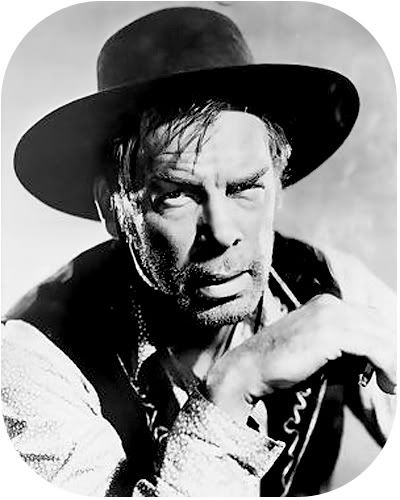
Twifficiency was (is?) one of the many borrowers of twitter's API to tell the user something about the way they use twitter - their effectiveness/reach/influence/rank whatever... (image, Lee Marvin via Cinebeats)
This particular version rewarded the visitor with a % score for putting their username into the magic box. The trouble is, Twifficiency then, under the cover of the obfuscating small-print of the Twitter 'allow/deny' screen (below), automatically tweeted that score with an invitation to all your followers to try theirs.
The convention has been to ask for further approval before granting permission to share - often via a tweet which you get to edit, approve and then decide whether or not to share with your peers: White Hat. White Hat doesn't hide behind obfuscation.
The black hat get out clause here is (see below) "access and update your data on twitter".
This apparently can be translated as meaning: "Tweet as if you were me, tweet what you like, and whenever."
If you wear a black hat.
If you wear a white one you know that wouldn't be very nice. You wouldn't like that to happen to yourself. So you don't do it to others. Social beings feel this and know this.
Passing yourself off as someone else to gain benefit has another name in law. Fraud. Not nice is it?
Twifficiency is a benign case. But it's not hard to imagine how less scrupulous developers could exploit the frailties of human nature by making 'you' tweet no end of scurrilous and self-serving content.
It's not good enough to lay the blame on the human desire to hear good stuff about yourself, as some have.
Those that blame ego (why do you want to know how popular/influential etc you are, anyway?) are likely the same people who never google themselves and claim to have zero shared performance anxiety or fear of public speaking.
If you meet one be sure to share the last of my stash of rocking horse shit with them.

Now, we don't want to suggest young James Cunningham did anything more serious than fail in his duty to fellow twitter users yesterday. Next time around, James, take a look at what others do - perhaps learn a few best practice lessons, then try again. We'll forgive a mistake - we've all made them.
Twitter is open. It's API is open. Which means there are doorways open to abuse.
What we have to do in response to this is become ever better at crap detection, at sharing warnings, and at defending the community against those who would more deliberately take advantage.
Let's start with defining what Black Hat Peer To Peer is:
  1. Attempting to pass yourself off as another person, in order to access that other person's social graph
  2. Hiding behind the small print instead of doing the right thing
  3. Using automation to acquire friends/followers
  4. Automating the process of dumping those followers who don't follow you back
  5. Sending unsolicited and irrelevant commercial messages to users based on shoddy algorithms (if based an anything at all?!)
...er that's mine for now - can you think of examples?
Enhanced by Zemanta

Wednesday, June 16, 2010

Deploying social tech to enhance co-creation means a long-tail of outcomes

Making just one product as a result of a social tech-powered approach to collaborative co-creation kind of misses the point - and out on lots of the value.

It's great for making your product a better fit for the needs of the people you would have use it.
It's great for creating a marketing force for the result - the folk who joined in creating the outcome and who will therefore embrace and champion that outcome to their peers.
It's great for making people feel you are a more open, outward facing, welcoming, brand or organisation.
But if the outcome is just one product, my concern is you've missed out on everything else you've discovered on your journey to making that one product.

For example Nokia's Design By Community project, in which we are all invited to help shape a prototype phone, will end up with just one outcome.

The spec for that one phone is selected by the community each week. From a range of choices, users are invited to vote. And even if (as is likely) there is a long-tail distribution to the spread of votes, only the spec accruing the highest number of votes - the single most popular spec for that week - gets included in the final outcome.

This, like Twitter trends, tells you one thing - what is the single largest grouping.
Yet everything we know about the peer-to-peer network world of the internet tells us that there is greater value in the long tail than in the single largest 'hit'.

So while the single largest group (note, this is very far from the majority in a networked world, while it was very close to the majority in a broadcast one - see 'why hits are worth less in the networked world') may be telling you to make a phone with the largest possible touch screen, 80% or more may be telling you they want something different - be that a small touch screen, a qwerty keyboard, or whatever.

Failing to respond to that, may be missing out on what looks like the smaller prizes, but together, serving global mass niches, they result in the bigger prize.

Watch this mistake get played out again and again as old broadcast ideas get applied to the networked world - where people try to use social tools to bring people together - but deploy them against broadcast concepts.

I fear this may be exactly what our new UK government ends up with as it attempts to use technology to bring more of us into the decision-making process. They will surface and serve lowest common denominators; with the resulting disatisfaction for the majority with the single outcome.

Socialising the processes of collaborative innovation and co-creation means more than just using social tools to find people and to distribute to them. It means understanding the greater value lays in the long tail and ensuring this isn't lost in the rush for the single most popular.
Enhanced by Zemanta

Tuesday, March 16, 2010

The internet simply shows us the way the world actually is

I had lunch with Gregory Lent today. We have known each other digitally for some time. He is the artist responsible for the work on the cover of my book. This was the first time we had met in person.

Greg is a truly fascinating, very warm and very wise man. His twitter profile tells us: 'Emptiness consultant, transformation ecologist, artist, economist ... pro-intelligence'. Not average.

Our conversation, our interaction, resulted in a phrase which Greg seized upon. And on reflection it is one you may also feel is worthy of further consideration.

"The internet simply shows us the way the world actually is,"
...is what I came out with. Or at least something very similar to that.

That could be a very interesting stub. The internet reveals to us how connected we are, how connected we could be, how connected we should be.

It reveals to us our interdependency. It demands we collaborate. You can't participate without others, you can't distribute without others. You can't publish to yourself.
You can't be a disconnected individual node when you are part of the web.

On the internet you can't achieve without others, without one another.

Think how an idea is distributed and evolves online: If it is not passed on from one human to another it goes nowhere. You can't blast it out, it has to be handed one to another. It may go global. It may reach us all. But it has done so at a very human, hand-to-hand scale. From one person who cared enough about it to pass it on to another human they cared about.

The internet makes those connected to it part of a whole. And it makes it a real, tangible thing, in a way we could only believe in or conceive of in the past (the Buddha, as Greg points out, tells us nothing exists in isolation, more recent philosophies introduce ideas such as 'without context there is no meaning').

In so doing, the internet (perhaps more specifically the web of humanity woven upon it) makes real what was once the realm of the transcendental philopsopher.

It makes this truth of our collective self accessible to anyone who chooses to connect. It can be accessed not only through philosophy, but also through action - by learning from connecting.

It makes real what we instinctively know. It provides the evidence.

Imagine the next generation: in which almost everyone understands humanity as a collective, not a series of national, political, language, religious or other silos.

How will that change politics, the law, education, the structure of business... us?


Reblog this post [with Zemanta]

Tuesday, December 15, 2009

Twitter makes it easier to be human


Twitter has announced it is trialling a new business tool. It should mean an end to faceless accounts such as @brandX.

Instead the same account can share multiple users. Multiple human users.
And when a different human being 'takes the helm' you'll know so, and what they tweet will be individually ascribed against that particular human.

So where @btcare currently has to update their profile to tell you which human you are connecting with, now the metadata with each tweet reflect its use by each individual human.

Now, not every business is going to go for this. Can't imagine the multiple heavy users at Zappos or Dell turning in their IDs, for example.

But a lot will. And what I think is truly wonderful here is that with this tool Twitter says loudly and unequivically that Twitter is a human, person-to-person environment where broadcasting your brand = fail.

It's a breadcrumb trail for those orgs who would otherwise default to voice-of-the-brand blandness.

They are led by the nose toward finding out what Twitter is all about. And in doing so they just may discover the principles of this human way, this better way of being part of the lives of their communities of users.
"It's up to business to accomodate itself to (the human shape) of twitter, not for twitter to accomodate itself to business," as @stephenfry put it at #140conf
One small experimental step. A giant leap for businesskind.


Reblog this post [with Zemanta]

Tuesday, December 08, 2009

A powerful tool for the real-time age

Remember that a-tissue Twitter-powered hayfever map that Kleenex did?

Yesterday I was kicking around an idea to track expressed activity in a mash-up of Twitter and googlemaps.
And I'm starting to wonder if there is a solution to the 'social media monitoring' problem I identified at last month's Monitoring Social Media buried somewhere in functionality like this.

My contention was that current monitoring tech gives us snap shots which we can the examine under the microscope. A boon in developing a strategy based on where people WERE talking about you, in what ways and in what parts of the social media toolset.

But what we increasingly need for the real-time web is a video version - because the peer-to-peer interaction of the Internet is more flock than rational in it's nature.

Past recorded behaviour is not necessarily a predictor of future interaction.

Put another way, we're trying to drive using the rear-view mirrors.

We need real time - to know that the flock is moving, at what speed, at what rate of change of speed and in what direction. That may equip us to join in more effectively as part of the movement -as true amplifiers - rather than trying to turn the flock in our chosen direction. (there's a chapter in my book on our inability to dictate to flocks from the centre).

Mashing up real-time expressions of particular activities and displaying this on a map of the physical world would at least show the spread of an activity through a geolocated community (through a street, a town, a county, a nation...)

Further, this could be mapped against other activity to reveal real-time correlations.
Imagine if there was a link between the spread of unhappiness and street crime and you could see, in real time, a cloud of despair headed your way. The police could staff up - heading it off by knowing the direction it was headed in and at what speed.

Perhaps a business could better predict demand and allocate resource more efficiently as a result?

Imagine a despot could use it to put down a revolution before it got off the ground?

And imagine if you mapped this not only against the physical world, but also against the digital?

A powerful tool for the real-time age.

Reblog this post [with Zemanta]

Monday, October 26, 2009

The significance of Twitter in search

The fact that search (Google/Bing) is opening up to Twitter is very significant. Why? because group forming is all about opening up the silo.
Blogs have remained the least silo'd form of user publishing up until now. You don't have to be a member of 'blogger.com' to read this blog, find it's outpourings or (crucially) respond to it (me).

User-publishing = expression of our metadata.
Expression of our metadata = ways in which others who share the same issues/concerns/passions as us can find us. This is critical for group forming.

Remember each extra node on a network doubles its value.

So being able to find one more person expressing, through their metadata, the same stuff you are expressing means one extra node on your network - with the doubling of opportunity to solve your shared problem that (potentially) equates to.

The realtime nature of twitter amplifies the potential for action -and therefore value. (connecting with those who care enough about the same thing you do right now, enough to drop everything to help you fix it, has great value).

But Twitter is/was a silo. You had to be participating to find each other. But if search can fix that - the tweets escape the silo. You can attract even more connections because your metadata escapes the silo. More nodes can be added to more networks.

Search can add a lot of value still - something Facebook should pay a little attention. Use its internal search and you get the impression of getting a scant view of silos within silos within silos. So much metadata trapped - so many connections failing to be made.

Believe in open.


Reblog this post [with Zemanta]

Monday, March 30, 2009

Who follows me makes me who I am

I am made greater by my connections, so are my connections. A Stowe Boyd line I enjoy and share a lot.

So it's nice to be able to see my connections described.

TwitterSheep looks through the profile descriptions of your twitter followers and creates a tag cloud.

I guess who follows you is a pretty good description of who you are.

Who follows me makes me who I am - or as I've put if before, I am part of a community, therefore I am.

Seems to work for me...

Reblog this post [with Zemanta]

Friday, March 20, 2009

Poor old people's email

You'll often hear that only old people use email. It's a notion driven by the whole IM/SMS constantly-connected youth thing.

Latest stats suggest that what Google's Eric Schmidt famously described as 'a poor man's email', twitter, is proving a huge hit with, how can we put this delicately, the less young person.

Of the 7m users up to Feb 09:

Age Group Unique Audience Composition %
2-17 250,000 3.6
18 - 24 ** **
25 - 34 1,379,000 19.6
35 - 49 2,935,000 41.7
55+ 1,165,000 16.6
65+ 477,000 6.8
source: Nielsen NetView, 2/09, U.S., Home and Work
**These demographics have insufficient sample sizes

Reblog this post [with Zemanta]

Wednesday, January 28, 2009

Worrying


"...the majority of Twitter is PRs, journos and indos... not playing any more, sorry." - LittleBoots

It does sometimes feel like that.

Pity littleboots didn't hang around a little longer and follow a few more back - she might have found a little more value in the connections.

I can't believe the 63,000+ people following @stephenfry are all PRs and journos, for example.

Lord I hope not...
Reblog this post [with Zemanta]

Thursday, January 15, 2009

Google holds the key to conversational marketing

Image representing Google as depicted in Crunc...Image via CrunchBaseI like where Stowe is going with this
He draws the conclusion from the Google shakedown ( Google Ends Google Video Uploads, Shutters Notebook, Catalog Search, Dodgeball & Jaiku ) that the big G is lining up a bid for Twitter.

Interesting, because if there's anyone with the volume of advertisers required to make a business model work in Twitter, it is Google.

Interesting too, to imagine how a half-way house to the fourth dimension of marketing (co-creation with real-time adhoc communities of purpose) could be delivered with something very similar to google adsense.

Think of conversational marketing, think of people being rewarded for recommending products or services where-ever they (digitally at least) talk about it.

Think how we are all advertisers and all marketers now. How the only way messages are passed on in social networks is peer to peer.

Think how trust in you as a source of recommendation could be enhanced rather than damaged by payment (a la ebay's reputation system) when your recommendations aren't broadcast, but shared in peer to peer networks of trust.

If I spam my friends, if I fool my friends, if I fail my friends - then pretty soon they aren't my friends any more.

And if the value of your recommendations are ranked by the reach of your social graph - that should keep the spam down: Lie to make a quick buck if you like. But trust is your currency in this world - and you've just blown yours.

Mechanically how might this work? Perhaps I register with Google Conversation Sense (tm!) and I pick out a series of brands and products I actually like, use and would recommend to peers.

After this if and when I do recommend these in digital p2p communication, I get a micropayment. The size of payment depends on how many people follow/read/interact with me online (which correlates with trust, of course).

There are details to be overcome, for sure. For example, should your use of a specific term become a link whenever you use it - to a particular vendor, depending on bids of the kind used in adsense/adwords.

A simpler proposition would be that you get rewarded for the mention - those receiving the recommendation will use search (likely google) to find a vendor for themselves anyway!)

And I'm thinking beyond single networks. Google could track the conversation across all open networks - and reward participants where-ever the conversation is happening.

Which explains why Facebook (with its conversations beyond the reach of google) is seen as such a rival for them.

Ultimately that may mean that Facebook is the more glittering prize for Google to go after - since they can get at the conversation in Twitter anyway.

  • I want to thank Farhan Rehman for the thinking around adsense and conversational marketing.

Reblog this post [with Zemanta]

Wednesday, January 07, 2009

Twitter's missing millions: How social media will make money

I have a feeling those of us old enough to use search are getting rather tired of it. Search fatigue is setting in. I've hinted as much before and more recently at /message.

Indeed my own informal research (ask the kids you know) suggests the latest generation of digital natives aren't even bothering to try it long enough to tire of it. They are skipping straight to friend recommendation. (image courtesy)

I've been doing the January thing. Searching for a holiday. What a chore that has become. Dead end after blind alley after irrelevant results. SEO without the social can do that to an Internet.
Thought: wouldn't it be good if SEO was all about an improved experience for the customer, rather than the vendor? We might be more inclined to surf the resulting SEA (search engine accuracy) with more joy in our hearts.
I digress. Search fatigue is driving us to opt for a strategy of 'good enough for me' results, by which we mean 'if it's good enough for the friend I trust, it's good enough for me'

Recent questions I've been asking of the humans Itrust on Twitter include where should I go for a holiday with guaranteed hot weather, all inclusive, safe and fun for my 4yr old with kids clubs and baby sitters. Oh and at the right credit-crunch adjusted price.

People understand what I mean by all that. And if they don't, they ask questions. People who come to know me also know what makes me happy.

We're not being lazy. We just trust our friends (our adhoc communities of purpose) more than we do search returns.

Algorithms eat your heart out.

And so to Twitter's missing millions. Everyone is asking how this phenomenon can turn all this two-way flow of conversation into cash.

And most struggle to see an answer. And I think that's because it's like looking into the fourth dimension from a world of just three.

We want to apply business models we know - ad models, banners, affiliates etc. to a networked world we are glimpsing in the corner of our eyes - a blur of a ghost we think we may have seen.

But before google gave us adsense few would have predicted such a brilliant fit with the third dimension of the digitally disaggregated world. It gave us ads that served as content by virtue of their potential to be so relevant to the content they were served against.

That was something that couldn't be done in the two dimensions of print - and couldn't be conceived of from those thinking in those two dimensions.

Twitter - and the other peer-to-peer networks which make up social media are different from the broadcast style websites which went before them. It requires a different model again to monetise.

There IS money being made in Twitter, via conversational p2p marketing. We're all buying stuff on the recommendation of those who make up our social graphs - of our ad hoc communities of purpose.

The vast majority is done with zero involvement by the brands getting the benefit. And zero involvement by Twitter.

So how will Twitter stake a claim on those missing millions?

What I do know is there IS a key to unlocking this - trouble is, not only do we not know where we left it, we don't even know what it looks like.

The adsense moment for social media will come. My guess is it'll involve a combination of conversational marketing, co-creation webs and ways of enabling production by communities of purpose.

Social media's monetisation will be less from the traditional broadcast model (cash spent to persuade us to buy the mass produced) and more from the networked world it inhabits - a model enabling a crowd-sourcing response to deliver against global, real-time niche needs.

The fourth dimension in this case is not just time, it is right now, real-time - and the adhoc communities of purpose who act in it.

And that, my friends, is not a banner ad.

It's not an ad model at all. It's ultimately a new means of production.

Reblog this post [with Zemanta]

Thursday, October 30, 2008

Measure your change-readiness; find your leaders

The core competency of any business today is its readiness to adapt to the networked world.
How much is your business, not just preparing for change, but change-ready?

Measuring your level of change-readiness is the first step. Acting on what you learn from this excercise is the next. So, quite simply measure, the percentage of your people who are living in the network.

They are already adapting to survive. Follow them, encourage them, incentivize them and JOIN them.

What does that mean in real terms?

How many are active users of social networks (score higher for members of total communities - in which to take part you have to create part. Examples include facebook, myspace, bebo, twitter where the minimum requirement for involvement is that you create a profile).

They are learning the simple and powerful disruption of self-forming adhoc communities of purpose - the business units of the 21st century).

How many are creating blogs; with words, pictures, video or audio?
They are learning all about the disruption that we are all publishers now, all advertisers and all marketers now. They are learning how content connects people and people connect content. They are learning how to pool and share and create new value in value webs they control. They are creating networks of trust superceding anything the mass-focused centre can muster. And they are doing it inspite of, despite of, audience and for and with community.

How many have built and deployed their own widget? They have learned the user is the destination now, that it is more important to be taken with the user on their journey than to lead their horse to your chosen water.

Those who make widgets understand the content isn't theirs it is owned by the person who adopts it, who adapts it, who will pass it on with the same understanding to the next adhoc community of purpose they converse with.

So score your business for your social networkers, your bloggers and your widget makers.
You need to be beating the global averages - around 8% of internet users blog, more than 40% use social networks. The number of widgetisers can be lower - at present. We'll let you off with 5%.

Anything less and you need to take urgent action. Organise workshops, call in the experts but critically - listen to the people who are already doing it within your organisation. They are your keys to indiginous change - the most powerful kind. Listen and learn. This is an an important element of the next step: identifying your leaders.

So now get your venn diagram out.

Where those who blog, those who use social networks, and those who create widgets intersect, there you'll find those refusing to sheepwalk. They will be challenging your status quo and beating a path to success in the networked world.

These are the heretics. These are the people ready and willing to create and to be the eighth mass media. They understand WE are the distribution, the content, the 'user journey', how messages are transmitted... WE are the medium and the media carried within it.

We are the connections. We are also how the connections are made.

Support them, encourage them, incentivize them. They get the disruption - and what to do about it.

Be led by them.


As always, this is a work in progress, some thoughts in beta. Your adaptions welcome.

Friday, June 20, 2008

Using mobile social networks to target advertising... one day

I was due to be in Brussells on Monday to present on the subject of using mobile social networks to target advertising.
For a variety of reasons I can't make it. My good friend Jonathan Macdonald is going to fill in for me. Many thanks for that.

Still, I'd done all the prep work so I'd rather share that than waste it. Right below you'll find the slide deck and then below that my notes to go with them. It's not quite the real thing - but if it gets you thinking and makes you want to take the conversation in various directions, I'd be delighted to read your comments.

In summary:
  • First we need ubiquity
  • UGC-powered broadcast models and Total Community models require different approaches
  • Viral is something we do together
  • Be ready to give up control

  • Slide Two

First things first.
The company I work for, Bauer Consumer Media, is one of the few media brand owners to sell its own mobile advertising, at least in the UK.
We can do this because we have long term excellent relationships with key operators. Our brands include FHM, Grazia, Heat, Motorcycle News, Angling Times, Mother & Baby, Your Horse, Zoo, etc.
In mobile our best known brand is Eyevibe – the video mobile social network which operates across 3, 02 and Vodafone in the UK.
Selling our own advertising reveals two significant truths for us:
1. A lot of people still don’t know where to start if they want to place an ad on mobile.
Is it with the operator, the agency, the media property, the handset maker even. So just to be clear: If you want to place an ad on any of our properties come and speak to us!
2. We’ve learned a bit more about the scale of the opportunity than most media owners. And right now, that opportunity is small.

  • Slide 3
What that means is that while I’ve been asked to talk about ‘exploiting mobile social networking and user generated content to deliver highly targeted mobile advertising’ the reality at present is that none of us have big enough pies for media buyers to trouble themselves with slicing up.
At the moment we are stuck with selling our services, and the eyeballs gathered by whatever community features we deploy.

  • Slide four
Eyevibe has 350K unique users a month generating 28m page impressions each month.
That may sound impressive, and in mobile internet terms, it is. But it’s not enough to start dicing and slicing for the average media buyer.
We know for example that our core age group on eyevibe is 18-25. 18-25 year olds who are heavy users of mobile internet are a pretty focused group right now. That’s focus enough to offer advertisers without going too much further.
  • Slide five:
One current example: Doritos is carrying out a mobile advertising trial with Bauer. The five shortlisted entries to its £2.5m 'You make it, we play it' competition are being shown as post-roll ads on not only eyevibe but also on Empire and FHM’s mobile sites. They are targeting 18-24 year olds. Users are asked to vote for their favourite and the ad will be aired on TV during the UEFA European Championships.
  • Slide six
Mobile is playing its role in an integrated campaign and one in which the planners have identified mobile as having high penetration among the 18-25 age group.
Targeting broad channels within a mobile social network, rather than tightly targeting individuals within it may be the best fit for today’s media buyer. In fact that’s an approach we are working on with eyevibe – the sponsorship of channels.
In short, it is too early to be deploying highly targeted advertising on mobile..
  • Slide seven
Why is this? Because we are not at internet scale yet – or anywhere near it. It’s more like the mid 90s on the internet. And remember, Google adsense didn't emerge until there was already a good deal of advertising volume on the internet. Ubiquity first, targeting second.
We are not yet at that volume and your business plans for the short to medium term must take account of this.
Pains me to say it, but it's important to understand the reality of now before examining how value will be created in the near future.
  • Slide eight
Now, all that said, scale is coming. Only a fool will think otherwise. Flat rate data is becoming ubiquitous, 3G footprint is expanding, emerging nations are going to mobile first adding billions to those online, search is improving, walled gardens are coming down.
So no wonder Google’s Eric Schmidt now predicts more ad revenues from mobile internet than fixed line in a few short years.
What I'm going to talk about speaks perhaps to the understanding google has arrived at. Google are focused on services – where ads and content meet. They also see a new slicing and dicing niche emerging from location based services.
When we reach scale then we have the possibility to create more value with real relevance. Ads have the opportunity of moving from interruption to engagement – from lowest common denominator to being focusedm useful content for the user.
  • Slide nine
So with that in mind, let’s return to that question ‘Unleashing the power of the user: Exploiting Mobile Social Networking and User Generated Content to Deliver Highly Targeted Mobile Advertising.

Is it right to lump these together? Perhaps not. Here’s why.
  • Slide 10:
I think there are two kinds of user generated content models:
broadcast and total communities.
Youtube and wikipedia and our own eyevibe are great examples of UGC-powered broadcast models.
1% of users contribute. 99% consume.
Let me be clear. This is not a bad thing. The 99% now have something they want to consume, created by that busy 1%. It didn't exist before. It's been carved from that cognitive surplus that Clay Shirky introduced us to. New value has been created.
It’s actually a very good thing if you’re an advertiser of the old school. Youtube, for example has some videos which have been viewed by 1m plus. That’s an audience – and it’s one in consumption mode.
  • Slide 11
What they are consuming is content. And if your advertising model functions in a content way you have opportunities for success. In simple terms: music video to promote sales of tickets, downloads etc, discount vouchers to promote sales of products, wallpapers to promote fan affinities etc.
Users in these worlds soon spot straight-forward 30 second spots though – and turn on them. Yes they are ready to consume content on youtube, but not to be spun at.
  • Slide 12
Simple ad models we are familiar with such as pre-roll etc have a better chance of success if users are receiving something in exchange – your download is free if you watch this ad, for example, seems a reasonable bargain. Just make sure the ad is relevant to the content if you don’t want those eyeballs to simply turn away…
Consuming your ad as a part of their selected experience can work.
There are, for example videos on youtube which reach multi-million audience. eyeballs matter when you have this scale – for branding purposes at least. an ad for a web2.0 conference on a great bit of web2.0 thinking could work well.
The greatest aggregate value will of course be achieved by activating advertising in the long tail in self-formed audiences.
So UGC-powered broadcast models can deliver value and are relatively easy for traditional agencies to understand.
  • Slide 13
Then we have Total Communities, the other UGC model. These are communities in which to take part you have to create part.
Think of twitter. If you don’t create a profile you can’t take part. And if you don’t contribute some thoughts through microblogging you’ll get little value.
These are models which aren’t architectured to be accessible to large consuming audiences – they are for small communities to form around shared purposes and interests – facebook, myspace, secondlife… social networks/mediums.
Itsmy is a fine example in the mobile world.
And in these cases I’m going to suggest traditional ad models will prove less effective.
  • Slide 14
So it may not be a question of using social networks as a vehicle to deliver highly targeted advertising, more that unless you consider different advertising models advertising will simply not be effective in social networks.
In Total Community models ads as content models are king.
Itsmy allows users to choose if they want to display ads, and if they do, they get to choose which ads to display. It changes the relationship with the brand. Now your choice of relationship with your brand says something about you, it’s now your content.
Even in huge networks like facebook and myspace, we know response rates even to relatively targeted banner ads is poor.
I believe this has much to do with the mode of thought people are in when they are using Total Community sites – they are more creative than consuming.
They are also looking at each other, rather than at you.
Give them an opportunity to join in the creation of an ad message and they are not only more likely to respond, they are also more likely to share.
As Mark Earls, author of Herd, says, “give them something to do together”

  • Slide 15
This is at the crux of the idea that viral marketing may be “the key enabler for the success of mobile advertising”.
To be successful viral marketing must follow the rules of a networked world – and they are rules that appeal to people in creative mode, the mode we find people in in total communities:
Speak in an authentic voice (close the gap between creation and marketing)
2. Lose the TV envy (think relevance over quality)
3. Give people tools to make it their own (that which we create, we embrace)
4. Don't bother with urls, links or 'brand messages'. (We don't do spin) If people are interested they will search. Buy the keywords if you want to make it easier for them.

  • Slides 16-18
What it takes to succeed in the viral environment:
  1. A willingness to relinquish control.
  2. Toolkits users can play with.
  3. Creative users.
2 and 3 are readily available.
Number 1 is down to you.

  • Slide 19
Summary
  • First we need ubiquity
  • UGC-powered broadcast models and Total Community models require different approaches
  • Viral is something we do together
  • Be ready to give up control


Wednesday, March 26, 2008

Social Shopping? Think Conversations of Intent

Social Shopping seemed to be all the buzz at last week's AdAge conference in New York. I wasn't there, but my self-selecting trusted news filter (that'll be blogs and twitter) kept me up to date moment by moment.

And as I mentioned in a throw-away line previously there is some sense in this because it combines the social tools/media/networks where all the 'eyeballs' happen to be, with the intention to buy (which is demonstrably lacking from most 'social networks').

Example? Bloomingdales in New York offers booths in which you can get a snap taken of you in the clothes you are thinking of buying. Does my bum look big in this? The wisdom of the crowds will pass judgement thanks to pictures sent instantly to your friends.

This kind of real time validation of choice has its place, no doubt. But it seems little more than a surface scratcher against the many opportunities which arise if you look at your consumer as someone rather more than a spending machine ( think converged buying/selling/marketing/creating/designing/inspiring individual).

I've been talking about two key elements of marketing recently: Conversation and Intention.

We often talk about "cutting through the clutter" and the "battle for attention" created by the proliferation of channels.

I'm thinking it is now less about the battle for attention and more about Conversations of Intent. Being the place where intention is expressed could be incredibly valuable.

My posts about trying to buy a car illustrate part of this, the part where I am expressing intent (apparently into an echoey void, as it happens - but there are fixes for that).

My post about buying an Asus EEEPC illustrate another part, the part where I am not only expressing intent, I'm seeking advice and navigation.

In both cases not one single advert was clicked. I had conversations (in the case of the car I tried and failed to initiate one with dealers... they have a long road to travel).

Both beg questions about the traditional role of the (even in-context, related, uber targeted) ads, especially online.

The value has been created by the fact that conversation within trusted networks is enabled.

All very Facebook Beacon, you may argue. But there is a crucial distinction. The initiation of the conversation is with the person who intends to make the purchase. It is a Conversation of Intent. And that's more in tune with Vendor Relationship Management thinking, as proposed by Doc Searls.

Social networks - any group within them - only create value you can easily measure when they self-organise with purpose. Groups that just have a bit of a chat don't create that instant value - the members don't even click on those carefully targeted ads. (They do, of course, create a longer term 'social ties' value which may be activated when 'the purpose' dawns on the group...)

Within twitter, those I follow and who follow me have a certain level of trust in each others ideas and opinions - it's writ large in how you go about deciding who you will follow. You find them interesting because they are interested in things you are interested in...

When I ask a question of that group another self-forms within it - one which is available right now (there's that value of synchronous communication and the value of those in a group who are willing to drop everything to help out that Stowe Boyd references).

What we end up with is a self-forming group which, by its very actions, defines a value-creating purpose.

The purpose in the case of my EEEPC purchase was to help me buy a small wireless device. It could as easily have been to find a good hotel, restaurant, car, piece of software, or to force down the level of tax on UK petrol!

And this all happens in a very fine conversation enabler ( conversations of intent, after all, require the easy ability to initiate conversation).

The self-forming group of purpose has three other important elements for 'social shopping'.
It has to:

a) be interested in me
b) be interested in what I'm expressing intent about
c) drop everything (no matter how briefly) to join in a conversation about it right now.

These may be the key factors in enabling the social shopper, provided we allow the 'consumer' to take the lead - for them to initiate the Conversation of Intent.

Friday, February 22, 2008

In esteemed company

Tomi Ahonen at Communities Dominate Brands puts me in esteemed company today. For which I can only thank him. If my embarrassing bragging about this fact can achieve one thing, please make it that you take another look at the post Tomi references, and add your thoughts/reactions.

Friday, December 21, 2007

Warning for social media marketeers

One line from Todd Defren's PRSquared Blog summarises the issue for brands as they make an effort to come over all communal (and when they get it wrong they come over all comical).

They didn’t want to be part of the conversation; they wanted to be the topic of the conversation.

Thank you Todd.

Monday, November 12, 2007

The Social Graph: Is it what me, myself and I want?

Forrester’s Jeremiah Owyang offers this executive summary today to help define terms for men in suits as the buzz around The Social Graph becomes a clamour.

The Social Graph is the representation of our relationships. Today, these graphs define our personal, family, or business communities on social websites. Unfortunately, we’re duplicating our same Social Graph on multiple websites, resulting in inaccurate data and time spent managing it. Despite many challenges, our Social Graphs should be self-managed from a single trusted source, replicated to websites of our choosing, thus resulting in accurate, efficient, relationship management.”

Which is simple enough. But is the idea of the Social Graph anything new and/or useful? And can it really be this simple?

I’ve got three problems I hope you’ll help with:

  1. What does The Social Graph add to what we can already discern from Reed’s Law (Group Forming Network Theory)
  2. If the Social Graph is about mapping the individual within networks, is this single ID approach all positive?
  3. Finally, is what Jeremiah and many others describe actually Social Graph Lite?

Reed’s Law describes the exponential growth of value potential in networks – based on each node’s ability to move between groups, operate within multiple groups and choose which groups they wish to belong to.

The Social Graph maps the individual within those networks.

If we accept that multiple connections in multiple groups require your node to exhibit characteristics (it is these which enable the connections – ie shared interests/passions) then it is these characteristics that are the true enablers of the network.

So the social graph is inherent in Reed’s Law.

In other words; without a node sharing its characteristics in some form the network cannot be sustained and certainly won’t grow. If you know nothing about me why would you connect? (you could, of course, but you would be spam).

So Reed’s Law cannot function without shared characteristics. The Social Graph is simply the way those characteristics can be described.

Its benefit is that It’s a way in which we can define and describe the demand for a digital identity utility which carries a key to all your relationships with it.

As Jeremiah puts it: “centralising a users Social Graph on a trusted, third party area that can be a central place where relationships are updated, and then replicated to every social networking website using a common process and technology.”

That means it’s about making the potential for value growth in networks described by Reed’s Law closer to actual value. That's because the bits in networks that create value are those which connect with purpose. If you give me a way in which its easier for those connections with purpose to form, you're going to create more value.

And this is where I have to ask, is this single ID approach all positive?

I get the efficiencies: time saving, completeness of picture – and potentially the better ability to serve as a result. But…

But it’s not always what we want. There is value in allowing the same node to have multiple identities. It’s an idea I explore in detail in this paper (Reed’s Law and How Multiple Identities Make the Long Tail Just a Little Bit Longer). And I’m speaking about it at the Digital Identity Forum at the Clink, London on November 21, 2007.

In a nutshell: I think differently when I act differently. And acting differently is influenced by which facet of identity is deployed, depending on the social mores of the community I am interacting with.

When I think differently I contribute new value to the network.

So the charge towards a one-hit social graph may have a negative impact on the value created by networks. Whether the creation of value emerging from multiple identities is greater than that created by more efficient sharing of my characteristics remains to be seen. It’s a calculation that may have critical importance as the network evolves.

The ideal of course would be to deploy a fluid social graph which serves multi-faceted individual nodes, allowing me to choose which of my multiple IDs is revealed to each community.

It’s going to be a complex beast – particularly if you accept that “I am part of a community, therefore I am”. That is: your ID is created by those around you.

So there has to be a constant feedback to your central social graph, and it has to work out which of these updates is relevant to which other of your facets. And you have to be able to rate the accuracy of those updates – and you may want to switch off vast swathes of characteristics for displaying in one community compared to another. And all this may eat into the better-serving efficiencies we must hope the Social Graph creates.

And if you think all that is a bit complicated, consider this: The idea of the Social Graph emerges from the ‘six-degrees-of-separation’ work of Jeffrey Travers of Harvard University and Stanley Milgram of the City University of New York.

It inspired mathematicians’ Watts and Strogatz to model connections which resulted in some pretty pictures and some scary maths. So when you take a look here you may conclude that what we’re looking at in the concept of the Social Graph emerging in social network thinking today is a bit of a watered down version. And if anyone can explain how that maths is currently being deployed in the development of social networks, please contribute by commenting!

All thoughts very welcome. It feels like there are some tough nuts to crack here so the more minds, the better!

Thursday, September 13, 2007

New connections; New resources... new lessons?

We are indebted to Jill Simon for the latest addition to 'Resources' (see left hand nav).

She pointed us to The Communication Group's Social Networking Intro for Business in response to my call for help on "What makes for great communities?"

It's a straightforward easy-to-read pdf doc any of us might use to educate and inform and share within our businesses? It's on the resources list now - so open for all.

Jill is the brains and passion behind start-up fashionpublic.com

We came to each other through the shared connection of Stowe Boyd. (And, by the way - many thanks to Stowe for his kind comments on and reference to my paper 'Don't Just Witness The Network: Be Part of It'... I am truly humbled.)

But, back to Jill. She's creating quite a buzz around fashionpublic. She has to. She's trying to raise the capital it needs to become a reality.

She, perhaps, understands that the buzz is part of the creation of the value?

But often when large companies build for launch they do exactly the opposite. We close the doors. We keep secrets. We hide what we are doing from the people we think we are doing it for.

Can that be right?

Social networking is wasting whose time exactly?

The BBC reports that 'Facebook costs businesses dear'

According to some number crunchers somewhere (see the Beeb article for the full credits) 233 million hours are lost each month to employees 'wasting time' on social networking. £130m a day, apparently.

And you'll recall the cases of companies who even go so far as banning google (Bosses Who Ban: Out of Touch and now Out of Control).

Some argue that facebook will stop being regarded as a waste of time when the business applications get developed for it. JP Rangaswami on Confused of Calcutta has some wise words on the issue.

I'd argue anything that facilitates self-forming communities of interest (and facebook is surely one) can be conceived of a business app itself. Sure, if all you do is gabble and play solo games, it's a waste of time. But if you are connecting with a purpose...

So where is the story about how much value is created by people being part of social networks during their working day? Which set of number crunchers have added up those figures?

All depends on your terms of reference of course. Relationships made via social networking may have a business benefit to the company. That relationship will continue outside of working hours. The constantly connected communities of today continue those relationships on mobile, on their home pcs etc etc.

So where is the line between working time and personal time for these people? Are they putting in a bill to the company each week when they connect outside of the 9-5, when they even think about work outside of business hours?

My guess is that if they really go through the balance sheet with a fine-tooth comb they'll start demanding their employees do MORE on the network.

I'll give you one example. Through blogging, and connecting with other bloggers, I've become a facebook friend of Stowe Boyd. Stowe is based on San Francisco. Face-to-face meetings in Cambridgeshire UK are therefore pretty unlikely.

However I saw on a Stowe's facebook status update that he was in London. So we exchanged messages and ended up meeting for dinner.

This meeting was arranged and held in our own 'personal' time. It will result in a range of value - introductions to new people and new ideas, which I will find of huge value to new projects and who knows what else. Hope Stowe got something too.

The point is, if I regarded social networking as a waste of time, none of this value would be created. None of the introductions would be made, none of the new ideas would emerge.

I particularly like Stowe's notion that there's no such thing as your 'own' time any more. I think companies may have to reconsider what they consider 'their' time, too.

As referred to in previous posts and in my paper: Reed's Law and how multiple identities make the long tail just a little longer Stowe says: "Productivity is second to Connection: network productivity trumps personal productivity. I am made greater by the sum of my connections. So are my connections."


Friday, August 31, 2007

Reed’s Law and how multiple identities make the long tail just that little bit longer…

Reed’s Law or Group Forming Network Theory as Dr David P Reed* originally and rather modestly called it, is the mathematical explanation for the power of the network.

As with all great ideas it’s breathtakingly simple, easy to understand and enormously enlightening.

This paper sets out to explain what Reed’s Law describes and includes more recent understandings of the collaborative power of networks which I hope helps make sense of and gives context to the exponential.

It also suggests that the multiple complex identities we are adopting in multiple communities are not necessarily a ‘Bad Thing’. My contention is that the different modes of thought these actively encourage are to be welcomed when viewed in the context of unleashing the power of self-forming collaborative communities of interest and purpose.

(If you'd like a full copy of this 11-page paper please click here to download) You don't need to register, it won't cost you a penny. But please do take the time to tell me what you think of it.

If you'd prefer a copy with all the commas in the right places (scribd seems to remove them all), email me and I'll send it as a word doc.

email david(dot)cushman(at)emap(dot)com with 'Reed's Law Paper' in the subject line.

FasterFuture.blogspot.com

The rate of change is so rapid it's difficult for one person to keep up to speed. Let's pool our thoughts, share our reactions and, who knows, even reach some shared conclusions worth arriving at?