
The further ahead you look - the faster you go | davidpcushman AT gmail.com | These are my views and my views only.
Showing posts with label co-creation. Show all posts
Showing posts with label co-creation. Show all posts
Saturday, February 16, 2013
Tesco must trust us if they want us to trust them
Tesco is right to start the communications rolling in the aftermath of Britain's horsemeat-in-beef-products scandal. Emails to every customer (that they have emails for - which is a lot, thanks to Clubcard) about the value of trust, promises made about rigorous testing (the stuff we had trusted they were doing anyway) and a commitment to a new website to share progress and outcomes is all great.
But the more exciting, and both business changing and business winning, idea contained in Tesco's new commitments is in the pledge to 'open up our supply chain'.
This not only brings them the benefits of applying some of the 10 Principles of Open Business, it also goes some way to enabling customers to get closer to the wizard, rather than the curtain - in other words, the source of the brand.
And IF they are wise and consistent in the application of Open Business, if they truly wish to become customer-led, then co-creating the fix to this problem with those for whom it is intended will become second nature.
That's the part I see missing from the Tesco plan right now. It feels like the customer is being treated as a receiver of outcome rather than a key stakeholder in the decision making process. CEO Phillip Clarke has told us what he is doing for us, but he hasn't asked us what we think the solutions are, what we think will rebuild trust.
Getting closer to the source is a critical part of that. Being part of steering how that is done is another.
Tesco must first learn to trust us if it wants us to trust it.


Monday, November 28, 2011
Customers as partners investing in production
 |
| Image via Flickr, Garageband logo, by beoes |
The music you choose indicates the music you would have created yourself if you had the skill/time/access.
It isn't the music you would have created for yourself. It is an approximation. Just as the products and services you buy aren't those you would have created for yourself. They are an approximation.
As a 'customer' to get closer to the product you would have created yourself requires you to invest some of your skill/time/input into the the process.
As an organisation your role is to create the platform to enable your customers to invest.

Tuesday, January 04, 2011
Head of Research at 90:10 Group

Ninety10Group is a pioneering global business consultancy focused on using social media, its technologies and data to improve efficiency and innovation through action-orientated insights for its clients across their supply chains.
You'll find all of the below on Linkedin - where you can apply. We're looking forward to hearing from you.
The Opportunity:
We seek an experienced director of Research to join 90:10 Group's management team to help drive and shape it's research products and services across our global businesses.
The candidate will have a strong background and industry profile in pushing the boundaries of digital research practices such as Nethnography, new and emerging medias such as social media.
They should be fascinated by the opportunity this role offers to combine social media, online communities with open innovation & co-creation. They should already have a clear and thought out position on this field and its future.
Role:
-Will lead all large scale research projects (including at pitch stage) and look to constantly evolve and improve existing client work.
-They will ensure the network has clear guidelines for data visualisation
-Ongoing development of proprietary data collection and visualisation systems with partners and internal stakeholders
-Hire new teams and train existing personel in best practice qualitative and quantitative research
- Internal and external thought leadership through white-papers, blogging and speaking at industry events.
-Responsibility for the growth and profitability of their business area and its full utilisation across the network
-Must be willing to travel on occasion. Primarily EMEA based but with the possibility of North America, LAT AM and Asia travel.
Preferred Experience:
-Qualitative and quantitative marketing research and particularly online community research via the netnography method.
-Open innovation projects with focus on virtual customer integration.
-Marketing consulting or product development & management
-They will be an avid user of social media themselves. Ideally blogging for some years.
-Commercially-minded with experience of managing departments / divisions
-Proven credentials in challenging traditional wisdom in their field
-Multiple written and spoken languages is ideal with English as a must.
Possible Specialities
Open Innovation & Customer Integration, Marketing & Product Management, Marketing Research & Consulting, User experience design, User experience research, Web Monitoring, Data Visualization, Social Media Research, Nethnography, Software Development, Co-creation, Crowdsourcing
APPLY HERE

Wednesday, September 15, 2010
The challenge of 3D printing to the role of the organisation
RepRap from Adrian Bowyer on Vimeo.
Love this article by Simon Bradshaw, Adrian Bowyer° and Patrick Haufe on the trends among, and impact of, 3D printers. I recommend you go read the lot.
In summary the story goes that 3D printing (ie the ability to copy and fabricate products in the home very simply and cheaply) is likely to have the same impact and reach as the home pc before too long.
So for those of you who thought the disruption delivered by the power of the network was limited to movie making, music production and paid-for content, it's time to take a deep breath and imagine this near future:
Oh, but what of economies of scale? That's the howl heard railing against anyone touting the accurate serving of microniches (in which users get to shape products to their actual specific fitness landscape, compared against the potentially wasteful ill-fit of the lowest-common-denominators of mass production)."All this may be heading towards a world in which people do not buy consumer goods any more but instead download them from the web and print them themselves. They will be able to customise them at will and may avoid some of the environmental and monetary cost currently entrained by the (often global) physical transport of manufactured goods; indeed, work is in train to make RepRap [a community-owned and very low cost 3D printer] run on home-recycled plastic which would further reduce such costs. In particular, the ability of a 3D printer to, in principle, print a copy of itself, and for both machines to print further copies and so on, suggests that the cost of 3D printing may rapidly fall to the point where it becomes a widely-available technology.
The future is a more widely distributed, less centrally organised place...
My caveat is this: our preference, as very social beings, is to always work with others. We are not silos and we will not produce, customise or replicate in silos. The web is not primarily for taking from (ie searching for a product to download and print out). It is for connecting us."...having many people making few items in the home, instead of few people making many items in factories, is against the idea of economies of scale. But economies of scale are not universal: in the past people took clothes to central laundries to have them washed; now people use their own washing machines. Today electricity is generated in 2 GW power stations tomorrow it may be generated by individual photovoltaics on everyone’s roofs. And industrial printing presses offer far greater economies of scale than the home inkjet printers mentioned in the first paragraph that are – for many types of printing – replacing them."
Less for taking from, more for making with (others).
Through it we connect with people aiming to solve the same problem as us in real-time. That's where it delivers real value. Through those relationships our preferences are also shaped.
When we find each other we need effective ways of surfacing our best ways forward - and support in reducing the cost of delivering those solutions/fixes/next steps.
Even a world in which we all have a home factory requires a platform approach. The very process of making together delivers better results for those with shared purpose (none of us is as clever as all of us, after all...)
Platform Organisations can help bring us together and help us discover the more successful collective solution. The expertise organisations contribute will be another value-add. And their ability to bring us together to source raw materials at a collective price, another.
3D printing becomes one of the ways in which the outcome is delivered. It's the new delivery truck. But the web itself - and the relationships it enables - retains its role as means of production (via co-creation - making with).
When we talk about means of production, we often think about the machinery to produce. But that does not mean the device.
In a mass production world the connection between the machinery and the process is clearer. Traditionally a newspaper owner needed to own a printing press. They also needed to employ a team or writers, photographers, editors etc to produce the content. Which was the means of production? The printing press or the producers of the content? The two were so tightly connected it didn't matter.
On the web the owner of the means of production of content is the person who creates the content. In reality this was always so. In the past the owner of the means or production of content had no access to the printing press. Now they have (or at least to its equivalent in the form of the web - where of course everyone is a publisher).
The same is true of factories; where the production line is the equivalent of the printing press. In a world in which everyone has access to their own production line ( a home 3D printer) the real means of production is revealed as those coming up with the ideas, process and required designs.
What is clear is that 3D printing throws into sharp relief the need for organisations to think of themselves far less as the makers of, and far more the supporters of the makers of, 'their' products.
Which is exactly how a platform organisation should be thinking...
One final thought inspired by the article (The Intellectual Property Implications of Low-Cost 3D Printing) - the authors conclude: 'Within the UK at least, personal use of 3D printing technology does not infringe the majority of IP rights.'
Which makes me wonder what planet those politicians who forced through the Digital Economy Act are living on...

Tuesday, September 14, 2010
Beware the survey of the thing they haven't experienced yet
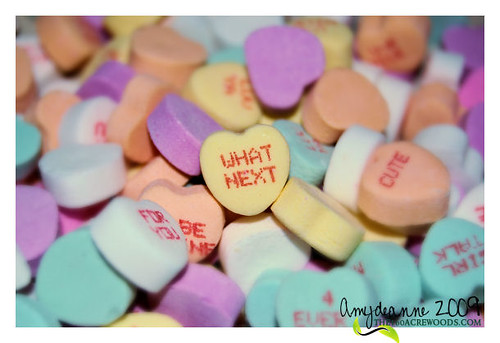 People are notoriously bad at telling you what they want when they haven't yet experienced the thing you think they might like. Apple's Steve Jobs is always banging on about it. It's summed up as 'people don't know what they want.'
Which always sounds, well, insulting and patronising. (image courtesy amydeanne)
This (from December 2007) illustrates the point:
"Am I missing something? The headlines (Consumers Prefer GPS over Mobile Internet/GPS edges out internet as desired mobile feature - study) tell us US mobile phone users would rather have a GPS-enabled phone than a mobile-internet enabled one.But people are exceptionally good at shaping a concept to fit their fitness landscape. In fact, they always place a higher value on something they have had input in creating (which brings oodles of peer-to-peer marketing value).
Translation: I'd rather have a sat-nav than be a live, real-time connected node on the network.
What kind of questions resulted in that?
Q"Would you like to know where you are? Or would you like to know any and everything?"
A"Oh, I'll take where I am thanks."
Uh?
In order to engage them you have to provide the 'thing' to talk about. That becomes the social object; an integral part of the platform-thinking approach. (discover/bring together/surface/work together to fix).
Give them something that interests them, that engages them. Then they'll help shape it. And if you can give them something to experience - then the 'survey' of their feedback will be all the more effective.
That thing could be a workshop in an interesting location, with physical interaction and decisions made, or a beta site with direct links to the developers, or prototypes to add to and delete from, or....
As long as it's something around which discussion-leading-to-change can happen, the social object will be doing its job. And the discussion is key - the process must be social not silo'd.

Monday, August 16, 2010
It's a bit of a... missed opportunity

I'm not knocking the concept. Peperami essentially get 1185 people to pitch them on the hook of a $10,000 prize. No doubt an ad agency would bill them more for the creative time. So on the face of it, it looks like a very efficient solution for the brand.
I'd love to show you the outcome but... er... the video can't be shared from the Brand Republic site it's shown on. Score that how you wish (I'll be scoring that very low, just so we're clear).
Anyway, once again, rather like Nokia's collaborative co-creation of a phone, there is only one outcome here. Only one winner. Only one version of 'good' - and that good judged from just one perspective.
And since we know relevance beats quality every day of the week... it's throwing away a load of the long-tail value being generated.
Peperami should be creating a platform for people to make their own shareable versions of the story, ones which matter to them and their mates - not just coming out with the 'big hit' winner - which is meant to one-size-fits-all suit the lowest common denominator.
Every one of the 1185 entries tells Peperami what people think of its brand. But in isolation only.
The process isn't collaborative. It's silo'd ideas in competition with one another. And that isn't how ideas spread (the intended outcome surely is a spreadable idea as a minimum?). What's missed when you miss out on collaboration is that very critical human element - social influence. What does your idea mean to other people? How would other people reshape it? What do they choose to pass on? What do they choose to adapt?
The problem is that the key outcome of this process is aimed at creating a TV ad. When you start with that as a premise, you're bound to take a very broadcast approach; always an odd match with the networked world the idea is aimed at engaging.
And the networked world would prefer your innovations with the crowd focused on making better products - not just better messages.

Tuesday, August 10, 2010
Breakfast in London, Manchester and Leeds
 E-Consultancy have signed me (and 90:10 Group) up for a UK mini-tour in November this year. This consists of breakfast briefings in London, Manchester and Leeds.
They offer an opportunity for me to spread the word about the real value of social media - the bit that's less about messaging and more about innovation. For the full outline, see below.
If you'd like to be at any of them use the following links to sign up:
Social media offers much more than an opportunity to ‘reach new audiences’. It offers powerful new efficiencies, better fit marketing, products and services your customers demand and care about – and new business models.
It can’t be layered on to your current strategies. Better-than-ever-connection with stakeholders (customers; potential customers; suppliers; employees; and anyone who cares about achieving what you have set out to achieve) places social media at the heart of what you do.
It creates disruption and opportunity in equal measure. These breakfast briefings will identify who is taking advantage – and how you can, too.
Areas for discussion include:
Location Based Services: 90:10 Group has researched the impact of LBS in social media. We’ll answer which brands are having success with FourSquare, Yelp and Gowalla and whether there is scale for LBS to matter to enough of your customers in the UK and beyond.
How innovation must shift from making better messages to making better things:
We’ll address how using the tools and techniques of social media delivers the ROI of better things, more fit for those they are intended for and how those better things come pre-loaded with the peer-to-peer power of the advocates who helped make them.
Scaling co-creation:
Bringing people together to share ideas and inspire creativity is nothing new. The scale and affordability delivered through social media is. What does this mean for everything from Marcomms planning to customer service, New Product Development to sales?
Innovation in the org:
Those who take a few steps into social media soon discover that old silos and ways of organising fail. What is CRM is PR is Customer Service is NPD and R&D.
We’ll make the case for change in the way organisations should organise and how they should now define their role as platform organisations.
Based on the forthcoming book: Platform thinking: How social media changes the organisation of business and the business of organisation.
All of this will be supported with case studies and data to take us from the theory to the practice.

Wednesday, July 14, 2010
Participation is the new default

The story of the Internet has been one of lowering the transaction cost of forming groups. The lower the cost the lower the motivation required so to do = the greater the opportunity for all parties to engage.
We have the best set of tools in history to connect people (and if you think our current set are cool, wait until we truly get out of the silos). And the impact of their arrival has been to reduce our reliance on organisation from the centre - for our entertainment and our news etc (from Facebook to YouTube, IM to SMS).
When given the opportunity to connect, we take it. Whether it's to move into cities to be together - or to never be out of sight of our mobile phones - such is our reliance on the connection they offer.
The internet and our ever-growing collection of digital toys have given us a new order of magnitude of self-organising behaviour, not a new behaviour.
The 1:9:90 rule suggests it is normal for people not to participate (90% being lurkers).
500m people on Facebook suggests otherwise. Each of them has had to, as a minimum price for admission, contribute their own profile. This is the age of the total community - one in which to take part you have to create part.
And through this we are reminded that as in the real world, so in the digital.
We have an innate ability to identify and punish freeloaders and all-for-themselves bores. The more we and others can express our humanity online the more we will apply those innate abilities. Brands and orgs attempting to join in will have to put down their shields and meet us as equals; face to face and in the flesh of genuine human interaction.
The cost is low, the barriers increasingly surmounted and surmountable. Does anyone still believe only 1% of us is motivated (as the 1:9:90 rule would have it)?
So let's build our new institutions, our updated organisations, with the expectation of 99% participation.
If our governments, schools, businesses etc were designed from the off with that expectation I suspect they'd look somewhat different.
Participation was the old default. And now it's back.

Thursday, July 01, 2010
Media Owner Co-creation Solutions
I'm planning on getting part III of this week's Clay Shirky presentation at the LSE up on the blog tomorrow morning. (part II and I are already live - see links below).
In the meantime, here's a slidedeck we've put together at 90:10 Group I hope you'll find interesting.

In the meantime, here's a slidedeck we've put together at 90:10 Group I hope you'll find interesting.
Media Owner Co-creation Solutions
View more presentations from david cushman.
Wednesday, June 16, 2010
Deploying social tech to enhance co-creation means a long-tail of outcomes
Making just one product as a result of a social tech-powered approach to collaborative co-creation kind of misses the point - and out on lots of the value.
It's great for making your product a better fit for the needs of the people you would have use it.
It's great for creating a marketing force for the result - the folk who joined in creating the outcome and who will therefore embrace and champion that outcome to their peers.
It's great for making people feel you are a more open, outward facing, welcoming, brand or organisation.
But if the outcome is just one product, my concern is you've missed out on everything else you've discovered on your journey to making that one product.
For example Nokia's Design By Community project, in which we are all invited to help shape a prototype phone, will end up with just one outcome.
The spec for that one phone is selected by the community each week. From a range of choices, users are invited to vote. And even if (as is likely) there is a long-tail distribution to the spread of votes, only the spec accruing the highest number of votes - the single most popular spec for that week - gets included in the final outcome.
This, like Twitter trends, tells you one thing - what is the single largest grouping.
Yet everything we know about the peer-to-peer network world of the internet tells us that there is greater value in the long tail than in the single largest 'hit'.
So while the single largest group (note, this is very far from the majority in a networked world, while it was very close to the majority in a broadcast one - see 'why hits are worth less in the networked world') may be telling you to make a phone with the largest possible touch screen, 80% or more may be telling you they want something different - be that a small touch screen, a qwerty keyboard, or whatever.
Failing to respond to that, may be missing out on what looks like the smaller prizes, but together, serving global mass niches, they result in the bigger prize.

Watch this mistake get played out again and again as old broadcast ideas get applied to the networked world - where people try to use social tools to bring people together - but deploy them against broadcast concepts.
I fear this may be exactly what our new UK government ends up with as it attempts to use technology to bring more of us into the decision-making process. They will surface and serve lowest common denominators; with the resulting disatisfaction for the majority with the single outcome.
Socialising the processes of collaborative innovation and co-creation means more than just using social tools to find people and to distribute to them. It means understanding the greater value lays in the long tail and ensuring this isn't lost in the rush for the single most popular.

It's great for making your product a better fit for the needs of the people you would have use it.
It's great for creating a marketing force for the result - the folk who joined in creating the outcome and who will therefore embrace and champion that outcome to their peers.
It's great for making people feel you are a more open, outward facing, welcoming, brand or organisation.
But if the outcome is just one product, my concern is you've missed out on everything else you've discovered on your journey to making that one product.
For example Nokia's Design By Community project, in which we are all invited to help shape a prototype phone, will end up with just one outcome.
The spec for that one phone is selected by the community each week. From a range of choices, users are invited to vote. And even if (as is likely) there is a long-tail distribution to the spread of votes, only the spec accruing the highest number of votes - the single most popular spec for that week - gets included in the final outcome.
This, like Twitter trends, tells you one thing - what is the single largest grouping.
Yet everything we know about the peer-to-peer network world of the internet tells us that there is greater value in the long tail than in the single largest 'hit'.
So while the single largest group (note, this is very far from the majority in a networked world, while it was very close to the majority in a broadcast one - see 'why hits are worth less in the networked world') may be telling you to make a phone with the largest possible touch screen, 80% or more may be telling you they want something different - be that a small touch screen, a qwerty keyboard, or whatever.
Failing to respond to that, may be missing out on what looks like the smaller prizes, but together, serving global mass niches, they result in the bigger prize.

Watch this mistake get played out again and again as old broadcast ideas get applied to the networked world - where people try to use social tools to bring people together - but deploy them against broadcast concepts.
I fear this may be exactly what our new UK government ends up with as it attempts to use technology to bring more of us into the decision-making process. They will surface and serve lowest common denominators; with the resulting disatisfaction for the majority with the single outcome.
Socialising the processes of collaborative innovation and co-creation means more than just using social tools to find people and to distribute to them. It means understanding the greater value lays in the long tail and ensuring this isn't lost in the rush for the single most popular.
Thursday, March 25, 2010
Plug collaboration into your business
Plug collaboration into your business
View more presentations from david cushman.
Bringing communities together, co-creating, collaboration, open source... open ended?
The whole notion of businesses without walls can be very difficult for those embedded in traditional organisations to imagine. Where to start? Where does it end?
So at (disclosure, I work there) 90:10 we have been working on a whole series of products to help those organisations benefit from the value created by co-creation in a rapid, outcome-oriented way. First, clear, effective action-oriented steps.
They each have deliverables and outcomes, fixed and short timescales (from 1 week to 3 months) and fixed prices to go with them.
The following slidedeck reveals our approach. If you're interested in the products themselves and how they can create value for your organisation - let me know.
![Reblog this post [with Zemanta]](https://lh3.googleusercontent.com/blogger_img_proxy/AEn0k_uf5MS5jf2sxznhWRZ0YDujVvGIlGS1qEtTlkg6qWPsyonZuKqwUww9HIZzM8wWgz90qaTOH9Gi53fEKy_3ZaLLJjkJy7MWQt6MmSRq3YCi6jaqaNFND4cuaBQ0wtIBo2vPDx9BpJIDh34cF6ytv-HW=s0-d)
Monday, March 15, 2010
Wanted: Paid intern to work on a co-created movie
NinetyTen (my lot) has been helping Honda (a client) on a project to co-create a road trip movie.
There are lots of ways you can get involved. But the latest is rather splendid if you have some time to learn the magic of movies from April 19 to June 11, 2010.
Working with award winning director Claudio Von Planta (you may know him from his work on the Charley Boorman and Ewan Macgregor BBC bike trips Long Way Round and Long Way Down) and the agency producer, you'll be paid £1500 and be provided with accommodation in and travel to and from London.
You need to know your way around social media (if you found this while online, you are on the right lines) and be able to write a blog.
The job is based in central London, but you may be asked to attend the 35-day shoot around Europe throughout May.
You can come from anywhere in Europe, but you need to be able to speak English. Additional languages are beneficial (particularly French, German, Italian or Spanish) and you need to have the appropriate working
visa for employment in the UK.
If you, or anyone you know, should be taking part, send your CV to intern@liveeverylitre.com and describe why you'd be perfect for the project.
You don't need to contact me directly :-)
Here's Claudio talking about the project:
![Reblog this post [with Zemanta]](https://lh3.googleusercontent.com/blogger_img_proxy/AEn0k_u-3CDjiy4B0GeyY30JuwzB0SdE0Z48CMuNUqlbrn3wI83a8EBvbod04YGun4Ducw9gZGGBtaHiCMsq6_SbnsMl8NqZM5mhIE0yfXixDmhuEb0cYoIPepC64s6FxbwHUAc3Vxrm74Km_GSQtjbiMgc=s0-d)
There are lots of ways you can get involved. But the latest is rather splendid if you have some time to learn the magic of movies from April 19 to June 11, 2010.
Working with award winning director Claudio Von Planta (you may know him from his work on the Charley Boorman and Ewan Macgregor BBC bike trips Long Way Round and Long Way Down) and the agency producer, you'll be paid £1500 and be provided with accommodation in and travel to and from London.
You need to know your way around social media (if you found this while online, you are on the right lines) and be able to write a blog.
The job is based in central London, but you may be asked to attend the 35-day shoot around Europe throughout May.
You can come from anywhere in Europe, but you need to be able to speak English. Additional languages are beneficial (particularly French, German, Italian or Spanish) and you need to have the appropriate working
visa for employment in the UK.
If you, or anyone you know, should be taking part, send your CV to intern@liveeverylitre.com and describe why you'd be perfect for the project.
You don't need to contact me directly :-)
Here's Claudio talking about the project:
Tuesday, January 12, 2010
Announcing: Social Business Innovation Awards

We have the best set of tools in history for people to find each other and act together to create and improve on the things that matter to them.
What are we doing with them?
Some businesses and organisations are grasping them to wikifix their products and services, to deliver best-fit R&D and NPD and join in waste-free people-powered communications and marketing. The wikifixing of the world has begun.
Those engaging in the process reach new levels of efficiency thanks to an ever-better fit with the needs of their partners - those formerly known as the customer. (By way of disclosure, that's what we at 90:10 Group help organisations with).
I hope you will join with me to celebrate the best of them - and through this find a path to the communities-of-purpose-driven future of the organisation.
So each month this blog will host a Social Business Innovation of The Month award, nominated by you and voted on by you. The format is very much inspired by Neil Perkin's ThinkTank.
The awards are to recognise great work in open/social business/organisational design/innovation/tranformation/efficiency using social technologies.
The winners will enter a case-study Hall of Fame to be shared with all - and in which the winners can revel in the glory of their peers' admiration ;-). More importantly, we can all get inspiration and guidance.
We'll have some (digital) badges for nominees and winners too (logos etc in production, and if you want to contribute ideas/creative talent please drop my 90:10 colleague Ilkut a line. Make them better than my hastily assembled effort.)
I'm less concerned at this stage about the niceties of defining specific rules (they will emerge), more with encouraging your participation - and that of those you know will care.
So at this stage, let's just nominate what we think is great from anything that's been done right up until now.
I hope one of the side effects will be discovery for those of us working, or planning on working, in this space, too.
But, before we get a chance to vote, we need some nominations.
Just post yours as a comment with a link to anything relevant (slidedeck, blogpost, video etc) and at the end of January we'll open the voting.
Please share with those who will care.
![Reblog this post [with Zemanta]](https://lh3.googleusercontent.com/blogger_img_proxy/AEn0k_tx--Gkdb7VxfpAkkb5IxxeKCHIfV1dWB3wr3bgzRJDFTX2_oP655zDNUBeyheOklbhDKWFR406h1H3Rz4LlClWJB8zXcOSE-r1gi-lZ4VNOigZDAcdtnFa7L613526EsbELIdx_o6bsCXpZMASKBg=s0-d)
Monday, November 24, 2008
Social Media: It's educational
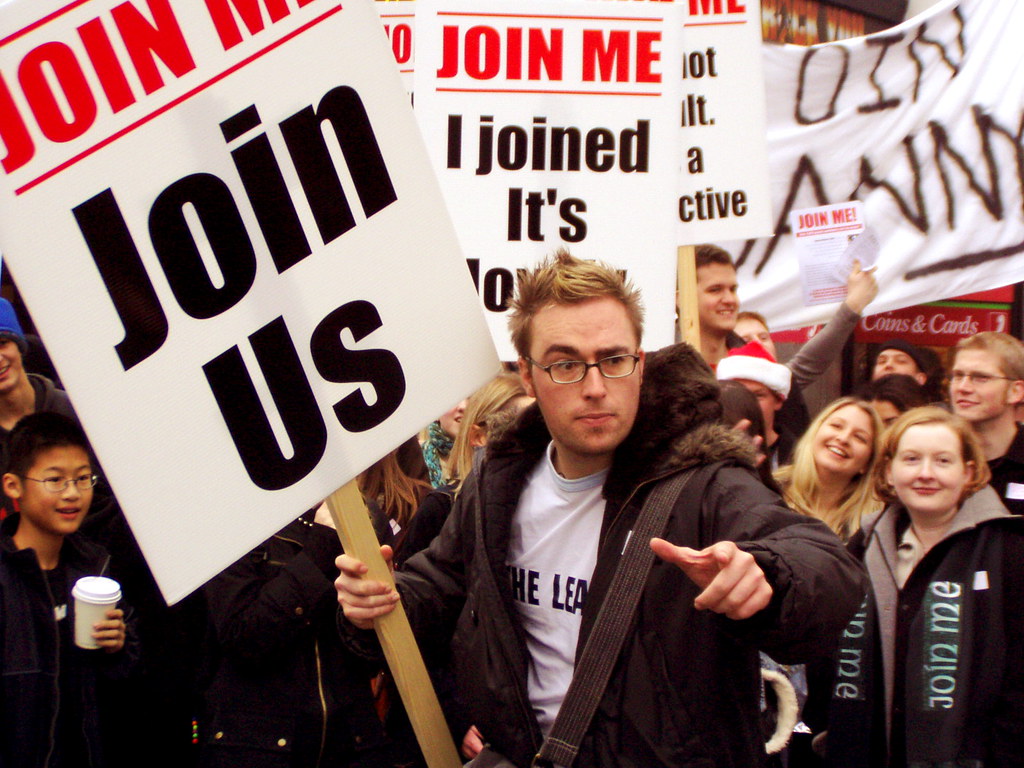 One of the reasons I love social media is its ability to reveal the power of the network.
That power is there for anyone to discover. But is only truly appreciated by those who participate.
This is a key distinction. There are those who believe they can use social media and those who understand they can participate in it.
The first group, the users, stand back from it. And from afar they order its deployment. These are the people who - no matter how much they may protest - do not really understand it. (Picture courtesy)
This first group see social media as just another channel. They see it as another way to extend reach, to gather eyeballs. They like their measures in the thousands and millions.
They neglect a simple truth. The only measure that really counts is the action that results; a sale, a new believer, a new organisation, a better mousetrap. .
Theirs is the world of never mind the quality, feel the bandwidth.
You'll know you are in group 1 if you blog but don't allow comments, if you broadcast an rss feed into Twitter but follow no one, if you stuff videos on to Youtube but don't respond to comments or video responses. If you spam 'your friends' on Facebook.
Sure, you're using social media. You're not participating in it though.
The second group are those who genuinely benefit from social media.
They learn as they do.
- Where group 1 says Use Social Media, we say Participate.
- Where group 1 asks how many were exposed to a message, we ask what action resulted ( how was a community of purpose galvanized to act?)
- Where group 1 stands back to witness the power of the network, group 2 is partipating in it.
Those who would only witness are missing out on learning so much.
They aren't taking part in a conversation.
As I've said before, the act of participating raises and answers questions about control and ownership - a process which makes brands and orgs better adapted to the connected world.
This does not happen if you and your people simply stand back and count the beans.
This time, you really do have to be in it to win it.
Friday, October 03, 2008
Clay Shirky on humanising brands
Today I'm pleased to share part III of my interview with Here Comes Everybody author Clay Shirky (recorded in London on September 30 at the offices of Incisive Media).
It is part of a 35min interview.
As Clay puts it: "Brands aren't people. They don't interact. People do."
And he warns creatives who seek perfection in their campaigns: "Something cleaned up right to the edges has no room for me. Perfection says, you don't belong here."
Clay's contention is messiness is human and acts as a welcome matt for interaction.
Watch the video below:
See him in person here. Buy his book, here.
It is part of a 35min interview.
Parts one: 'How algorithms caused the credit crunch'In part three Clay discusses the different qualities of interaction required to humanise brands - and how creatives can welcome collaboration rather than seal it out.
and two: 'Why email trumps facebook et al'
can already be found on this blog (dated Oct 1 and 2, 2008).
As Clay puts it: "Brands aren't people. They don't interact. People do."
And he warns creatives who seek perfection in their campaigns: "Something cleaned up right to the edges has no room for me. Perfection says, you don't belong here."
Clay's contention is messiness is human and acts as a welcome matt for interaction.
Watch the video below:
See him in person here. Buy his book, here.
Thursday, September 25, 2008
MySpace Music. Sharing the broadcast?
 While the real lesson of the networked world for music is that (as Herdmeister would say) music is something we do together, MySpace is taking advantage of the monkey-see monkey-do (in this case monkey-hear, monkey-do) reality of the flocking activity of real human behaviour.
(Thanks to Jamie Burke for sharing this link).
MySpace has launched MySpace Music which effectively turns audio files of your favourite music into a Facebook newsfeed-style shared experience with your social graph (your MySpace friends, at least). (image by antikris via flickr)
It's integrating the functionality of the likes of last.fm and blip.fm inside the fully-formed social network of MySpace. And, of course, it's an excellent fit - because MySpace always was all about the music.
One of its biggest advantages over other apps is that it offers unlimited streaming of the music your friends are listening to from the news feed.
Now, if only the record companies allowed users to mash-up, remix and redistribute the results (that is adapt in order to adopt)... then we'd have a model that really fits the networked world.
This slidedeck (used previously on this blog, granted) reveals why I think that's important. Essentially, because it takes into account the importance of individual human intervention and relationships (in adhoc self-forming communities of purpose) in the spreading of messages today.
If you don't enable the co-creation side of the equation what you are effectively doing is using people as a funky new broadcast channel. It can work. I just don't think it's likely to work as well as the evolving network of two-way relationships that ceding control and sharing outcomes allows.
Lots to think about for MIDEM in January.
Wednesday, August 13, 2008
I am a DJ, I am what I play
Just added a new post to /Message. I am a DJ.
Music, mash-ups and the value of what evolves against what is planted. Come spin a record?
Music, mash-ups and the value of what evolves against what is planted. Come spin a record?
Wednesday, July 09, 2008
Who owns your comments?
Just added a new post on /message inspired by a brief exchange of tweets with Jeff Jarvis.
Friday, June 27, 2008
Lessons in co-creation. Ignore them if you want to fail
James Cherkoff shared the June 2008 McKinsey Quarterly document via twitter. The Next Step in Open Innovation (by Jacques Bughin, Michael Chui and Brad Johnson) includes these gems:
Lesson two: Don't slap yourself on the back for a 20-30% growth rate in visitor numbers. As Professor Malcolm McDonald reminded me this week, we often fail to look at what the whole market is doing and how we are performing against it. The whole market in this case is growing at a rate of 100% a year. Anything less and you're falling behind, failing.
Lesson three: Trust in your brand is worth 40% of the new value co-creation is unlocking. Work at it, invest in it. Never abuse it.
- "25 per cent of Western Europe's internet users now post comments and reviews about consumer products of all kinds."
- "User-Generated media sites are growing in numbers of visitors and participants by 100% a year, traditional sites by 20-30%."
- "40% of would be co-creators will refuse to co-create with companies they don't like or trust."
Lesson two: Don't slap yourself on the back for a 20-30% growth rate in visitor numbers. As Professor Malcolm McDonald reminded me this week, we often fail to look at what the whole market is doing and how we are performing against it. The whole market in this case is growing at a rate of 100% a year. Anything less and you're falling behind, failing.
Lesson three: Trust in your brand is worth 40% of the new value co-creation is unlocking. Work at it, invest in it. Never abuse it.
Wednesday, May 28, 2008
Why people like you have got time to join in the co-creation revolution
Here's the video of Clay talking about what he wrote about here.
Now this IS TV worth watching!
Cognitive surplus, gin and and why people like you have got time to join in the co-creation revolution
more about "Clay Shirky at Web 2.0 Expo SF 2008", posted with vodpod
Subscribe to:
Posts (Atom)
FasterFuture.blogspot.com
The rate of change is so rapid it's difficult for one person to keep up to speed. Let's pool our thoughts, share our reactions and, who knows, even reach some shared conclusions worth arriving at?
