Some quick thoughts on Facebook’s latest iteration (as revealed at F8 last night).
The moving 'stream of news' from folks you know has been pushed into the wrong place. It should be in the centre. Facebook should instead push top stories to the edge (as Twitter does with Trends).
The reason they have got this wrong is the reason Facebook is headed in the wrong direction full stop. It can’t find a way of making value without slapping ads on. It is therefore forced into thinking it is a mass media play.
When you think like that you get led by the lowest common denominator (most ‘liked’ over most relevant) that leads you to ‘top stories’ and to placing them in the centre.
Facebook is treating your ‘friends’ as one big community. You only get to choose who you share with once. It should at least be every time you share.
Twitter’s trends is another (in some ways worse) case in point. It surfaces the most shared, not the most relevant - among everyone.
Top Story is kind of ‘trends among friends’. Which is something I previously advocated twitter should do. But now I see it in the flesh and actually working, I realise how even this delivers most liked, not most relevant – even if it is ‘most liked/shared’ among your friends.
For example, when I checked in on Facebook this morning my experience of it was a top story which was a very funny video involving British chef Nigella Lawson (also available on Youtube, on the open web).
The video is entertaining. It would entertain many. But it sure ain’t relevant. Because it gets liked and shared by many of my friends (and presumably their friends) it stays on top story position.
Meanwhile, in a side-thought at the side of the page potentially more relevant stuff ticks by.
What is needed is a way in which you can select, every time, who you wish to share with. Friends may have things in common but that does not mean they share common purposes. Communities do.
And communities of purpose are much more adhoc in nature than Facebook is built for. They are much more like the way conversations develop in twitter – aggregating around a common thing for the time that thing matters to those taking part, moving on to the next as and when the need is solved or the next emerges.
Communities of purpose get together to achieve things – from answering a quick question to making a solution to shared need. Friends hang out.
And this is Facebook’s challenge. Communities of purpose have to be much more adhoc than it is built for – yet this is where the true value (making things with people rather than sending messages at them) resides.
The Top Story thing reveals how far off Facebook is from cracking this, or perhaps even understanding it. It is why, instead, they must attempt to be a media platform. Because media platforms are nice and simple for selling ads on - instead of coming up with ways of creating real value with communities.
The Media Briefing was kind enough to conduct a video interview with me last week.
The questions (and answers, I hope) are aimed at helping media companies understand the impact of digital/social, the value of purpose in a platform-thinking world and the value of open vs closed (paywalls et al).
Here's the edited results. To see the video in the context of the original article follow this link.
When Google announced it was closing down Google Video I was relatively comfortable with the idea since they said nothing would be deleted. The idea (as I recall) was that you could no longer add to it. Made sense post the YouTube purchase, of course.
I was staggered to find recently (and they haven't even emailed me with this) that they are going to shut it down as a hosting site entirely. And it's up to you, dear contributor, to download what is yours or lose it.
Some would say that's the risk of free SaaS. I disagree. There is a difference between SaaS and a platform to host content from which the platform owner then makes all the money (ie by advertising against content that users contribute).
And I think it was incumbent on Google to transfer all Google Video content to YouTube on behalf of the the content creator, with the option to merge with the owner's Youtube accounts or delete. How hard would that be.
Instead it's up to mugs like you and me to salvage the likes of this, above: A 35 minute interview with Clay Shirky I conducted in 2008. It was too long for YouTube at the time, so started life on Google Video.
In it we discuss Gin, TV and what comes next?, Why Here Comes Everybody (his book) avoids the copyright issue, is technology changing us, scoring collaboration in education, humanising brands, facebook and email and how algorithms caused the credit crunch.
Gin, TV and what comes next?, Why Here Comes Everybody avoids the copyright issue, is technology changing us, scoring collaboration in education, humanising brands, facebook and email and how algorithms caused the credit crunch.
But I believe we are at the end of the era of device-specific computing.
The move from urls to apps, closed code to open apis, on-device storage to access from the cloud, all points away from the pivotol role of the device (which is where Apple makes its bucks) to enabling connectivity to your services (the realm, currently, of developers, mobile operators, broadband and wifi providers and ISPs).
The thing that smartphones, tablets and laptops (even, Microsoft Surface - remember that?) enable is ubiquity of computing. Always on - always with you. Access is the key here. Very clearly NOT the device.
The device can enable access - but it is only one way of enabling it. Not THE way.
The service and its delivery is king. Not the device.
Apple has allied these two things by controlling what is available in its app store. You have to meet Apple's standards to be allowed to deploy - for your service to be experienced by the user via the Apple UX interface. The service provided, therefore, on an Apple device is good.
That experience can only be as good as the quality of its adaption to the device through which you experience it.
In other words, if a service is as well designed for the device you are currently experiencing it through as it is for an iPhone, then you may conclude it is the device that's delivering that service (hence the growing army of Android fanboys). A well-designed service works brilliantly with the available interface. It isn't degraded by switching from one device to another. It takes advantage of the interface it has to hand.
But holding a device in your hand, having a device at all, may be little more than a hangover from our comfort with the tactile world. The cloud could be accessed in 3D before -your-eyes Minority Report ways.
Or more likely, direct to your mind (remember how far off and way out you thought gestural interface was when you first saw it demo'd on a YouTube video?)
And at that point in the non-device specific future we'll have no one to blame for a crash but ourselves.
Despite all the excitement for publishers over the iPad (and no doubt the excitement to come over the iPhone4 - well the screen resolution should improve the reading experience) I remain sceptical about the long term benefit for publishers - particularly publishers of 'news'.
In fact you could make the case that by encouraging them not to adapt, it puts their survival at greater risk.
The issue is that news - at least what we understand as news in the current lexicon - is not a best fit with the networked world.
It's lowest common denominator - the fat end of the long tail. And we all know more value exists in the long, long, skinny end - and that the fat end seems to keep on getting smaller.
That approach to news suits a broadcast world. If you can only make one TV news show, with a limited amount of items, then you'd best try include news that appeals to as many people as you can muster.
It has always been the fact that more people weren't interested in each item than were (fact - more people won't watch the World Cup this month than will - you'd be hard pushed to believe that if your guide was traditional broadcast news and programming).
But until recent times there was no alternative to this model. They'd have had to broadcast a million versions of the TV news with a never-ending range of news items to meet the needs of all the people who weren't interested in the main agenda.
Now of course that's pretty much exactly what does happen and is possible. Say hello YouTube.
In a networked world we produce for niches (for ourselves), distribute peer-to-peer and get value from relevance rather than quality (we like both, but we'll always take relevance over quality).
News, as I have often said, is now less about when it happens and more about when it's relevant (matters) to you.
So, back to that iPad and iPhone4. Too many traditional news vendors, it seems to me, see Apple's open hand as a way of reformatting/repackaging exactly what they've already done on the assumption that the reason we have been buying less newsprint is because it wasn't available in a beautiful digital format.
That doesn't make sense to me. I don't sit on the train each morning pining for a copy of the Guardian to read. I get on with participation and interacting with other people discussing stuff that's way more relevant to me than the vast majority of stuff in ANY newspaper. At least any they've come up with yet. Yes, some of it comes from newspapers. Shotguns hit targets, too.
Even the personalised rejigging of the content they have, to respond on individual use patterns, only delivers the more relevant stuff from their pile of 'not-quite-the-right-fit-with-me'. And it's individual. We are social.
There are two options. Invest like crazy in quality rather than scale. Think less mass and more about serving a niche of people who value the specific and otherwise unattainable. There are, after all, still people who will hand illuminate a leather bound Bible for you some many centuries since the invention of the printing press.
The other is to be the filter; the curator for specific niches. Prove you are a better filter of what's valuable to me than my peers and you win that game.
That is no easy task - and one that's a million miles away from decanting your current offering into the latest digital formats.
The networked world demands new models, new approaches - not just new technologies.
So I'm hoping you enjoy how it's shaping up and recommend you give it a go if you haven't already.
Nikhil says: "Mixcloud is democratic – anyone can upload to the site and the listeners decide who get exposed. It is social – with lots of great features to share and discover radio through friends. Finally it is personal – the team are busy in the lab working on cool radio recommendation algorithms that help users find shows they love."
Mixcloud places value on the quality of expert curation individual people (presenters) can bring - a role the media industry is desperate to continue to play.
You may or may not be aware that I'm a Trustee for Citizen's Online - part of which is EverybodyOnline.
EverybodyOnline helps communities and individuals in disadvantaged areas across the UK to engage with digital technology.
It aims to help communities overcome any barriers they may have to computers and the internet so they can take advantage of the wealth of opportunities digital technology and the internet has to offer.
'Simple' things that so many of us take for granted. Like this:
I hear The Face is coming back. As a magazine (though most likely digital, free or subscription only). I wish the team good luck.
I like to think of the role of print editors these days in terms of glider pilots.
The more skilled the pilot, the more thermals he may find, the higher he may, in the short term, rise.
If the conditions are right he might even perform a few impressive aerobatics.
If the weather is less than ideal he won't be taking risks.
He'll be doing everything he can to keep that bird in the sky just a little bit longer.
Every media company with print interests believes it has better gliders and pilots than the other guys.
So they can stay in the air just a little longer than the rest.
(Image courtesy)
They all started a long way up, with the advantage of being flown there by a powered plane - all the advantages mass media used to enjoy; route to market; distribution, access to exclusives; unavoidable advertising; monopoly on publication etc.
Now they have a slingshot to fire a new launch into the air. Staying up for long periods requires ever greater skill.
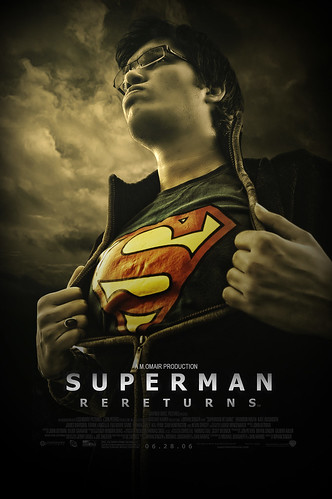
Meanwhile we've all learned to fly - without the need for your planes or gliders. And we take that Superman ability and carry aloft Twitter and Facebook, Youtube and flickr, eBay and Google.
Together we can lift anything, raise it as high as we choose.
And from up here we watch the old world push gliders off cliffs.
Good luck and good fortune to all who fly them. Those who soar will do so by convincing enough of us there is a good reason to come to your glider and support it on our Superman shoulders.
To coin a sacherine phrase: We are the wind beneath your wings.
Here's the video of google explaining wave. Click through to the Youtube home page for this (or use the HQ function on the embed) and you'll get a load more video detail.
Since it's been described as everything from a email and microsoft killer to a twitter and facebook replacement, it's probably worth getting up to speed with.
The wave is coming at you later this year!
Microsoft's Bing is the other 'need to know' of the last week or so. It launches June 3.
Catch up with that here. That's what I'll be doing after a lazy weekend in the sun...
I've been talking to the guys at Mixcloud.com for a short while now. They have a very interesting and potentially disruptive model to unleash on the radio industry.
If you'd like to give it a try I've got 100 beta invites for readers of this blog.
Just use the code: fasterfuture
If you try it and it's already run out, post a comment below and we'll get you on a waiting list (with a pretty short wait!)
Most internet radio sites allow you to choose the channels you want to listen to. Other players (of the LastFM kind) allow you to select individual tunes as the disaggregated elements for the user (with or without their peers) to reaggregate to their own preferences.
Mixcloud makes the unit of value the radio show.Their elevator pitch is: 'The Youtube of radio'.
In a more niche global incarnation, imagine listening to a station of the shows you want to listen to drawn from a world of talent and relevance - with recommendations from your peers (and your behaviour) leading you to the right shows.
The idea retains ‘the show’ as unit of editorial control/value but places channel control in the hands of the user and their peers. Entertaining presenters, quality production etc remain valued in this model - whether its UGC or professional content.
Rankings could be ordered by preferences too (ie only want UK, only want rock, only want comedy, only those recommended by my friends etc
Mixcloud doesn't do all this just yet. But it's on the right road.
Interesting times: Times in which Youtube overtakes yahoo as No2 search engine; and in which twitter is overtaking digg.
Even the new order is being reshuffled.
Cutting brands out of the conversation is not a wise business strategy. It is is limiting and potentially damaging for all concerned.
I’ve used Flickr for many years – as have many of my colleagues.
I’ve even used Flickr for ‘Branded’ functions – setting up accounts in the name of brands, using its functionality to upload and display to those brands' own websites etc.
So when we thought of running a competition using the group functionality of Flickr no one thought – STOP surely this is all nasty commercial stuff Flickr won’t accept.
So it came as something of a surprise when we discovered that a competition group associated with a brand runs the risk of being closed down because it contravenes Flickr’s commercial use terms and conditions.
Let’s consider the landscape here for a moment. We’re told by Flickr that groups don’t support competitions. We found 3600+ running when we last looked. Image courtesy
A vast proportion of the users of Flickr are promoting their photographic wares, from just displaying the quality of their work right up to (and including) people selling T-shirts and mugs with their images on them.
Huge numbers of groups are brand-related. From the obvious (Canon and Nikon users) to the might-as-well-be-an-advert of group’s extolling the virtues of one of Ford’s trucks.
None of these have links to buy stuff (though, hang on a minute, many of the groups do, it turns out).
Seems even if your group has zero links to external sites, no calls to action to buy – in other words is less commercial than most, you’re still not welcome if you come attached to a brand.
It seems a little unfair that because you organise a group FOR a brand Flickr will take exception but if users of brands (and how can you tell the difference in most cases) create a group, all is well.
Not exactly encouraging transparency now, is it?
Is this a case of ‘if it’s from the edge its ok, if it’s from the centre, it isn’t’. A big principled philosophical stand?
Nah. It’s all about the money. Any brand can PAY for a sponsored group, which Flickr will then happily spam its users with by pasting it all over the homepage with no regard for that user’s interests. There is no moral high-ground in that.
Good brands don’t use social media, they participate in it. At least, their representatives do.
They go to the trouble of reaching out to people who care about a particular competition, theme or idea - to join in. And they ask them to bring others – more people to Flickr in this case – more of the people who make Flickr.
Flickr is the provider of tools and a platform. The community that emerges is not Flickr's, it's simply enabled by those tools.
Good examples make Flickr more useful for all those concerned. Users end up uploading and sharing more images, and forging more connections. And each new node on the network doubles its value.
We didn’t intend to give Flickr money. We did intend to give it more people and something useful those people could do together.
We usually charge for this service…
I suspect those at the top in Flickr get all this. But those charged with hitting short-term commercial targets don’t.
So, a little advice for the commercial strategists at Flickr. Nose off grind-stone a minute. Look around you.
Facebook. More images than you. More people than you. Treats brands just the same as it treats users. There I can set up a fan page, share functionality etc, as a brand or as a user. Perhaps they’ve noticed brands are made up of people (you can but hope…)
Whatever the case, Facebook’s treatment of brands is welcoming. Come and play. Join in. Learn from the networked world.
Consider Youtube. Brands can create channels, profiles, upload content. They are treated like users. Join in: Brand or user.
Consider Blogger. Brands can create blogs and have them hosted by google. All at no cost. Join in: Brand or user.
Consider Twitter. Brands can create a profile and interact just as much as any individual user. Join in: Brand or user.
These, and the vast majority of communities, see the bigger picture. They are not the owners of a community. They are the owners of a set of tools for the community to do with as they will. And the communities include people who happen to work for brands.
Flickr, and communities like it, are made up of people who have to create part to take part. Brands are one of the things they want to create around and interact around – just try some searches to see. Creation and interaction is what makes community valuable.
My best advice: Don’t stand in the way of this.
Youtube, Facebook, Blogger, twitter are all applying the principles of the because effect – when something that was once scarce becomes abundant you can no longer make money with it, you have to try to make money because of it.
The classic model is music. Now that digital music is everywhere and all-but free you can’t make money charging for it (selling cds) but you can make money because of your music (ie concert tickets –things that are scarce).
Youtube made uploading, sharing and broadcasting video abundant. They realized therefore they couldn’t make money from that. They have focused on making money from what has resulted from that (because of that) – their place as one of the biggest sites on the planet with huge, huge audiences and increasingly clever in context ads.
We appreciate these are difficult times for commercial considerations. We appreciate the lines are blurring.
But Flickr and other social networks have lessons to learn if they want to connect properly with brands as they adapt to the networked world.
Social Glue has a plan to open debate around this and get the social networks (yes Flickr dudes, you included), users and brand-promoting folks to join in and establish some new ways of doing business in this networked world - ways which will be to all parties' advantage - particularly for the communities we're all trying to serve.
Almost a year ago I wrote a post that called on those who would 'do viral' to remember who actually 'does' viral: The humans doing the interacting with one another.
And to that end attempts at 'viral' work which enables co-creation gives you both engagement and relevance.
One example I remember well from a previous life was an excellent and funny video - expensively made with high production values too. It was on topic. The seeding strategy was sound.
But it was essentially broadcast, broadcast which USED the user as the distribution channel.
So the message couldn't be adapted by the receiver. There was no room for their input. No adaption = low adoption. And if I don't adopt, I'm not going to pass it on; as simply illustrated as I can, here.
The quality was high. But the relevance was low. And relevance, as I so often say, beats quality every single time.
Allowing people to put a little of themselves into 'your' viral makes it 'their' viral.
And as Alan Moore - and by osmosis I, am so fond of saying: "That which we create, we embrace."
It allows us to work with the user rather than targeting them, based on the understanding that the User Is The Destination Now.
It makes it their message, not yours.
So I was delighted to walk into my new job this morning to be met with this new piece of work from Brando-Digital (yep, that's where I'm working now).
(By the way, we're so new the company site is nothing but a holding page right now. If you'd like to know more about us, drop me an email at david AT brando-world.com )
Despite the he-would-say-that-wouldn't-he inevitable in this; I think it's pretty cool. It allows the adaption of the message which will encourage that adoption.
It's promoting a new phone, the Sony-Ericsson W595 - so the youtube element is not only relevant (you can upload direct to youtube from the W595) it's also a helpful viral aside.
Technically, some may be interested to know the creation of this effort has involved mashing-up apisfrom youtube, googlemaps AND facebook.
And importantly, it uses not only the silo'd social networks (in this case facebook) but also email - the most ubiquitous of all the social connectors.
Yeah, yeah, yeah but it's also a bit of fun people can have together at Halloween. We've given people, as Mark Earls would say, something they can do together - we've made the human interaction element the important element.
Have fun with it. Pass it on if you think its cool and think someone else will do to. Here's mine, below.
BTW I'm not 43 - yet! But I am odd.
10 Downing St, the British PM's home and office, has launched a new version of its website. It's powered by youtube, twitter, digg, delicious, facebook and flickr; interactive and connected activity left, right and centre (there's a political gag there somewhere...).
Podcasts and RSS are a given. It's even built on the wordpress blogging platform.
I'd love it to enable comments (rather than have to wait for the allotted moment of interaction with our elected servants). Sadly even the youtube videos and flickr images have comments disabled. That makes the social tools a bit too broadcast (we'll do the talking, you do the listening) for me. Shame.
I bet that level of control was set by someone who doesn't use social media, huh?
And it would be wise to have feeds from rivals if No10 wants to serve a community, rather than its own ends.
I don't expect them to enable crowd-sourced legislation any moment now, either (though I do believe our current political system serves the lowest common denominator in ways that fit the broadcast/industrial world rather than the networked one the new site's tools are attempting to tap into).
Our new site aims to keep you up to date with all of the developments of the PM’s activities through news stories, videos, Flickr images and our Twitter channel.
There are also plenty of interactive features available, including the opportunity to post your video questions directly to the PM, submit e-petitions and take part in webchats with ministers.
I say:
It's a sad day when many a media brand finds itself lagging behind Gordon Brown for use of social media, innit?
If you watched this from Michael Wesch, you might be interested in the further explanation of the Context Collapse he describes. The context here is the moment the vlogger faces the webcam to record something (for youtube for example) and realises that they are about to share with whoever may ever discover it on the web, for all time.
Daunting.
Some pause for thought to try to let that sink in... Most just crash on without thought for the ever-more or the endless variety of audience for their piece-to-camera.
"Context collapse: an infinite number of contexts collapsing upon one another into that single moment of recording. The images, actions, and words captured by the lens at any moment can be transported to anywhere on the planet and preserved (the performer must assume) for all time. The little glass lens becomes the gateway to a blackhole sucking all of time and space – virtually all possible contexts – in upon itself."
The same weight of history applies to our blog posts (even these words as I write them...), your comments, forums, the pictures you share on flickr, the relationships you share on social networks...
As I asked Mike in the comments on his post: "Assume you make the distinction for video (as compared to our words and pictures in blogs, forums and social networks) because of the lack of ‘face-work’* in those contexts?
Mike Wesch: "*Face-work is a complex collaborative dance in which all participants and their every word, wink, gesture, posture, stance, glance, and grunt take part. In short, how we present ourselves (and by extension, who we “are”) depends a great deal on context; where we are, who we are with, and what we are doing, among many other factors.
I guess the weight of history rests upon the very words I type now. But the process of writing has been one we are used to performing without direct and real-time feedback.
Out of interest, I wonder if Mike has done a comparison with how people reacted to home video when it first emerged (ie video that was never likely to be shared with history?)
Do you remember the first time someone shoved a video camera in your face? Could you guess who you were presenting yourself for?
The webcam, I think Mike is saying, puts us in a place where we can no longer make that guess.
A MESSAGE TO THE FUTURE
POST SCRIPT: This inspired me to record a message to the future on qik. If you have one, post it where-ever you like (youtube, seesmic, qik, whatever) and, please, post a link to it in the comments on this blog? I'll add it to our list.
I've been gagging to see this ever since this discussion with Dr Michael Wesch. Mike (who gave us the Machine is Us/ing Us) is back from hols and has now shared his June presentation to the Library of Congress in Washington on Youtube - on Youtube. Big thanks to ServantofChaos for tipping me off. Fabulous discussion of participatory culture. If you're (really, really?) so short on time you can't watch it all, go to minute 48. Take a glimpse at the new Earth rising...
I feel like I've been warning that global warming was about to reach its tipping point - and suddenly images of the arctic glaciers collapsing, crashing into the sea at an alarming rate, are being broadcast around the world, providing hard evidence for all to see.
The great disruption of social networks has reached its tipping point. The theory of the impact of the networked world has become real. The evidence is now with us.
A short time ago I wrote that the disruption caused by social networks had only just begun. I thought we'd been guilty of over-estimating the change that the internet heralded - and of underestimating the significance of the rapid charge toward ubiquity of social connectedness - via the easy-to-use tools of 2.0 - social networks in their various guises.
But it looked to me like a two-speed 'social' world had emerged: 1. UGC-powered broadcast models (where 99% of the 'audience' consumed what 1% created) 2. Total Communities: where to take part you have to create part (eg twitter, secondlife, facebook (reversing the 99/1)
But now, Via JP Rangaswami's Confused of Calcutta, comes evidence of the inconvenient truth of the speed with which the networked world is emerging - a shock for those of us who perhaps thought the UGC-powered broadcast model was something more persistant than a hangover of the broadcast world.
It's evidence of the speeding up from broadcast to networked, from centre to edge.
It concerns youtube - one of the models I placed firmly on the UGC-powered broadcast side of the equation.
In the past our assumptions were that it followed the 1% create, 99% audience model.
And this, according to the Library of Congress news release is what he will be talking about: "More video material has been uploaded to YouTube in the past six months than has ever been aired on all major networks combined, according to cultural anthropologist Michael Wesch. About 88 percent is new and original content, most of which has been created by people formerly known as “the audience.”"Wesch will discuss the three-year-old video-sharing Web site in a lecture titled “The Anthropology of YouTube” at 4 p.m. on Monday, June 23, in the Montpelier Room on the sixth floor of the Library of Congress’ James Madison Building, 101 Independence Ave. S.E., Washington, D.C."
Update: www.twitter.com/mwesch: " finishing highly experimental presentation for Lib. of Congress ... 50 minute video made of over 300+ YouTube vids that I will narrate live"
I think this part is worth repeating: "In the last six months...About 88 percent is new and original content, most of which has been created by people formerly known as “the audience.”
The numbers were so impressive that I thought I ought to check with Dr Wesch. I am extremely grateful for how rapidly he has responded:
"The numbers are as fuzzy as the distinction between professional and amateur. We are very confident that at least 80.3% of all content is UGC ... and as much as 95% (depending on how it is defined). "The difficulty comes because many "users" are now creating near-professional-level content and are often getting paid for it - even if they did not expect to get paid for it when they started creating videos. I would consider myself one of these people in this fuzzy category (see my youtube account "mwesch") "And one more clarification: the 88% figure refers only to what is new and original (and may be ugc or pro) - the other 12% are repeats, reloads, or stuff that was copied from TV, etc.. I think 80.3% is the safest figure for what we call "unambiguously user-generated content"
The notion that we are all publishers now (and that also means we are all advertisers now) has taken a giant leap from theoretically possible to actually happening.
The networked world is becoming reality before our eyes.
The end is in sight for the silent majority When all is said and done Youtube may yet remain a UGC-powered broadcast model, attracting large audiences to consume that which is created by ever-larger numbers of user-creators. But as surely as participation rises towards the norm, so those who would passively consume will fall into a silent minority.
They'll get as much as they ever got from the broadcast world, which is to say, rather less than those of us enjoying the fruits of the networked world.
I'll be speaking about some of the implications of this in New York next week. Find me at WidgetWebExpo I'll be in NYC from Saturday evening.
I don't know the 'why' of what he wants to know at the moment ("Still researching content creators vs audience figures/ratio...anyone got examples/figures etc?") but the question itself made me think about our definitions, and valuation, of community.
Wikipedia and YouTube provide great examples of products made entirely from user generatated content. The question often thrown at them is "yeah but, how many people create content compared to those who simply consume it?"
The answer is thought to be a consistently low number (1%?) who contribute while 99% consume. I'll gladly update this with more accurate stats if you happen to have them.
Let me be clear. This is not necessarily a bad thing. The 99% now have something they want to consume, created by that busy 1%. It didn't exist before. It's been carved from that cognitive surplus that Clay Shirky introduced us to. New value has been created.
Of course, it could achieve twice the scale and value should another 1% of the consumers become creators. But then, the theory goes, each time you double the number of creators, you'll scale up the number of consumers, too. That means the ratio of creators to consumers will remain static. Let's call it 1:100 for the sake of argument.
So, the more people who join the community by creating, the more 'audience' you'll grow. Clearly worth getting the tools of creation right then? If nothing else the audience gets to connect with the community through repeated exposure... and that drip-drip effect may inspire some to cross the theshold from audience to community.
All good, of course.
What made me pause for further thought was the fact that I was having this discussion on twitter.
Without creators there is no twitter. Same with YouTube or Wikipedia of course.
But twitter is made with communities of creators as its primary concern, not for consuming viewers. It is built for communities of purpose to form in a networked conversation-driven way, not for an audience to consume what they are creating. It's about small numbers sharing their conversations.
In both cases you can't take part without creating part of it.
I'm not about to claim there's no value in products which mix creation with consumption - YouTube and Wikipedia stand as testimony to the folly of that line of argument.
But I do think this raises questions about how uniformly we can apply laws of creator/consumer ratios. The purpose of the tools has a huge influence on this.
I imagine there are some twitter users who only 'follow' (ie only read the content others have created). But I'll make a wild guess: That number is way closer to 1% than the number of people who create content on twitter is.
In really community-focused models (from the architecture up) the creator/consumer ratio is likely to get turned on its head.
And that clearly hasn't done any harm to the likes of SecondLife and Twitter.
So being part of a community is to take part in creating it. All the rest is broadcast - sharing the community's metadata with a world of self-selecting potential members.
The rate of change is so rapid it's difficult for one person to keep up to speed. Let's pool our thoughts, share our reactions and, who knows, even reach some shared conclusions worth arriving at?


![Reblog this post [with Zemanta]](https://lh3.googleusercontent.com/blogger_img_proxy/AEn0k_u1wy8wd_7V78R6v3lVV3I3PdjV-G7PdHnx3mOznOQNGp0XII3RoCEPiZRg-n2op-GGVWtA6tRks7k4Vmr-65LPrDTEm7tgFX5ZIVkoUe1aoU3ID36F4ogt7ZBfJ5VEKlA8YnZ67no9e79fgjTpzAJy=s0-d)

![Reblog this post [with Zemanta]](https://lh3.googleusercontent.com/blogger_img_proxy/AEn0k_uk8SykPbGG7n5jQMJeJZX2jgvB3yHTM9SwNwhBHxJ28TLRj-r1SWYjjnJSazJoTHB1tqealFnQI1Eqbs__WWH0UcUcGI1S-fVQQK3uGLnqZgS9aqcxsk9-kYVV2Hz21xLZKFg254ZOgiyo4lyWAbA=s0-d)
![Reblog this post [with Zemanta]](https://lh3.googleusercontent.com/blogger_img_proxy/AEn0k_uzsIcn6BQLGwRDducVCWKehC9R-DX4c9pLgzjA21d_UrDJx3fy2g4koIq_hcxeOU4ZsOQVNhjYk6XVEko3bee3kBokvNYINkYkG5ROdegx5qrb9cJjUluPzpe39FgFfeeVlpoHPpKU0ZQ2_J-QkMB4=s0-d)
![Reblog this post [with Zemanta]](https://lh3.googleusercontent.com/blogger_img_proxy/AEn0k_tHQzzMvyOuWq1CczW3cfFndgjFpzNRkFPQ8pfNwraVKmZ3YO-AJUnpfOE_QCLMF4oQe_lCOGEQGukYVMSeVc5PFW8jDTWrf1_knfW-XxNnJbs6IkTwKOfNopOZ-Mhh8RamXqbCc0iqdShrBqg3n9Gi=s0-d)
![Reblog this post [with Zemanta]](https://lh3.googleusercontent.com/blogger_img_proxy/AEn0k_vs_ZPLNLo_3OlPtw90pxXAO6TNq2yRTGZlOos6BPA5G5F8Inrjm9FUX8DuBjanLbShIp9lqFD7cWGwjJpTAVLI-6h4iTabN0edXgr5l-GDC8PZlBGHRUicZ2DHOIU3eTztjhpqD75uPNE69psGQI0=s0-d)
![Reblog this post [with Zemanta]](https://lh3.googleusercontent.com/blogger_img_proxy/AEn0k_uGsC2r4HddBmEm13m4ck_S22aGFbJWZpHAaU6v4Ee-1eSsYwRi21vfl-onLrC1iI7fDsu5Mr4Vbc2901wDTrTc81onWarSm7Rbo_Pc_NOMCDKZLRxyXMLwELm5kr4pbnseDKznNCYUH1YOPlpMROAN=s0-d)

![Reblog this post [with Zemanta]](https://lh3.googleusercontent.com/blogger_img_proxy/AEn0k_tsdkXJoOl7Osmg0qGTvz-rHrQDVHBNAzSlaZTye2nMoxEzifWzhl00barqo2absfarl_687glW4d0qW-6k1_ZoHyyeDIhKZf4Gxr0ewPXs9isrPwnj8_AtRHOy7CEpwHia2wDp2y6qB0z0_geSvtV7=s0-d)

![Reblog this post [with Zemanta]](https://lh3.googleusercontent.com/blogger_img_proxy/AEn0k_t1WfWF4UccCAsnAvqbj7xPGbrOiP4dRTGlt_STehze7cfCQvSwDGtOF2RAFl-zfSp-iPk6owNLQzPF_OyyeOrX0Zb1ul4mPsyxhGxqTLDKsXHUNXoZBaS9K8JdlDg25pJaL6s1U5wTUbydGk2orIeR=s0-d)