For those of you who weren't at Webciety at CeBIT, Hannover, Germany on Thursday March 8, or weren't able to catch the live webcast of my keynote when it was first broadcast, a recording is now available.
The video lasts almost an hour which includes introduction, my keynote and a panel discussion of the themes it outlines. In summary it explores how the future isn't digital, it is self-organised, how and why the web powers disruption based on this and explores the role of the organisation in a world in which we can organise for ourselves more cheaply and effectively than ever before. It also recognises the challenge of 3D printing in this context - how this reveals where the means of production have always resided and what this tells us about the key tasks that must be taken on by the org of the future.
I've expanded a few more thoughts, specifically in relation to 'Loose Ties and Sufficient Organisation', which are detailed in my blogpost of Saturday March 10, 2012.
I have also updated the slides on slideshare to those I finally presented. I hope you find them useful.
Here's another chance to see the marvellous Mark Earls (@herdmeister) present at the RSA on how things spread - how that social sharing thing happens (much less rational than we like to believe of ourselves).
I'm a big fan of Mark's book Herd. And no doubt I will be of the signed copy of his new book I'll Have What She's Having - when it arrives... (hint).
A few weeks back I got asked in to IBM to share my thinking on 'social business'. Of course I made it very clear that I thought the term somewhat unhelpful - and that I would prefer we talk about Open Business.
I also attended in not only my capacity as a thought leader (blogger) but also as a practitioner (MD Ninety10 Ltd UK and Co-Founder Ninety10 Group.com).
I'm hoping we'll get a bit more of both those things in the final edit we're still due to get from the day - on the Future of Social Business.
In the meantime, take a look at the videos below. Contributions from me on both.
The Media Briefing was kind enough to conduct a video interview with me last week.
The questions (and answers, I hope) are aimed at helping media companies understand the impact of digital/social, the value of purpose in a platform-thinking world and the value of open vs closed (paywalls et al).
Here's the edited results. To see the video in the context of the original article follow this link.
The P2PR community we've started over here is all about changing the way things are done - shifting broadcast modes of thought, delivery and measurement to networked ones.
This is why I think changing the way things are measured is so critical to success:
Almost a year ago I wrote a post that called on those who would 'do viral' to remember who actually 'does' viral: The humans doing the interacting with one another.
And to that end attempts at 'viral' work which enables co-creation gives you both engagement and relevance.
One example I remember well from a previous life was an excellent and funny video - expensively made with high production values too. It was on topic. The seeding strategy was sound.
But it was essentially broadcast, broadcast which USED the user as the distribution channel.
So the message couldn't be adapted by the receiver. There was no room for their input. No adaption = low adoption. And if I don't adopt, I'm not going to pass it on; as simply illustrated as I can, here.
The quality was high. But the relevance was low. And relevance, as I so often say, beats quality every single time.
Allowing people to put a little of themselves into 'your' viral makes it 'their' viral.
And as Alan Moore - and by osmosis I, am so fond of saying: "That which we create, we embrace."
It allows us to work with the user rather than targeting them, based on the understanding that the User Is The Destination Now.
It makes it their message, not yours.
So I was delighted to walk into my new job this morning to be met with this new piece of work from Brando-Digital (yep, that's where I'm working now).
(By the way, we're so new the company site is nothing but a holding page right now. If you'd like to know more about us, drop me an email at david AT brando-world.com )
Despite the he-would-say-that-wouldn't-he inevitable in this; I think it's pretty cool. It allows the adaption of the message which will encourage that adoption.
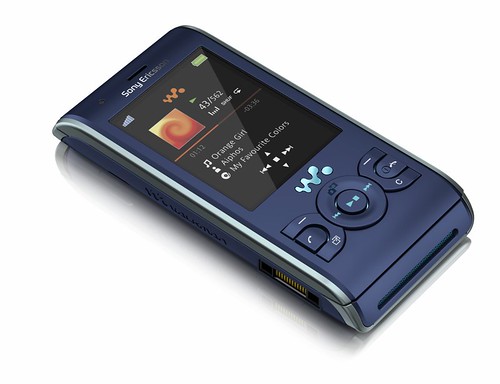
It's promoting a new phone, the Sony-Ericsson W595 - so the youtube element is not only relevant (you can upload direct to youtube from the W595) it's also a helpful viral aside.
Technically, some may be interested to know the creation of this effort has involved mashing-up apisfrom youtube, googlemaps AND facebook.
And importantly, it uses not only the silo'd social networks (in this case facebook) but also email - the most ubiquitous of all the social connectors.
Yeah, yeah, yeah but it's also a bit of fun people can have together at Halloween. We've given people, as Mark Earls would say, something they can do together - we've made the human interaction element the important element.
Have fun with it. Pass it on if you think its cool and think someone else will do to. Here's mine, below.
BTW I'm not 43 - yet! But I am odd.
I've just added a new post to /Message - the full 35minute version of the Clay Shirky interview regular visitors to this site will have seen sliced up over the past week or so.
On /Message you can get the whole thing in one hit AND download it all for playback on your pc/iPod etc.
In part two Clay explains why he thinks email is the most effective tool for group-forming (and therefore for influence on social and political change) right now. He describes the impact its 'dull' ubiquity is having on the US Presidential elections.
And we talk about the future of mass any-and-everything (though particularly broadcast TV) with reference to solidarity goods (value gained from shared experiences). Clay reasons that far from dumbing down, the fragmentation of the internet is demanding increasing quality from its hits.
When media and channels were scarce you got a share in the value of solidarity goods simply for showing up. Now you only get a share by being truly excellent.
Watch the video below. Buy his book here. See him speak here.
I had the great good fortune to meet and interview Clay Shirky (author of Here Comes Everybody) yesterday at Incisive Media in London. He was in town for the AOP conference among other keynotes - and meetings with Government Ministers, no less. So to get a one-to-one for any length of time was fantastic. We had a scheduled 20mins... but things got interesting so we stretched it...
The result is the video you see below. At least, that's part of the result. It's part one of seven. The interview lasts over 35mins in total and Clay answers not only my questions, but all those put through comments on this blog or via twitter over the last few days.
I'll be adding the next six parts over the next week or so - and for those who can take it all in one go - I'll add the full and unedited (and higher quality) version to google video before too long (youtube limits me to 10mins a pop, anyway).
In part one we talk about Clay's journey - what is in his background that makes him place the human element so high in his consideration of group forming network theory. (image by matlock via flickr)
And the new ways value are created in self-forming communities of purpose leads us to Clay's fascinating analysis of what the bankers did wrong and what they can learn (how social capital mitigates risk) from reconnecting with humans.
I've been playing with qik recently as anyone who has caught any videos from me will know.
Qik allows you to broadcast live streaming video from your mobile phone. There's usually a small delay before it'll appear in my live channel (see latest from the channel below) but it's close to live.
This evening from 6.30pm (UK, BST) I'm going gliding - and I'm taking my mobile and qik with me. I managed to broadcast on just a couple of bars of 2G signal recently from a forest in Norfolk. I reckon hundreds of feet above the Cambridgeshire countryside should offer an even tougher challenge! Here's what I've written about qik before.
UPDATE The rather disappointing outcome appears below:
Just been introduced to Viddler.com by colleague Andy Donovan and at first gawk I love it. What viddler allows is the opportunity to move video from poor man's TV to the rich media it so often claims to be. With Viddler you the (community formerly known as the) audience get to participate. You get to tag the video with your comments which can appear in a timeline as the video plays. In short, it enables the conversation at in a low-barrier-to-entry way. You don't have to record a video response, edit it and upload it. You can simply comment - just as you might on a blog. Neat.
1. At least rate and comment on any video content (an absolutely minimum requirement). 2. Insert your comments as text overlaying the video at the point they were relevant (subtitles if you like). 3. Add your comments as video at any point you choose (upload a quick clip from your phone or webcam) 4. Insert other peoples videos to make their or your point 5. Add an image, or draw a picture, if that's the way you prefer to 'talk'. 6. Change the soundtrack to one of your own devising. 7. Connect to discuss in real time with other (like-minded) people watching it right now (youtube offers this without the brackets...) 8. Some other cool stuff you've just thought of (post as a comment!) 9. Save it all as your own version to post or share as and where you wish.
I'm scurrying over to Cork first thing Tuesday morning (March 4) where I'll be presenting a paper at BlogTalk2008 at 10am.
Streaming live video is available from the event. This is the link. If it's all working, I'll give you all a wave!
Below: My slides: Reed's Law and how multiple digital identities make the long tail just a little bit longer. Best viewed while reading the paper I guess (which you can download on from under 'white papers' on the left-hand navigation.
I'm a bit of a fan of Mippin. It ticks many of my 'moon-on-a-stick' requests for a mobile internet play which will enable the long tail. And Refresh Mobile CEO Scott Beaumont is good enough to keep me up to date on developments. The latest supports video found in RSS feeds. The blurb claims: "Refresh Mobile (makers of Mippin) and blueapple.mobi Partnership Creates Seamless Video Service Connecting Video in RSS Feeds With Mobile." "...the service will convert and distribute flash-based RSS video content of any publisher, from international publishing companies through to independent bloggers. The process will see video transcoded automatically to the .3gp mobile standard in real-time for viewing on users' handsets." What I'm not sure of without testing is whether that means it supports video I upload to this blog AND play videos referenced on this blog (eg the copy and pasted youtube code which makes it appear the video is on this blog). So here's the experiment. First (example 1) I'll upload a video of my own to this blog:
Next (example 2) I'll copy and paste in some code (also my own, from Brightcove) and see if Mippin also supports that. Frankly, I'll be surprised and amazed if it does.
If it copes with number 1 and 2 then there's no requirement to change our approach to using video in order for our reach to extend on mobile. However if example 1 works and 2 doesn't then, for those who want to give the fullest experience on mobile, we'll have to stick to ONLY uploading video, rather than copying and pasting code. And that will change where we upload our video in the first place (why put it on youtube if you then have to go and upload it to your blog, too.) Might be good news for the likes of VodPod, because you'd upload once to your blog/site then use something like the in browser ease of VodPod to share elsewhere. Apologies, all this is guesswork until we actually see the result of the test... you are currently walking through the experiment with me! Stand by. I'll be updating soon. Right then, so far not working. Scott has come back and explained why (see comments below). My example 2 uses Brightcove (and not yet supported, read the comments for those that are). Bit concerned that the Blogger uploaded one (example 1) ain't working either on my mippin site (go to mippin on your mobile - http://mippin.com - and search for 'fasterfuture' on there, find this post and you can join in as we go!). Scott does say youtube and several others are supported. So... Here's example 3, David Ogilvy coming at you from Youtube with a clip that wouldn't have seemed out of place in the first series of Lost.
And Eureka the youtube one does indeed work, and very smoothly too. Congrats to all of you at Mippin. It does indeed play videos simply referenced in the rss feed from this blog (ie youtube code). I'm told the Blogger ones should be added fairly soon... Brightcove may take a little longer.
When the Blogger (and eventually) Brightcove ones are live that'll mean any publisher can extend the reach of not only their content and pictures (via rss) onto mobile via Mippin, they can also add video. An impressive and important addition.
I was on hols when the embargo was lifted on the news about EyeVibe - which was a pity because I was itching to share having been given the full grift by YoSpace CTO Dave Springall over lunch a week or so ahead of the launch. I know the team have been working exceptionally hard for a considerable time to do the deals that make this work - and to create the technology.
Disclosure; YoSpace is (now) owned by Bauer, the company I work for and Dave and meet and speak on a semi-regular basis.
So, if you've missed the news, EyeVibe is, at its simplest, the combination of 3 and O2's SeeMeTV and LookAtMe - both mobile video ugc social networks built on the YoSpace platform. Users create the content, other users pay to view it. The creators get paid per view.
Overnight it becomes the single biggest video-based mobile social network in the UK. Not only because it combines too very large ones, but also because this is available off portal, too.
Even if I didn't play for the same team, I'd still be saying this is fantastic. It's fantastic because:
1. It tears down the wall between communities. 2. It offers the opportunity for social networking to experience the same growth as texting and picture messaging experienced when the operators opened access across networks (because they tore down the walls).
Tearing down those walls is important for all sorts of reasons. As I've posted previously:
"...open will always beat closed. So here's another reason: the value of random friends. "You'll have heard of small world theory, or six-degrees of separation. The reason these are possible is because random friends are introduced to networks - people outside of your usual experience. For example, someone you meet on holiday, or at a party - who opens up a whole series of new connections for you.
"These do not happen when you are in jail...
"Random friends are the parts of your network which allow its value to grow exponentially (see Reed's Law). Remove them and your network has considerably less value."
Now any UK mobile subscriber with a video-enabled handset can share and earn cash from their mobile video clips in one community, no matter which operator they are with.
For the first time members can invite ALL their friends to be part of the same community.
Story so far? Since the launch of SeeMeTV and LookAtMe!, users have paid for more than 32 million video downloads earning a combined total of over £800,000 for users who have submitted more than 60,000 clips. The services currently generate 28 million mobile page impressions per month.
Towards the end of last year I had the pleasure of hosting a seminar and workshop on blogging (Never Mind The Bloggers). And while it was only open to employees at the company I work at, both our speakers - Alan Moore and Euan Semple - were happy to share their presentations with you on this blog, too.
The size of the files and the everyday demands on colleagues' time has meant it's taken until now to make those videos available. Big thanks to Angus Farquhar for attending, filming and making available the videos you will see below.
Video 1: David Cushman intro's the day:
Video 2: Introducing the speakers:
Video 3: Alan Moore:
Video 4: Euan Semple
Video 5 Q&A (excerpt... until the card filled up!)
In previous posts I've wittered on about the how the 'rich media' fantasy of video leads us all too often back to being petit broadcasters - complete with a nasty dose of TV envy. And I've bemoaned the fact that there is nothing available in video so far which replicates the ease of ability for all to contribute, with the low technical barriers that blog or forum-style postings allow. I'm coming to the conclusion that the most helpful definition of your digital trickery is not how 'rich' it is but how conversation enabling. Twitter seems the most conversation-enabling network we're currently witnessing. No coincidence that it's heavily and robustly text based (though you can point to video, images, sound and all that 'rich' goodness of course). Seesmic (which I have only just signed up for) appears to be the best stab yet at the video equivalent. That was my initial thought - and one which Ivan Pope - a longer time user - confirms. "It is like Twitter with video, has its own community feel, very addictive generally. See you there!" What I like about this is that it enables real-time conversation, through video. It has its issues, not least of which is the fact that no-one dare leave it on for long for fear of burning out their harddrives - which means an inevitable lean towards asynchronous communication (ie not real-time and same-time). Early days.
Anyway. Just to crystalise this easy (technical low barriers) -hard (technically high barriers), broadcast-conversation landscape, here's a very simple (and terribly drawn) graph (see above).
I reckon the closer to the top right corner, the better the fit with the networked world.
A traditional TV channels would sit in the bottom left corner. Twitter is quite close to the top right - as are all the best social networks.
Where would you place your favourites or what you are working on?
Bonus: Ivan Pope on how 'everything is falling apart' and coming together again. Apologies for the out-of-synch sound. Think it's part of the joy of mp4 on my N73!
I was discussing video with a colleague this afternoon - and my fear that all too often our desire for editorial control leads it to becoming a kind of poor man's TV - a broadcast tool which makes it poor media rather than the rich media it gets lazily labelled (I posted about this unfortunate TV envy late last year.). This video, shot by Jeff Jarvis in April 07, makes the point rather well. It features Michael Rosenblum at the RTNDA conference. Nicely put Michael. Not the highest quality - but monumentally relevant - and that is very much the point. I'm not so sure about the $100,000 journos, but all those who seek to retain centralised control would do well to listen to the reference to ebay towards the end of this clip.
And you can comment on it - and respond with a video of your own (at least on youtube, where it's from).
Still, I'm waiting for a set of tools to make video truly rich. But in the meantime, handover control to the edge.
The rate of change is so rapid it's difficult for one person to keep up to speed. Let's pool our thoughts, share our reactions and, who knows, even reach some shared conclusions worth arriving at?