As we come to terms with the news that UK schools are about to close for what could be six months, I find myself reflecting on how lucky we are.
Imagine if this had happened before the mass adoption of the web?
When I was at school there was no internet. A pc was a rarity. Mobile phones unheard of.
I would not have been able to order what I needed online - and there certainly was no opportunity to experience e-learning, virtual classrooms or any of the other digital innovations education has been dancing with, but will now have to adopt on a mass and 'business-as-usual' scale. Imagine facing the next six months without any of that.
Of course, the same is true of business.
The web allows us to continue to trade, to continue to meet and do deals, to collaborate on ideas, concepts, prototypes, launch strategies and projects of all kinds.
We are exceptionally lucky that Covid19 comes at a time when we have the technology to physically self-isolate WHILE socially connecting. This is the only time in history that has been possible.
The web has given us a critical advantage vs this virus.
We can continue pretty much every aspect of trade and education. We can maintain our economic progress. We can do it while improving our relationship with our planet.
All we have to do is get over the shock and get used to a few new tools.
We can do this.

The further ahead you look - the faster you go | davidpcushman AT gmail.com | These are my views and my views only.
Showing posts with label internet. Show all posts
Showing posts with label internet. Show all posts
Wednesday, March 18, 2020


Thursday, December 31, 2015
50 years of me
 It's my birthday today. My 50th. I know lots of people do their review of the year or predictions on December 31. I'm going to have more of a wander down memory lane. 50 years makes you pause and reflect. Those of a certain age may enjoy the reminiscences...
Change is the constant of the last 50 years of course. Isn't it? I wonder if in fact it may have been a story of massive technological change in the very earliest years of my life followed by a frenzeid four decades of commercialisation of that technology.
In the first five years of my life we put a man on the moon, the first supersonic commercial jet liner took off for the first time (a feat NASA scientists regarded as a greater technical achievement) and the first two nodes of the internet were connected.
Actually all of these things happened in 1969.
Compare this with the life of ordinary folk. I went to school, aged 4 and a bit, probably in 1970. Occasionally we would all be called outside to watch as Concorde flew on test from the relatively nearby RAE Thurleigh (I grew up in Bedfordshire, UK). Hi-tech huh? Inside we had blackboards and chalk. Even in my junior school the desks retained the holes where inkwells used to be held.
While I studied for an O-level in Computer Studies (writing code, in BASIC) the only time I saw a computer at school was in those o-level lessons (around 1980-82). We had the first rubber keyboard Spectrums.
At university I typed not on a word processor, but on a manual typewriter. It wasn't even electric.Research meant the library.
I owned a home pc before I got exposed to one at work. Mine was a Spectrum. ZX-82 (please correct me) I think - proper keyboard, playing games loaded by cassette player. Copying was easy.
I worked in media and over the course of a decade we moved from typing on three layers of paper separated by carbon paper (to create copies) to Macs with the power of 'super computers'. Lots of folks lost their jobs.
By then (early 90s) the internet was becoming a thing. I got internet access at home before I did at work. But boy was it slow. Even so, internet banking seemed infinitely preferable to the High Street alternative. In the next month or so I'll be taking delivery of a new broadband offering up to 500mb. Back then I had 512kb.
This past Christmas my guestimate is that 90% of my spend was online.
When I was born, the second world war was just 20 years behind us. We were reaping the technological peace dividend.
But since 1969 what giant leaps for mankind have we made?
Put it like that and smartphones and tablets can be easily dismissed as ways of commercialising the internet.
Medical advances have been spectacular - but we are only generally exposed to these when they become a matter of life and death to our nearest and dearest. We don't have a cure for cancer, nor for many other diseases.
And most painfully of all, despite the massive resources we have accumulated, the brilliant minds we are capable of connecting, we have not solved the problem of poverty. All the data suggests that, even in developed countries, the gap between rich and poor is growing.
Our great technological leaps have given many of us significantly better, more connected, healthier, wealthier lives. That has been the great achievement of the last 50 years.
1969 showed us the way: Neil Armstrong's pictures of the Earth showed us we share a world. The internet allowed us to make that connection real. 1969 gave us the tools. Perhaps 2016 could be a new dawn of intention?
So my birthday wish is that the next 50 years are focused on making significantly better, more connected, healthier, wealthier (and happier) lives for ALL of us.
Have a great New Year.
Thursday, January 05, 2012
The web: More than an enabler of rights
 Vint Cerf’s assertion that the internet should not be considered a human right troubles me.
It troubles me because it seems to be on the wrong side of fiddling with semantics – I don’t really care if the web is only an enabler (Vint’s point) – it’s such an effective, inclusive, far-reaching, all-engaging enabler that those excluded from it are as cut off from what matters to them as those cut off from air or water.
Access to clean air, clean water – these are human rights. And always have been.
But if the authorities only make that available to you in oxygen tanks in central London and bottled water at your local depot (and both at a price) you’d be right to assert that the weakness of the enabling of these rights so limits them as to make them invalid.
To argue that one can distinguish the enabling of a right from the right itself offers too many get-out clauses to those who would control from the centre.
"You're perfectly free to protest. Just not in public."
Our social connection to others – freedom of expression and assembly, are just as fundamental to our well-being as humans as other rights; to our ability to be human. The internet enables this on a species-wide scale. No other form of tech has enabled this. This is different.
To be cut off from this is different. It is to be cut off from a species-wide reassembling of the way we live that billions of others are taking advantage of. You have a right to be part of this.
And while the technology used to enable this should not matter, the reality is that it does. Indeed in the case of the Arab Spring it could be argued that the use of the ‘enabler’ (the social tools and tech of mobile phones and social networks supported by the internet) led to the assertion of new human rights where previously they had not be allowed any form of expression. The Arab Spring is not where this ends. It is merely showing which way the wind is blowing - to a self-organised future in which participation is everything.
There is little point in saying we all have the right to participate and then expecting some to do this by sending a letter in the post.
When authorities attempt to control the enabler that the web is, they are actually restricting the right. They know this. It is why they do it.
Let’s not give them any wriggle room.

Tuesday, September 14, 2010
Beware the survey of the thing they haven't experienced yet
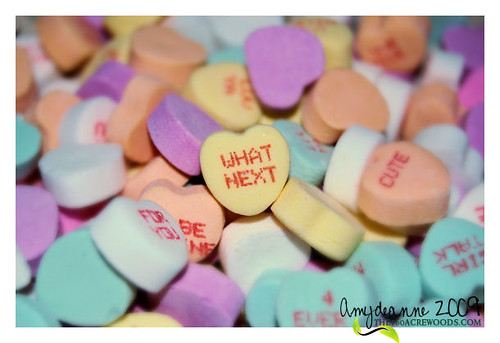 People are notoriously bad at telling you what they want when they haven't yet experienced the thing you think they might like. Apple's Steve Jobs is always banging on about it. It's summed up as 'people don't know what they want.'
Which always sounds, well, insulting and patronising. (image courtesy amydeanne)
This (from December 2007) illustrates the point:
"Am I missing something? The headlines (Consumers Prefer GPS over Mobile Internet/GPS edges out internet as desired mobile feature - study) tell us US mobile phone users would rather have a GPS-enabled phone than a mobile-internet enabled one.But people are exceptionally good at shaping a concept to fit their fitness landscape. In fact, they always place a higher value on something they have had input in creating (which brings oodles of peer-to-peer marketing value).
Translation: I'd rather have a sat-nav than be a live, real-time connected node on the network.
What kind of questions resulted in that?
Q"Would you like to know where you are? Or would you like to know any and everything?"
A"Oh, I'll take where I am thanks."
Uh?
In order to engage them you have to provide the 'thing' to talk about. That becomes the social object; an integral part of the platform-thinking approach. (discover/bring together/surface/work together to fix).
Give them something that interests them, that engages them. Then they'll help shape it. And if you can give them something to experience - then the 'survey' of their feedback will be all the more effective.
That thing could be a workshop in an interesting location, with physical interaction and decisions made, or a beta site with direct links to the developers, or prototypes to add to and delete from, or....
As long as it's something around which discussion-leading-to-change can happen, the social object will be doing its job. And the discussion is key - the process must be social not silo'd.

Thursday, September 09, 2010
The web and the silo of the self
 Our digital tools of connection and discovery - the web and its reliants - are not here to make our lives faster.
Whenever it feels that is what they are delivering this is more a result of the sometimes over-stimulating abundance of choices they uncover - and our fear of missing out on something.
That abundance has always been here. People who face the same issues as you existed before the web enabled us to discover each other rapidly and effectively. Sources of information we could refer each other did too.
The existence of the abundance is not the cause of our occasional feeling of being swamped by opportunity - or information overload, as the less-connected world would have it. (image courtesty eggman)
Enabling the discovery of all our available, relevant connections is also not the cause of the 'drowning' sensation.
Some of the solution is effective filtering.
But the greater key is attitude towards our personal responsibility for knowledge acquisition and retention.
In the silo'd world of one-to-many channels (broadcast/mass production) we felt the pressure to acquire and hold the knowledge we needed in the silo of ourselves.
In the many-to-many networks of the web we are allowed a more distributed view of knowledge.
Humans who share lives each hold composite pieces of a shared memory - which can be readily assembled into a greater and agreed whole.
Mark Earl's book Herd describes this. You will recognise it in the experience of swopping stories at a family get-together. Each member of the group recalling a different detail of the same story - completing the jigsaw for all to see.
The web offers a similar opportunity for knowledge - with each node retaining for recall important pieces of a billion jigsaws; nodes being people, documents and things.
For an individual to know everything at once is an impossible godlike dream.
To know that everything known is knowable by us all is a reality of the web.
Those feeling swamped should stop setting themselves impossible personal targets and start accepting their part in our collective knowledge bank.
What you know and are willing to share is more important to all of us than what you don't.

Thursday, August 19, 2010
Why the web will stay complex

Is it all bad if someone at the centre does all the building? Our Governments deliver our road systems - and no one fears for our liberty as a result.
Expanding on that analogy, (and in the case of both Places and Like this is obvious) perhaps Facebook is simply paving over - making up to a 'better' standard - routes which others established over time. Loads of us walked that way so we flattened a path through the long grass. Facebook paves it over.
Trouble is when the road network becomes 'improved' to a certain standard it also becomes subject to governing rules and restrictions. And we have to argue with the powers-that-be about where the next road should be built or expanded.
Is the web, as some suggest, being 'killed' in favour of big, simple, easy-to-use, one-size-fits-all stuff like Facebook or iphone and ipad apps? Big tarmacced roads (god forbid; information superhighways).
I suspect not. And I suspect not because while space in the world of the atom is limited - as are the number of locations requiring connection via roads - there are no such limitations in the digital world. No limits on the number of groups that can form (provided more nodes keep on coming along).
Facebook is a standardization of getting from A to B. It makes life easier. Lots will indulge. We like easy. It's a one size that fits many.
But it's not as interesting as going your own way. Creating niche response to niche needs. And actually, as a species (like most others, cats excepted), we like interesting more than we like easy. Cite any number of experiments Dan Ariely references in his work.
I'm sleeping safe. Facebook doesn't get to be the web this year, next year or any other year.

Thursday, October 29, 2009
Look how busy WE are
Thursday, May 07, 2009
Something to talk about vs something to do together
This is brilliant. No, really. A fantastic bit of creative from the ad industry. I do urge you to watch it. You'll be entertained.
And if you watch it in the context of the Vimeo takeover I first saw it in, you may even rave that this is the 'future of internet advertising' or 'pure innovation' - judging from the 367 comments in the last 12 days.
It works on so many levels.
Trouble is, it doesn't work on the one that counts.
Honda Insight - Let It Shine from Honda on Vimeo.
ok. If you saw the sheep thing from Samsung (at least I think it was Samsung... and we'll come back to that) you might not think the content is that much of a breakthrough.
The point is it is really well executed and a neat idea and people are talking about it. But almost every one of the comments is about the wonder, impact and technical achievement of the advert (and a broadcast advert it most assuredly is, no matter how 'interactive' some may describe it. There ain't no two-way flow going on here).
Anyone mention Honda in all this? Honda Insight? Hybrid Prius rival? er... all quiet there.
Well... all quiet apart from a smattering of relatively negative stuff. For example:
A big spend on a neat piece of entertainment. And?
And for many that's job done. But the connection between something memorable and the behaviour changing thing they'd like you to remember has not been made.
I wonder if they may have had more success in this regard by creating not something for people to talk about, but something for people to do together - something truly interactive.
For example: Perhaps a way of creating your own versions of the movie, spelling out your name, drawing pictures that matter to you, so that you might be willing to share your personalised versions with people you care about and who care about you. The result becomes yours to share - not theirs.
It would have been a start.
But greater impact comes when the creative is led by the purpose. And the purpose here is a greener world.
Instead of the broadcast entertainment experience, think of ways of bringing people together to make a greener world which the Honda Insight could make a valuable contribution to. Build from there.
Less shock and awe - more shared and sustained relationships.

And if you watch it in the context of the Vimeo takeover I first saw it in, you may even rave that this is the 'future of internet advertising' or 'pure innovation' - judging from the 367 comments in the last 12 days.
It works on so many levels.
Trouble is, it doesn't work on the one that counts.
Honda Insight - Let It Shine from Honda on Vimeo.
ok. If you saw the sheep thing from Samsung (at least I think it was Samsung... and we'll come back to that) you might not think the content is that much of a breakthrough.
The point is it is really well executed and a neat idea and people are talking about it. But almost every one of the comments is about the wonder, impact and technical achievement of the advert (and a broadcast advert it most assuredly is, no matter how 'interactive' some may describe it. There ain't no two-way flow going on here).
Anyone mention Honda in all this? Honda Insight? Hybrid Prius rival? er... all quiet there.
Well... all quiet apart from a smattering of relatively negative stuff. For example:
‘honda, how about coming up with some real solutions for the obvious problems, instead of this feel good, lifestyle eco shit?’ … totally not impressed by the car.
‘it's baby steps in the right direction - research Honda's FCX for a real life-changing car’
'If your selling point is being environmentally-friendly, I don't think it's a good idea to have a commercial that drives a hundred cars out into the desert just to make a light show.Honda's ad agency has given people something to talk about. The ad is also used for TV (at least, it has been in the UK). So make your guess about the response to the TV ad too.
A big spend on a neat piece of entertainment. And?
And for many that's job done. But the connection between something memorable and the behaviour changing thing they'd like you to remember has not been made.
I wonder if they may have had more success in this regard by creating not something for people to talk about, but something for people to do together - something truly interactive.
For example: Perhaps a way of creating your own versions of the movie, spelling out your name, drawing pictures that matter to you, so that you might be willing to share your personalised versions with people you care about and who care about you. The result becomes yours to share - not theirs.
It would have been a start.
But greater impact comes when the creative is led by the purpose. And the purpose here is a greener world.
Instead of the broadcast entertainment experience, think of ways of bringing people together to make a greener world which the Honda Insight could make a valuable contribution to. Build from there.
Less shock and awe - more shared and sustained relationships.
Monday, December 22, 2008
Perspective
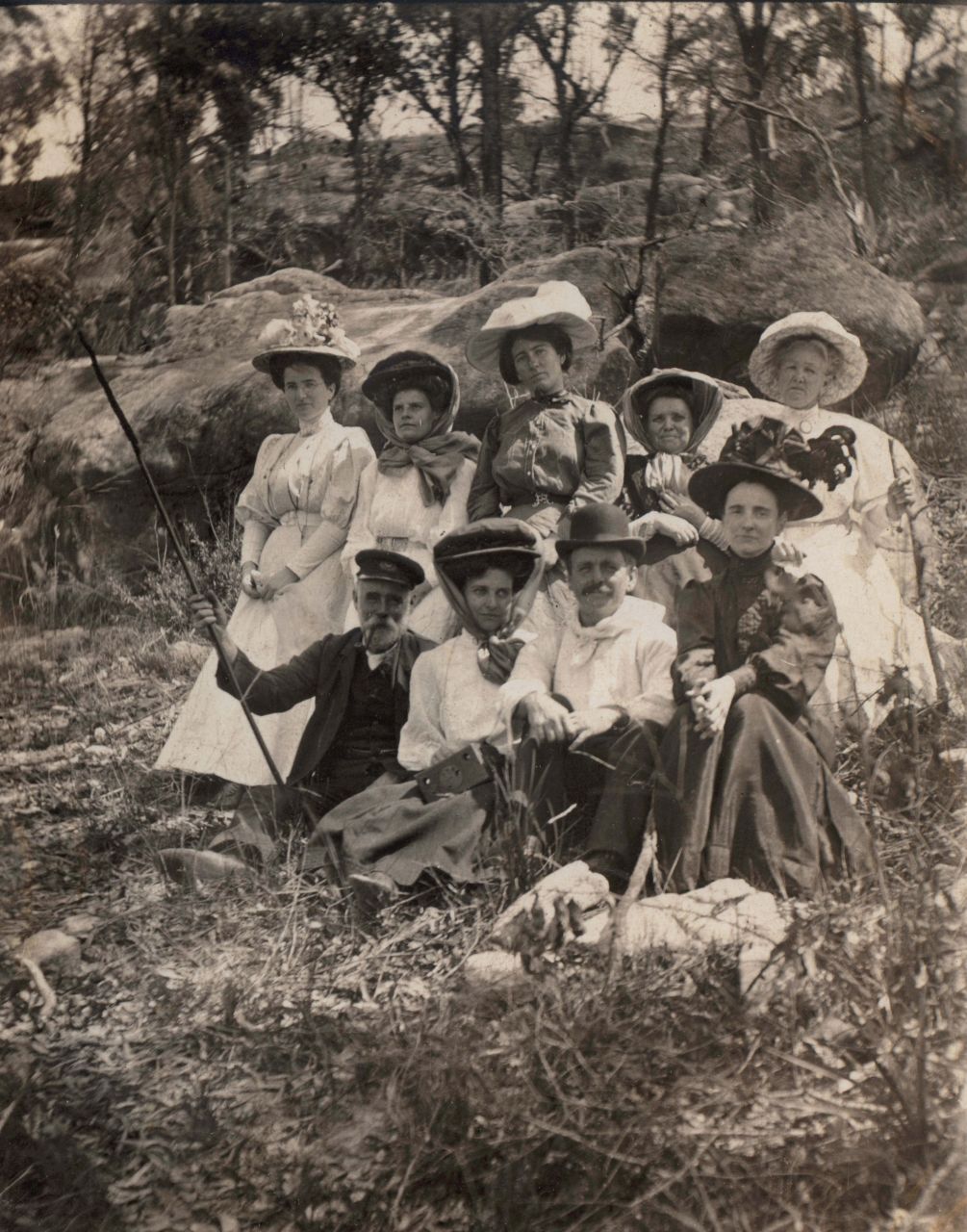 My four year old daughter met an old lady yesterday. Very old. We sang her happy birthday Happy 103rd birthday.
She was born before the first radio programme was broadcast. She was 13 at the end of the first world war.
Wonder what she'd have predicted for her life back then?
The flu epidemic which killed more than that first world war? The great depression? The rise of Hitler (she is Austrian) and the loss of most of her family in Auschwitz?
A second world war?
A new life in England? The Cold War? Martin Luther King? Jfk?
Another new life in Australia? Deciding to move back to the UK alone at the age of 93?
The Internet?
I wonder which she regards as the most significant event in her life time? (image: 1906 picnic, courtesy)
I wonder what we will in our own?
Monday, December 08, 2008
ISP censorship reveals fragility of our connections
 Looks like a number of UK ISPs have been 'persuaded' to censor your internet.
In quick summary, a series of UK ISPs have bowed to pressure from the online watchdog the IWF (a quango) to block access to a wikipedia page about rock band The Scorpions. The row is about an image from one of their album covers - of a naked girl.
From the Beeb: "...the IWF, which warns internet providers about possible images that could be linked to child abuse, said it had consulted the police before making its decision."It's not clear if the ISPs or the IWF had even spoken to wikipedia before taking the action it did. After all wikipedia has (controversially) frozen pages in the past when libel issues have emerged. And surely child abuse is at least as big a concern to all parties as libel?
The ISPs have not just blocked the picture in question, they've blocked text and, wikipedia says, blocked many peoples ability to edit parts of wikipedia. (Image courtesy)
The issue reveals a wider and painful truth we must face:
The internet is created by us, is connected by us. It is ours - but our access to it - our very ability to use it - is not.
While ISPs are run by people who can be threatened with legal action by the centre (Governments and the like) they can be controlled. Mobile operators are already subject to rule after rule about what can and can't be distributed using their infrastructure.
That ISPs have come under so little pressure so far is something of a surprise. The reality is the centre can literally turn off all our access to the web tomorrow. And there's little we could do about it.
While the ISPs retain such power the network is at risk.
Yes, we are the distributors and in the idea of the eighth mass media I claim:
"We are the connections. We are also how the connections are made."
At least, we are when the eighth mass media arrives. What this ISP censorship issue reveals is that it is not yet with us. We don't have as much control over distribution as we'd like to think - as much as we must ultimately demand.
Peer-to-peer distribution requires the means to distribute. And that remains in the hands of the centre.
Only when the distribution itself becomes more distributed itself, a loosely connected network of nodes itself rather than these giant central on/off hubs, only then will the risk to the network be removed.
The eighth mass media requires the free distribution of metadata beyond silos to increase our ability to connect one to another. But one of the biggest silo walls remaining is centralised ownership of ISPs.
I have a feeling we have accepted and tolerated this only as long as the potential power the ISPs holds remains unused.
Examples like today's wikipedia clampdown give us cause for concern and raises questions about how long we'll tolerate this control.
And as we see time after time - people and their connections have a way of finding their way around control.
Monday, August 18, 2008
The networked world can make brands more relevant than ever
Brands risk losing relevance in a networked world - if they continue to apply broadcast, one-size-fits-all thinking to it.
But, by listening, responding and adapting to its group-forming nature, brands can become more relevant than ever.
Chuffed to say the following slidedeck was selected to be featured on the slideshare homepage on Aug 19.
What the network (the internet) is for:
The internet is for forming groups.
The fact that people can use it to organise themselves around shared interests, passions and aims (communities of purpose) at next-to-no-cost, disrupts everything.
People can organise themselves to achieve what they want on a niched global scale.
This has world-changing implications for all forms of mediation - branding and brand messages included.
Three key disruptions:
This 10-slide deck explains how allowing messages to evolve is the most efficient way of transmission in the networked world - and the only way of reaching into the increasingly long tail. It is the right response to life in a complex adaptive system.
Without this reach your ability to achieve scale in the networked world relies wholly on one-size-fits-all quality. That's fine in broadcast mediums. But the network is not a broadcast medium. In networks, where communities of purpose form, relevance wins every time.
The timescale:
The great disruption of the internet has only just begun.
It is only with the arrival of social networks that the majority of users have been offered an easy-to-use interface for accessing the power of the network; group forming (with purpose) on a global scale. When an interface becomes ubiquitous, then significant change occurs. Cite: The telephone.
It is only three years since myspace first clocked more page impressions than google. It is only three years since YouTube started changing the way we think about television.
The great disruption of the internet started just three years ago. You ain't seen nothing yet!
Key Lessons
1. Listen:
Brands are what their users say they are.
Noah Brier's Brand Tags illustrates this in a so-funny-it-hurts (and not in a good) way. Check out your brand now at brandtags.net. There is a UK version too, but data is currently a little patchy. Make it richer, here.
Users tweet about coke, british airways, o2, macdonalds, or anything else you care to name. Search using your own terms at summize.com (twitter search)
Their conversations tell you not only what they think about your brands, but also how, where and when they use them and who they are using them with. They use them as the content that sparks their conversations.
The conversations are happening with or without your consent, on or off your own mediated forums, branded social networks and chat rooms, in every connection between every node. Where people are, they talk. And where they talk, they talk about you.
Some brands are making great use of the new social mediums. Zappos (an online shoe retailer in the US), for example. And David Armano at Logic + Emotion offers a useful reminder of how brands should approach social media (using twitter as his example).
You can't build communities or control the conversation. You can enable. Join them around their campfires. Be prepared to listen, then serve them with things that are useful - things they they will think are cool enough to pass on to others, who they think will think its cool, too. They are best placed to judge this. Not you.
You've got to be joking?
Look on the funny side. Think how jokes are adapted to be passed on. How do you select which gag to tell which person or gathering. How do you adapt it to suit. That adaption = adoption by the next community of purpose.
The business case
Since approximately 70% of purchase decisions are made based on friend's recommendations (according to Forrester) - you have to seriously consider focusing more of your spend on connecting where the conversations are happening and placing higher value on the conversations and the results of those conversations.
Radian6 among other sentiment trackers, can reveal how your brands are being talked about. That's the information gathering phase... But there is a tangible connection between trust and responsiveness, as Jeff Sonstein says.
2. Respond
In the networked world marketing isn't done to them, it's done by them. Think less about where the eyeballs are and more where the mouths and ears are. And think about joining their conversations in real time.
Real time captures the moment of inspiration. "I want to buy X". It is the essence of two of my more simple concepts, the Intention Economy. and Lean-To-Marketing.

Responses that work:
Widgets with personal outcomes.
Widgets that allow users to adapt them to better suit them to the community with whom they choose to share them next, are a brilliant fit with the networked world.
There are numerous examples. One of my favourites was Pampers US campaign last Christmas. It lowered technical barriers to allow any and everyone to mash up pictures of their own kids with a beautiful video and Silent Night message of Christmas peace. And that made it a widget with a personal outcome. Anyone who did it would want to share it with their close relatives, at least. And each of the receipients may like the idea sufficiently to adapt it to include their own children, and pass it on to the next adhoc community... and on it goes. Unfortunately it is no longer available here.
Others include the Simpsonizeme.com (can you see what they'd done there?) which turns your mugshot into a Simpsons version of yourself, to coincide with the movie release. That does live on, in association with BurgerKing.
In each case we create a version for ourselves to take on our journey with us. And in the process it becomes our message to share with our communities.
Mark Earls (author of Herd) suggests "give them something to do together".
The Cadbury's Gorilla's manifold reinterpretations on YouTube illustrate the power of this idea. And here's an important lesson, whether or not Cadbury wanted the network to take its idea and play with it and share it or not, that's exactly what happened. (hint, they aren't in control of the message. They never were).
You can tap into this.
There are three conditions required for a successful widget.
1. A willingness to relinquish control.
2. Toolkits users can play with.
3. Creative users.
We've clearly got creative users. We can make their lives easier by lowering the technical barriers (as Pampers did) and providing tool-kits to make co-creation easier (just as NiN have by providing tools on their website to allow fans to easily remix their work and share the results).
And since that which we create, we embrace, we're more likely to take on the role of marketer on behalf of what we have created, selecting the right communities of purpose to share the outcomes with.
2 & 3 are relatively easy. It's number 1 many struggle with. But without it you're left trying to control a message - trying to dictate where and when and how it will be delivered. And you're not very good at that - at least you're nowhere near as good as the people living in those communities.
This post How We Are Made Great discusses how individually we cannot hope to be in control of turning the flock, how important it is to take a human social approach to changing opinion or behaviour.
In this world even the role of links is challenged (as I discussed in Portability is the new Linkworthy)
They did a great job at discovering people through content.
But we're entering a world in which content is discovered through people.
Here being pointed at is less important than being taken with. Widgets are consumate taken-with enablers.
Going on the journey all brands must make if they are to adapt to survive in the networked world goes more than skin deep. It requires cultural shift, a cultural shift that makes the brand itself a better fit with the networked world. We are in transition - so broadcast models still have great value - but the speed of the transition becomes faster by the day.
Great examples of brands listening to and adapting to the networked world:
Zappos understand that customer service (human interaction) is everyone's responsibility.
Pampers makes your kids the stars Christmas campaign.
NiN make mash-ups easy and shareable.
Where are the Joneses takes Ford to new places.
The Simpsons/Burger King
Itsmy.com (their user-chooses-the-ad model leverages the social graph in a brilliantly simple way).
Spinvox for listening and responding. (and that reminds me of qik's lean-too marketing)
Carphone Warehouse listens... (example of inevitable two-speed culture in a giant?)
Your further examples welcome. Post links in the comments below and I'll add them to the list as they come in.
But, by listening, responding and adapting to its group-forming nature, brands can become more relevant than ever.
Chuffed to say the following slidedeck was selected to be featured on the slideshare homepage on Aug 19.
What the network (the internet) is for:
The internet is for forming groups.
The fact that people can use it to organise themselves around shared interests, passions and aims (communities of purpose) at next-to-no-cost, disrupts everything.
People can organise themselves to achieve what they want on a niched global scale.
This has world-changing implications for all forms of mediation - branding and brand messages included.
Three key disruptions:
- Who gets to create content (control messages)? Any and everyone.
- Who gets to distribute content (share messages)? Any and everyone
- Who gets to control the user experience? The user is the destination now. They control their own A-where-ever journey.
This 10-slide deck explains how allowing messages to evolve is the most efficient way of transmission in the networked world - and the only way of reaching into the increasingly long tail. It is the right response to life in a complex adaptive system.
Without this reach your ability to achieve scale in the networked world relies wholly on one-size-fits-all quality. That's fine in broadcast mediums. But the network is not a broadcast medium. In networks, where communities of purpose form, relevance wins every time.
The timescale:
The great disruption of the internet has only just begun.
It is only with the arrival of social networks that the majority of users have been offered an easy-to-use interface for accessing the power of the network; group forming (with purpose) on a global scale. When an interface becomes ubiquitous, then significant change occurs. Cite: The telephone.
It is only three years since myspace first clocked more page impressions than google. It is only three years since YouTube started changing the way we think about television.
The great disruption of the internet started just three years ago. You ain't seen nothing yet!
Key Lessons
1. Listen:
Brands are what their users say they are.
Noah Brier's Brand Tags illustrates this in a so-funny-it-hurts (and not in a good) way. Check out your brand now at brandtags.net. There is a UK version too, but data is currently a little patchy. Make it richer, here.
Users tweet about coke, british airways, o2, macdonalds, or anything else you care to name. Search using your own terms at summize.com (twitter search)
Their conversations tell you not only what they think about your brands, but also how, where and when they use them and who they are using them with. They use them as the content that sparks their conversations.
The conversations are happening with or without your consent, on or off your own mediated forums, branded social networks and chat rooms, in every connection between every node. Where people are, they talk. And where they talk, they talk about you.
Some brands are making great use of the new social mediums. Zappos (an online shoe retailer in the US), for example. And David Armano at Logic + Emotion offers a useful reminder of how brands should approach social media (using twitter as his example).
You can't build communities or control the conversation. You can enable. Join them around their campfires. Be prepared to listen, then serve them with things that are useful - things they they will think are cool enough to pass on to others, who they think will think its cool, too. They are best placed to judge this. Not you.
You've got to be joking?
Look on the funny side. Think how jokes are adapted to be passed on. How do you select which gag to tell which person or gathering. How do you adapt it to suit. That adaption = adoption by the next community of purpose.
The business case
Since approximately 70% of purchase decisions are made based on friend's recommendations (according to Forrester) - you have to seriously consider focusing more of your spend on connecting where the conversations are happening and placing higher value on the conversations and the results of those conversations.
Radian6 among other sentiment trackers, can reveal how your brands are being talked about. That's the information gathering phase... But there is a tangible connection between trust and responsiveness, as Jeff Sonstein says.
2. Respond
In the networked world marketing isn't done to them, it's done by them. Think less about where the eyeballs are and more where the mouths and ears are. And think about joining their conversations in real time.
Real time captures the moment of inspiration. "I want to buy X". It is the essence of two of my more simple concepts, the Intention Economy. and Lean-To-Marketing.

Responses that work:
Widgets with personal outcomes.
Widgets that allow users to adapt them to better suit them to the community with whom they choose to share them next, are a brilliant fit with the networked world.
There are numerous examples. One of my favourites was Pampers US campaign last Christmas. It lowered technical barriers to allow any and everyone to mash up pictures of their own kids with a beautiful video and Silent Night message of Christmas peace. And that made it a widget with a personal outcome. Anyone who did it would want to share it with their close relatives, at least. And each of the receipients may like the idea sufficiently to adapt it to include their own children, and pass it on to the next adhoc community... and on it goes. Unfortunately it is no longer available here.
Others include the Simpsonizeme.com (can you see what they'd done there?) which turns your mugshot into a Simpsons version of yourself, to coincide with the movie release. That does live on, in association with BurgerKing.
In each case we create a version for ourselves to take on our journey with us. And in the process it becomes our message to share with our communities.
Mark Earls (author of Herd) suggests "give them something to do together".
The Cadbury's Gorilla's manifold reinterpretations on YouTube illustrate the power of this idea. And here's an important lesson, whether or not Cadbury wanted the network to take its idea and play with it and share it or not, that's exactly what happened. (hint, they aren't in control of the message. They never were).
You can tap into this.
There are three conditions required for a successful widget.
1. A willingness to relinquish control.
2. Toolkits users can play with.
3. Creative users.
We've clearly got creative users. We can make their lives easier by lowering the technical barriers (as Pampers did) and providing tool-kits to make co-creation easier (just as NiN have by providing tools on their website to allow fans to easily remix their work and share the results).
And since that which we create, we embrace, we're more likely to take on the role of marketer on behalf of what we have created, selecting the right communities of purpose to share the outcomes with.
2 & 3 are relatively easy. It's number 1 many struggle with. But without it you're left trying to control a message - trying to dictate where and when and how it will be delivered. And you're not very good at that - at least you're nowhere near as good as the people living in those communities.
This post How We Are Made Great discusses how individually we cannot hope to be in control of turning the flock, how important it is to take a human social approach to changing opinion or behaviour.
In this world even the role of links is challenged (as I discussed in Portability is the new Linkworthy)
They did a great job at discovering people through content.
But we're entering a world in which content is discovered through people.
Here being pointed at is less important than being taken with. Widgets are consumate taken-with enablers.
Going on the journey all brands must make if they are to adapt to survive in the networked world goes more than skin deep. It requires cultural shift, a cultural shift that makes the brand itself a better fit with the networked world. We are in transition - so broadcast models still have great value - but the speed of the transition becomes faster by the day.
Great examples of brands listening to and adapting to the networked world:
Zappos understand that customer service (human interaction) is everyone's responsibility.
Pampers makes your kids the stars Christmas campaign.
NiN make mash-ups easy and shareable.
Where are the Joneses takes Ford to new places.
The Simpsons/Burger King
Itsmy.com (their user-chooses-the-ad model leverages the social graph in a brilliantly simple way).
Spinvox for listening and responding. (and that reminds me of qik's lean-too marketing)
Carphone Warehouse listens... (example of inevitable two-speed culture in a giant?)
Your further examples welcome. Post links in the comments below and I'll add them to the list as they come in.
Monday, July 14, 2008
Blogs dead? Who cares? Ubiquity of Connectivity is what matters
The eighth mass media is not about tools. I care little who says blogging is dead or who claims microblogging is the next big thing.
The eighth mass media is where:
we are the connections and the way the connections are made; beyond silos. It needs tools but it isn't made by them.
It's the direction we're headed in. The sixth and seventh medias (internet and mobile) are helping us on our way.
How we choose to connect, in which silo or with which tools, is less important than that we do connect - and, crucially, as widely and instantly as possible. Blogs are quite good for this. They are considerably less silo'd than your average (what we traditionally think of) social network. Don't write them off just yet.
More importantly Hugh refers us to one of Clay Shirky's more oft-repeated lines (my emphasis):
"Yes, again, it's all about what Clay Shirky said four years ago, in a wonderful interview he did for Gothamist:
"So forget about blogs and bloggers and blogging and focus on this -- the cost and difficulty of publishing absolutely anything, by anyone, into a global medium, just got a whole lot lower. And the effects of that increased pool of potential producers is going to be vast."
Amen to that. We all have cheap, rapid, easy ways of sharing our metadata. That's what publishing has become. Publishing for all. Advertising for all.
We can all share content. Content is the conversation starter, conversation is where ideas turn into action, action is where value is created.
Now we can all share in sharing this. We can all share ourselves.
That is what changes everything.
In some ways the eighth mass media is also the first (as J_Mac pointed out in a comment on the original post).
Alan Moore and Tomi Ahonen's work on Mobile as the 7th mass media lists them thus:
1. Print
2. Recordings
3. Radio
4. Cinema
5. TV
6. Internet
7. Mobile
The eighth is where we are moving towards: We are the eighth mass media. But we were of course always the first, too.
The difference between the pre-mass information age and the post mass broadcast age is speed of transmission and scale of spread both enabled by the ubiquity of connectivity.
We need the sixth and seventh mass medias to enable the eighth.
Tuesday, June 24, 2008
Wanted: Web Producer with a passion for two wheels
Once upon a time I was the editor of motorcyclenews.com
The guys there are looking for some new members of the team and I'm happy to point you in their direction.
Here's the job ad:
"Got a passion for the internet? Love motorcycles? Want to develop your skills with the backing of a major UK publisher working on the UK’s biggest motorcycling website and the world’s biggest selling motorcycle weekly?
"We’re looking for a Web Producer to join the team producing www.motorcyclenews.com. You’ll get to write, edit and publish content viewed by the biggest audience in motorcycling as well as learning how to create, edit and produce multimedia content.
"You'll be bursting with new ideas to drive people to the website and ways to market the website throughout the internet, whether it’s on social networking sites, video sites, or an entirely new way to reach more motorcyclists.
"You’ll also have the opportunity to contribute to the print edition, travel to bike launches and events in the UK and abroad, and even take your motorcycle licence and test the latest bikes.
"Writing or blogging skills are essential and previous experience in website production is preferable, as is a love of all things motorcycling .
"The position is based in Peterborough, UK.
"To apply, please email your CV and any examples of previous work to angus.farquhar@bauerconsumer.co.uk"
Thursday, May 29, 2008
The new media ecology
From http://twitter.com/maratriangle, tweets from a wildlife protection officer working in the Maasai Mara.
"It's funny we were on BBC World News last week and our hits didnt change, yesterday with wired.com our hits went so high."
Tuesday, July 24, 2007
Why Nokia bought a photo and video sharing site
The common sense view of Nokia is that it is a mobile phone manufacturer. Those who look a little closer note that is about as close to the truth as describing it as a rubber boot manufacturer (which it once was...).
The deal to buy Twango (click here for report) is extremely revealing. Nokia is clearly positioning itself as a media company - the definition of which stretches by the day.
The Twango deal (an image and video sharing site with fantastic mobile accessibility) makes obvious sense when you also consider that Nokia is the world's biggest manufacturer of cameras (yep, the ones integrated in your converged handset).
They also believe themselves to be manufacturers of computers (yep, once again, that converged device somewhere very close to you right now).
And the appetite to see themselves as a media company is clarified when you note that Gerard Wiener, is the company's vice president of multimedia mergers and acquisitions.
Make no mistake, Nokia is in the game.
The deal to buy Twango (click here for report) is extremely revealing. Nokia is clearly positioning itself as a media company - the definition of which stretches by the day.
The Twango deal (an image and video sharing site with fantastic mobile accessibility) makes obvious sense when you also consider that Nokia is the world's biggest manufacturer of cameras (yep, the ones integrated in your converged handset).
They also believe themselves to be manufacturers of computers (yep, once again, that converged device somewhere very close to you right now).
And the appetite to see themselves as a media company is clarified when you note that Gerard Wiener, is the company's vice president of multimedia mergers and acquisitions.
A Nokia phone user can snap photos or videos while at a sporting event and have those images integrated with their online photo collection at Twango's Web site. It works the other way too - so you can view images from your pc on yoru mobile (a la Orb).
And all deployed through your (Nokia) Widset for fast internet access perhaps? And with Nokia Adservice ads against it?Make no mistake, Nokia is in the game.
Tuesday, January 09, 2007
Everything changes....
It seems that despite the current rush to jump online, U.S publisher Ziff Davis is listing game portals 1up and EGM among the three divisions for which it is actively inviting offers. While the sites are not critically acclaimed for their standards of journalism, they are popular, and it seems to suggest the firm might be moving away from publishing? More comments around the web, including GameSetWatch.
As noted in David's last post, blogging continues to do well on the internerd. It's probably a little early to dismiss predictions of a fall over the next 11 months, but I don't think any fall will be especially sharp or significant as yet. There's still expansion to come from integrating audio and video blogging, plus social profiles etc, all into one accessible place. And I'd like to see a breakdown of blogging's rises and falls among age groups. After all, there are plenty of middle-aged and old-aged computer users still discovering things like blogging and youtube.
Plus there are more and more outlets for 'Pro Bloggers' to actively seek a living from their writing. Certainly as incentive as a pension supplement?
Lastly, and bowing to internet schizophrenia and pro blogging etiquette, I'm trying to limit my split personalities. Therefore StressedBadger is no more, and Badger Gravling has taken his place. No less of a stupid pseudonym, but it's also my name on Xbox Live, countless gaming sites and forums, and dare I say, imbued with a certain Scandinavian air of efficiency which I'm going to need over the next few weeks. Especially if, as promised, broadband returns to my house at midnight tonight.
Monday, November 13, 2006
The geeks are listening...
It seems like I'm not the only person fed up with the internet schizophrenia which comes as a side effect of uploading images to flickr or photobucket, videos to youtube, and words to Blogger, whilst also managing social networking sites for work and pleasure...
Blake Ross, one of the main guys behind the Firefox open-source browser which has severly dented Internet Explorer's monopoly, has now revealed his new project, Parakey. There's lots of clever stuff behind it, but basically it's an interface which resides on your home computer, but creates a portal for everything you might want to upload. And it's all done in a simple, one-click fashion, rather than sending you off to log into your usual 12 or 13 different sites to manage your online persona.
Read more; http://www.spectrum.ieee.org/nov06/4696.
Subscribe to:
Posts (Atom)
FasterFuture.blogspot.com
The rate of change is so rapid it's difficult for one person to keep up to speed. Let's pool our thoughts, share our reactions and, who knows, even reach some shared conclusions worth arriving at?
