Tuesday, September 14, 2010

Beware the survey of the thing they haven't experienced yet

People are notoriously bad at telling you what they want when they haven't yet experienced the thing you think they might like. Apple's Steve Jobs is always banging on about it. It's summed up as 'people don't know what they want.'

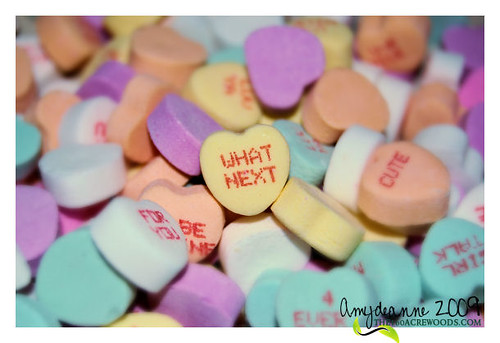
Which always sounds, well, insulting and patronising. (image courtesy amydeanne)

This (from December 2007) illustrates the point:
"Am I missing something? The headlines (Consumers Prefer GPS over Mobile Internet/GPS edges out internet as desired mobile feature - study) tell us US mobile phone users would rather have a GPS-enabled phone than a mobile-internet enabled one.

Translation: I'd rather have a sat-nav than be a live, real-time connected node on the network.
What kind of questions resulted in that?
Q"Would you like to know where you are? Or would you like to know any and everything?"
A"Oh, I'll take where I am thanks."
Uh?
But people are exceptionally good at shaping a concept to fit their fitness landscape. In fact, they always place a higher value on something they have had input in creating (which brings oodles of peer-to-peer marketing value).

In order to engage them you have to provide the 'thing' to talk about. That becomes the social object; an integral part of the platform-thinking approach. (discover/bring together/surface/work together to fix).

Give them something that interests them, that engages them. Then they'll help shape it. And if you can give them something to experience - then the 'survey' of their feedback will be all the more effective.

That thing could be a workshop in an interesting location, with physical interaction and decisions made, or a beta site with direct links to the developers, or prototypes to add to and delete from, or....

As long as it's something around which discussion-leading-to-change can happen, the social object will be doing its job. And the discussion is key - the process must be social not silo'd.
Enhanced by Zemanta

Monday, September 13, 2010

Apology as a tool of revenge

The humanising of communication; the shift from one-to-many broadcast to many-to-many conversation, raises the opportunity for comms and customer service teams to perform damage limitation faster and with greater effect than ever before.
Research published in Dan Ariely's latest book The Upside of Irrationality reveals there is one very powerful tool in your armoury which is currently deployed far too rarely and warily: the apology.
Dan revealed a basic and very simple formula: one annoyance + one apology = no annoyance.
A basic and intransigent unwillingness to accept blame (for all kinds of legal 'brand' and ego-related reasons gets in the way of this. Yet, if deployed unfettered by these self-regulations, an apology can make the problem those rules are meant to defend against go away. (image courtesy tim ellis)
Social media has revealed the truth of this on many occasions. An apology served early and earnestly is a powerful thing in damage control.

But the multiple success of this strategy seems to have confused some.
They get that there is power in an apology but not that the power resides not in the utterance of the apology but in the allocation of blame.
They say things like 'we are sorry you are sorry' rather than 'we are sorry for doing the thing that has upset you'.
It may be (and I'd love to see Dan examine this) that an apology only serves the purpose of tool of revenge if someone is seen to be taking the bullet - accepting they were wrong.

In the moment of one side admitting guilt we get a kick of vindication which allows us to move on with a feeling - no matter how minor - of justice served/revenge taken.

And as Dan also points out - our desire for revenge is an essential (even useful) part of what we are.
If we don't feel justice is served we'll find other ways to take our revenge (which regularly means doing down the product/service provider to anyone who will listen).

My apologies if I made that a little long-winded... ;-)

Enhanced by Zemanta

Thursday, September 09, 2010

The web and the silo of the self

Our digital tools of connection and discovery - the web and its reliants - are not here to make our lives faster.

Whenever it feels that is what they are delivering this is more a result of the sometimes over-stimulating abundance of choices they uncover - and our fear of missing out on something.

That abundance has always been here. People who face the same issues as you existed before the web enabled us to discover each other rapidly and effectively. Sources of information we could refer each other did too.

The existence of the abundance is not the cause of our occasional feeling of being swamped by opportunity - or information overload, as the less-connected world would have it. (image courtesty eggman)

Enabling the discovery of all our available, relevant connections is also not the cause of the 'drowning' sensation.

Some of the solution is effective filtering.

But the greater key is attitude towards our personal responsibility for knowledge acquisition and retention.

In the silo'd world of one-to-many channels (broadcast/mass production) we felt the pressure to acquire and hold the knowledge we needed in the silo of ourselves.

In the many-to-many networks of the web we are allowed a more distributed view of knowledge.

Humans who share lives each hold composite pieces of a shared memory - which can be readily assembled into a greater and agreed whole.

Mark Earl's book Herd describes this. You will recognise it in the experience of swopping stories at a family get-together. Each member of the group recalling a different detail of the same story - completing the jigsaw for all to see.

The web offers a similar opportunity for knowledge - with each node retaining for recall important pieces of a billion jigsaws; nodes being people, documents and things.

For an individual to know everything at once is an impossible godlike dream.

To know that everything known is knowable by us all is a reality of the web.

Those feeling swamped should stop setting themselves impossible personal targets and start accepting their part in our collective knowledge bank.

What you know and are willing to share is more important to all of us than what you don't.


Enhanced by Zemanta

Tuesday, September 07, 2010

The device-centric era is about to end

You could be forgiven for thinking that, with the arrival of the iPad, and the rivals it is spawning, that we are at the dawn of the era of 'tablet computing'.

But I believe we are at the end of the era of device-specific computing.

The move from urls to apps, closed code to open apis, on-device storage to access from the cloud, all points away from the pivotol role of the device (which is where Apple makes its bucks) to enabling connectivity to your services (the realm, currently, of developers, mobile operators, broadband and wifi providers and ISPs).

The thing that smartphones, tablets and laptops (even, Microsoft Surface - remember that?) enable is ubiquity of computing. Always on - always with you. Access is the key here. Very clearly NOT the device.

The device can enable access - but it is only one way of enabling it. Not THE way.

The service and its delivery is king. Not the device.

Apple has allied these two things by controlling what is available in its app store. You have to meet Apple's standards to be allowed to deploy - for your service to be experienced by the user via the Apple UX interface. The service provided, therefore, on an Apple device is good.

That experience can only be as good as the quality of its adaption to the device through which you experience it.

In other words, if a service is as well designed for the device you are currently experiencing it through as it is for an iPhone, then you may conclude it is the device that's delivering that service (hence the growing army of Android fanboys). A well-designed service works brilliantly with the available interface. It isn't degraded by switching from one device to another. It takes advantage of the interface it has to hand.

But holding a device in your hand, having a device at all, may be little more than a hangover from our comfort with the tactile world. The cloud could be accessed in 3D before -your-eyes Minority Report ways.


Or more likely, direct to your mind (remember how far off and way out you thought gestural interface was when you first saw it demo'd on a YouTube video?)

And at that point in the non-device specific future we'll have no one to blame for a crash but ourselves.

Wednesday, September 01, 2010

The joy-joy of ice-cream

Daddy and the nugget monster...
Over the last few nights I've experienced some deeply good things.

The first is the ubiquity of wifi and the extent of real-time social networks that is delivering. The rate of change in one small Spanish resort over the last 12 months in this respect is quite breathtaking (I stayed here in Cambrils on the Costa Dorada exactly 12 months earlier). FourSquare's grid is everywhere, for example.

Laptops are now competing with paperbacks as must-have holiday accessories. Not so many years back the holiday user of a laptop was doing so for 'very important business reasons'. Now the holiday laptop user is doing so for pleasure, entertainment, connectedness - work may or may not be part of that. The divisions dissolve.

I benefited very much from that connectedness. One of my twitter friends noted I was in Cambrils and offered that he used to live there. This resulted in a series of welcome local tips - recommendations of restaurants and ice-cream parlours (to which I will return...). Another who has a place nearby also had advice on what I should see and where I should go.

Trusted peer recommendations. In real time.

Dining out in Cambrils - particularly the harbour - is a pleasure. Here's some things to bear in mind re what I'm about to share.
  • We were visiting this particular restaurant for the first time.
  • The owner had no idea whether we were here for one night or 100.

So (and I hope this will embarrass my daughter some day...) my wife had spotted a particular pasta restaurant (Porto Vecchio) she wanted to try. My daughter (5) was resolutely against this very ancient establishment (17th century I believe) on the grounds that it did not serve chicken nuggets and chips. I suspect it never had in all those centuries.
Well. I thought there may be a middle ground. Would it be possible for the restaurant to source a chicken nuggets and chips from a rival nearby? Mum and dad happy, daughter happy, restauranteur happy?
You know what? They made a quick phone call. And said sure, come on in.
So we all ate together and we all ate happy.


And when we call for the bill the owner tells us the chicken nuggets and chips are on the house.
And I'm even happier.

So I tell you all about it. Imagine that in the average chain restaurant...

There is an interesting business model going on here: making everyone happy. Happy beats going for growth over everything. Happy beats going for the last turn of the screw on profit. Happy wins.

And happy wins for those doing the delivery too. How much nicer is it to have your customers leaving shaking you warmly by the hand? Isn't that a better way to live?

It's not a rarity either.

I was recommended (via twitter) to try SirVent - an ice-cream parlour on the harbour front. And it was truly awesome. The staff were brilliant and informative. The prices keen. The ice-cream just mind-blowing.
SirVent creates a steady stream of happy flowing from its door. It over delivers to such an extent most people leave not just smiling but laughing. And they take that joy with them past all the other Harbour front diners on cones piled beyond high with spectacular looking (and tasting) icecream. I've eaten ice-cream in a lot of good places. And this one wins.
The business has been in Cambrils (so far as I could tell) from the mid 50s. It's family run and has no great ambitions to rule the world. It's hard to be this good, to over deliver so magnificently and service shareholders.

But I wonder if businesses of the kind found on Cambrils Harbour show the way business models could and should move - in the direction of the maximising of joy for all parties vs the maximising of profit.
Are they the kind of businesses more of us want to exist? When there is an abundance of most things, there remains a scarcity of happy.

So, could it be the Temparanillo speaking? Or is there space for successful businesses who place joy first?

Enhanced by Zemanta

FasterFuture.blogspot.com

The rate of change is so rapid it's difficult for one person to keep up to speed. Let's pool our thoughts, share our reactions and, who knows, even reach some shared conclusions worth arriving at?