Showing posts with label fix the web. Show all posts

Tuesday, October 26, 2010

Join 10,000 of us and Fix The Web for all

I'm happy to say I have some small involvement in the Fix The Web campaign that is being launched today - and I hope you'll be able to say the same when you've finished reading this.

Fix The Web is a platform for making the web a better place for all of us by making it a better place for disabled users.

To make that seemingly daunting task a do-able one, we're turning to the crowd to join us in identifying where the issues are and in helping by working together to fix them.

The web is a wonderful place but it places obstacles in the way of millions of disabled people. They are being excluded by unfriendly navigation and other poor user experience issues.

Every person lost to the network halves its value. So it's in all our interests to remove the barriers to participation for as many as possible.

To compound the problem for disabled users, it is often difficult to complain about the offending sites. Fix the Web (http://ww.fixtheweb.net) offers a quick and easy way to register complaints. AND it introduces a volunteer-led process for those complaints to be reported back to website owners to get them fixed.

And there are big financial incentives for site owners to get them fixed - with £50bn-£60bn of spending power in disabled people's pockets in the UK alone.

With Fix The Web process of reporting an offending url is easily done in under a minute:
Fix the Web is an initiative of Citizens Online a national charity, of which I am a Trustee, which campaigns for internet access for all.

Citizens Online believes disabled people should not be expected to fight for a better web alone. So Fix the Web is recruiting a taskforce of tech-minded volunteers to champion the cause and report problems back to web owners. The project aims to have 10,000 volunteers dealing with 250,000 websites within two years of launch.

You or someone you know can help. So please join in or share - or join in and share.

To offer your technical or other support to Fix the Web visit: http://ww.fixtheweb.net. Maybe someone would like to offer to design a logo...

And if you can do nothing more than pass this on, please do that.

Thanks.

Enhanced by Zemanta

Thursday, August 19, 2010

Why the web will stay complex

Facebook's on-going attempt to replace the web (cite link protocol replacement 'like' and welcome 'FourSquare-killer' Places) raises questions we have to consider.
Is it all bad if someone at the centre does all the building? Our Governments deliver our road systems - and no one fears for our liberty as a result.
Expanding on that analogy, (and in the case of both Places and Like this is obvious) perhaps Facebook is simply paving over - making up to a 'better' standard - routes which others established over time. Loads of us walked that way so we flattened a path through the long grass.  Facebook paves it over.
Trouble is when the road network becomes 'improved' to a certain standard it also becomes subject to governing rules and restrictions. And we have to argue with the powers-that-be about where the next road should be built or expanded.
Is the web, as some suggest, being 'killed' in favour of big, simple, easy-to-use, one-size-fits-all stuff like Facebook or iphone and ipad apps? Big tarmacced roads (god forbid; information superhighways).
I suspect not. And I suspect not because while space in the world of the atom is limited - as are the number of locations requiring connection via roads - there are no such limitations in the digital world. No limits on the number of groups that can form (provided more nodes keep on coming along).
Facebook is a standardization of getting from A to B. It makes life easier. Lots will indulge. We like easy. It's a one size that fits many.
But it's not as interesting as going your own way. Creating niche response to niche needs. And actually, as a species (like most others, cats excepted), we like interesting more than we like easy. Cite any number of experiments Dan Ariely references in his work.
I'm sleeping safe. Facebook doesn't get to be the web this year, next year or any other year.
Enhanced by Zemanta

Tuesday, March 16, 2010

The internet simply shows us the way the world actually is

I had lunch with Gregory Lent today. We have known each other digitally for some time. He is the artist responsible for the work on the cover of my book. This was the first time we had met in person.

Greg is a truly fascinating, very warm and very wise man. His twitter profile tells us: 'Emptiness consultant, transformation ecologist, artist, economist ... pro-intelligence'. Not average.

Our conversation, our interaction, resulted in a phrase which Greg seized upon. And on reflection it is one you may also feel is worthy of further consideration.

"The internet simply shows us the way the world actually is,"
...is what I came out with. Or at least something very similar to that.

That could be a very interesting stub. The internet reveals to us how connected we are, how connected we could be, how connected we should be.

It reveals to us our interdependency. It demands we collaborate. You can't participate without others, you can't distribute without others. You can't publish to yourself.
You can't be a disconnected individual node when you are part of the web.

On the internet you can't achieve without others, without one another.

Think how an idea is distributed and evolves online: If it is not passed on from one human to another it goes nowhere. You can't blast it out, it has to be handed one to another. It may go global. It may reach us all. But it has done so at a very human, hand-to-hand scale. From one person who cared enough about it to pass it on to another human they cared about.

The internet makes those connected to it part of a whole. And it makes it a real, tangible thing, in a way we could only believe in or conceive of in the past (the Buddha, as Greg points out, tells us nothing exists in isolation, more recent philosophies introduce ideas such as 'without context there is no meaning').

In so doing, the internet (perhaps more specifically the web of humanity woven upon it) makes real what was once the realm of the transcendental philopsopher.

It makes this truth of our collective self accessible to anyone who chooses to connect. It can be accessed not only through philosophy, but also through action - by learning from connecting.

It makes real what we instinctively know. It provides the evidence.

Imagine the next generation: in which almost everyone understands humanity as a collective, not a series of national, political, language, religious or other silos.

How will that change politics, the law, education, the structure of business... us?


Reblog this post [with Zemanta]

Tuesday, March 09, 2010

Accessibility and your responsibility to the network

By (almost) anyone's count, stats, vibe, gut, whatever... 'social media' is becoming the dominant form of media across the world.

We are collectively and globally spending more of our time taking part in it than we do passively receiving all the other broadcast media put together.

And with that position of dominance comes responsibility.

In large traditional media companies (such as the ones I spent much of my life working in) there is a demand for legal compliance. The big boys sign-up to W3C etc. They also make an effort to make their output e-accessible.

They need to be seen to be meeting the needs of disabled users - whether those users have difficulty, seeing, hearing, moving etc. They see a box they need to tick.

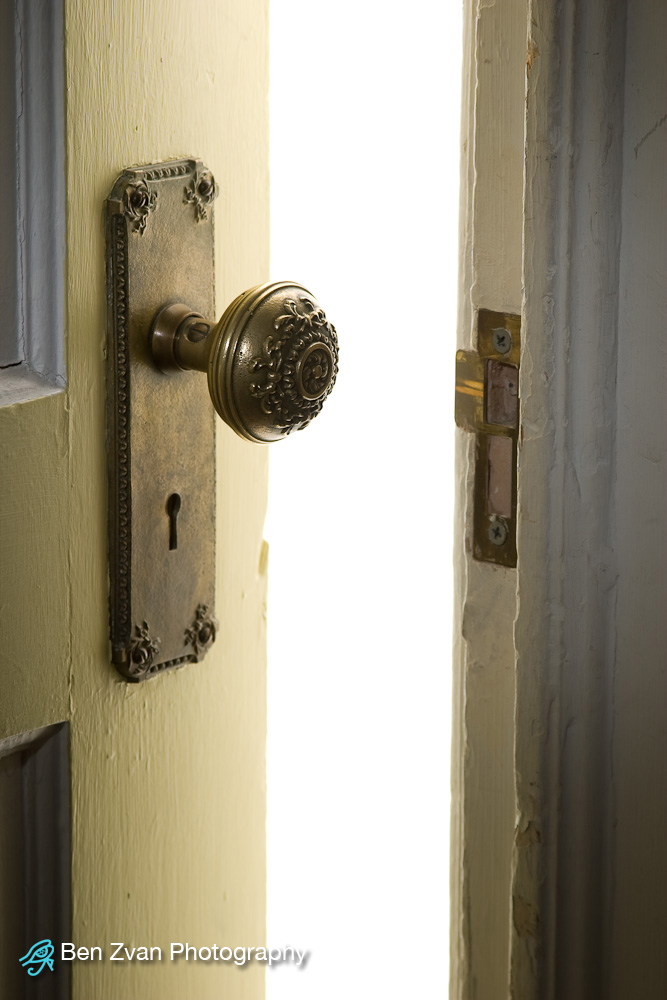
But there appears to be little thought for the needs of these users in many of the most mainstream of social tools, technologies and platforms. (image - an open door - via Ben Zvan)

APIs are of course usually available - which offers opportunities for those with the skills and the inclinations to create tools to improve accessibility. They result in great stuff like Accessible Twitter and EasyYouTube for example, but by no means the whole solution. There aren't enough of them solving the whole range of issues, for a start.

You never see accessibility buttons easy to find on your sign in to Facebook etc. And many a sign-in process includes some unfriendly CAPTCHA processes, too.


I don't have solutions - I do think it's going to take a motivated crowd response to sort out. But I also think, like so much else about a networked world, we all have to take responsibility for each other.

I often say that one extra node on your network doubles its value (that's group forming network theory, folks).

Conversely, if the barriers of accessibility preclude one extra node from joining your network you are halving its value. That's a sobering thought.

Or as Stowe Boyd puts it: "I am made greater by the sum of my connections, so are my connections."

CitizensOnline (the charity which I serve as a trustee) is trying to do something about access to the web - and I'll update you as soon as I'm able on the detail of that. Dr Gail Bradbrook has started a blog on this Fix The Web issue. She's also set up a poll you can take part in:

But in the meantime you could start doing your bit by providing captions for your videos, titling your photographs descriptively and usefully and limiting the abbreviations you use in your status updates (hat tip to Joseph C Dolson)

I'm not going to get this right myself every time. Expect howlers. How do I embed a description in the flickr-hosted image with this post, for example? But I do know it's in my interests - and that of the network - to try.

Reblog this post [with Zemanta]

FasterFuture.blogspot.com

The rate of change is so rapid it's difficult for one person to keep up to speed. Let's pool our thoughts, share our reactions and, who knows, even reach some shared conclusions worth arriving at?