Showing posts with label capital. Show all posts

Wednesday, November 28, 2018

The efficiency obsession - price isn't everything

Ross Hitchenor has written a great summary of a great session on the damaging impact of our obsession with efficiency.

Read it. I do think Professor Roger Martin's call for a switch away from efficiency towards resilience echoes Nicholas Taleb Nassim's valuable concept of antifragility.

And I'm glad that someone from the floor raised the ghost of Marx. Classical Marxist theory maintains that fewer people getting richer faster is a necessary consequence of unconstrained markets. Markets operating with perfect efficiency will always centralise capital. The market's ability to price-in cost should make it the ultimate resource allocator.

But it can only work if the price of each transaction reveals the total cost (including environmental and social impact). 

This requires rapid and insightful calculation and transparency on a global scale - as I wrote in a Linkedin article - Can We Code The Economy To Cut The High Price of Low Cost

Finally we may know the true cost of everything - and even its value.

Wednesday, October 31, 2018

Coding the economy to cut the high price of low cost

Photo by Ray Hennessey on Unsplash

The allocation of resources - and the cost of optimising that allocation - has always been humanity's most profound challenge. Artificial Intelligence may offer our best solution - but only if we are prepared to think globally.

Capital and the market model it sustains has been held up as our best bet for resource allocation for centutres. Yet capitalism and its governance are not necessary states by any means. They are emergent properties of the complex adaptive system we describe as the economy.

One transaction allocating value does not capitalism make. Multiple ones at scale can. Just as a molecule of water is not a wave, let alone a tidal force. These are emergent properties of complex adaptive systems.

The interactions within the system are what creates those emerging properties. Change those interactions and the properties change.

The best modifier we have had to date has been Government intervention - taxes, laws, welfare etc. But complex aqdaptive systems are notoriously difficult to tinker with. Think of the butterfly effect as applied to weather (another complex adaptive system).

So a Trump here or a Brexit there is going to have some impacts, but predicting exactly who, where and what feels the chill wind is a somewhat more exacting science than knowing that change will come.

As our economy has become more connected (and decentralised) it is becoming more anti-fragile. Make no mistake the economy will keep on functioning no matter what governments do. The question is can it be controlled somehow to ensure the emergent properties are desirable for humanity?

As we head towards quantum computing and ever more intelligent automation the point looms at which decisions to allocate resource will patently be better handled by machines.

Our machines will be better able to calculate the global economic costs of each transaction. They will factor for the environment as much as for human need. If we code that in.

But this is going to be a greater race for power than military applications of AI. Those who choose not to take part will be at significant compertitive disadvantage to rivals.

So the pressures to allocate to meet immediate human gratification will be huge. Only through global agreement on total costs will we give our children a chance.

Saturday, September 23, 2017

Wealth blocks the market from meeting need

Via  www.freedomfounders.com/
The moment that demand became conflated with ability to pay, Capitalism had lost its way.
Capital and free markets were meant to be the single most effective way of distributing resources. And they still could be. But we need to reset those markets.
For all the removal of trade and regulatory barriers we have seen, none has had the effect of distributing resources to those who need them, instead we have seen a continued decline of the market's to ability to meet need - and an increase in the reality of demand being conflated with the ability to pay. That means wealth.
Wealth - the storage of the ability to pay - has become the blocker to the market's ability to meet need.
If a resource is scare and you have a store of wealth vs someone who has a deep need, the market gives you the resource. That resource now costs more than it did, taking it further out of reach of the person with deep(ening) need while the wealthy stock pile, only to sell on to the needy at even greater disparity from the market norm in the near future. Your store of wealth - your blocker to the market's ability to flow resources to those of greatest need - becomes greater as a result.
The bigger the great stores of wealth, the greater their ability to add to themselves by repeated distortions of the market away from need and towards ability to pay.
Remember - wealth is not what the market is for. The market cares only that resources are best allocated. (equating to the fairest distribution of wealth to all).
This may be one of the drivers behind alarming statistics such as those from the Joseph Rowntree foundation - that while the UK economy grew 10% between 2008 and 2014, average wages fell by 6 per cent.
A market already distorted by centres of wealth will always continue the flow of riches to those with the greatest wealth - spiralling upwards their ability to pay = more distortion of resource away from need.
To bring the market back into balance requires a shift back towards need. The best instrument we have currently is taxation. Super Taxes on the Super Wealthy could be a start.
But the power of some of the centres of wealth are now beyond the control of Governments. Tax avoidance is a new art form delighted in by a globalised elite.
But perhaps even they are not beyond the democratising power of technology.
We need a change in market conditions - in the way that the complex adaptive system of the market's wind blows,. Perhaps of the kind Elon Musk is venturing on to redistribute some of the wealth held by the world's top 0.1%.
What we need is an instrument which allows the market to supply against need at least as well as it meets demand. Musk's Fintech and the drive towards Universal Basic Income show we have hope of a reset.
While few expect that reset to mean everyone gets an equal share, its essential that steps are taken to support the market in meeting its brief. Without it the spiral to Capital's singularity would seem inevitable.

Monday, July 25, 2016

Is Capital approaching its own Singularity?

Strange times - and so a second post on the economic-societal discontinuity we find ourselves amid.

Strange times when the politicians find themselves out of control (most parliamentarians in the UK wanted to remain in Europe, for example, most 'reasoned analysis of the promises of Donald Trump would have him sidelined by the US Presidential campaign process - and still he comes...).

Strange times - when lies become the gold-standard for political currency and we find ourselves evaluating who to trust in a post truth world?

Who and what to blame?

Spare a moment to consider The Singularity - not of computer technology - but of Capital.

Markets are meant to be the single most effective tool we have for distributing resources. The idea was that resource ends up where people have greatest need for it - supply scurrying to meet demand.

And in pursuit of this perfect market dynamic we have relentlessly handed control of the market to capital. The Bank of England has been out of political control for decades, the free market is almost universally saluted as a paragon of doing the right thing.

But rather than become the ultimate distributor against need, the market has become the single greatest machine of growing capital for capital's sake. It creates volume very efficiently - it has failed to match this with an evolution in distributive capacity. Indeed - it has proven it can't be trusted to do so.

It puts the payouts in the hands of fewer and fewer who simply use their gains to gather more and more, er gains (see what I mean, for its own sake?). What is the point of any individual having more than 10 million dollars in the bank? I'm not saying its morally wrong, or reprehensible, but in a world where millions starve you may have thought that a free (frictionless) market would have the capability to correct itself if its purpose is the efficient distribution of resources.

The reality is it isn't - never has been - at least not as far as 'most people' are concerned. In the past we placed more controls on it. And the wealth to poverty gap was a much smaller one. We had progressive taxation. Now the rich pay a lower % of personal income than the poor.  How does that help distribute resource efficiently? Freedom to choose to spend on what you choose is the argument of the defenders of the rights of capital over the rights of people.

So maybe - just as the predicted point at which computers make cleverer computers than themselves and go into a cycle building ever cleverer machines until they are wiser than all human thought, maybe capital has reached or is rapidly approaching its own singularity - the point at which it generates more and more capital in an unstoppable cycle and without a moment's thought for the humans it was once meant to serve.

In the technological singularity the arrival of the super intelligence (best guesses around 25-30 years from now) heralds the end of the Human Era.

"...the new superintelligence would continue to upgrade itself and would advance technologically at an incomprehensible rate." It would make of us what it chose.

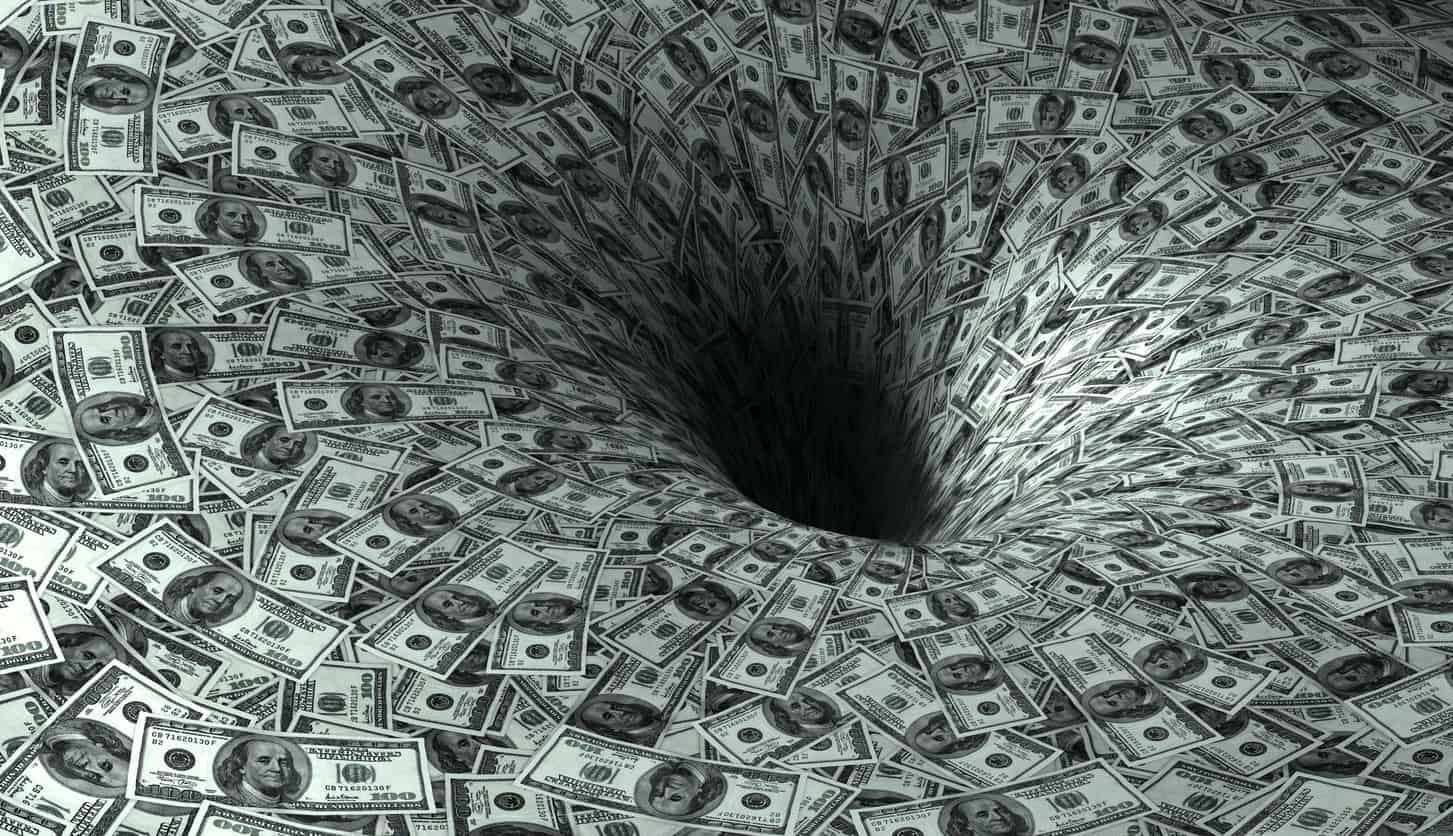
Perhaps capital has escaped its moorings and is cycling in a wilder and wilder vortex of self-gratification, sucking up everything in its path, hoovering it into an ever reducing pool of power-wielding pockets, until at last there is nothing left to own, buy or sell, the pile implodes and, big bang style, redistributes its content thinly and more evenly across the world's markets...

What can save us from the Singularity of Capital. Perhaps a return to the basic trust on which capital was built in the first place - the promises it made (on its bank notes being backed by real values), genuine trust?

Perhaps by winding back and taking a different turn. I'm thinking how Co-operatives emerged to defend against the early excesses of capital against the man in the street.

Perhaps by understanding that aggregation of wealth beyond need has a cost for the rest of the world we inhabit.

I'd like to think the revolution of the web still has the power to bring to fruition a world in which we are valued as much for what we share as for what we accrue.

I just hope that world can find its feet before Capital reaches its singularity.

Tuesday, June 12, 2012

Create value as if the world exists

There is a final disruption charging at full speed through the old world. It promises to be more fundamental than the disruption to the business of content creation and distribution, more disruptive even than our ability to self-organise to shape what we care about.
It is that we can self-organise to pay for it.

It is this disruption to mass, centralised blocks of capital, the switch to widely-distributed ownership and leadership that this entails, that will have the greatest long term impact on how our society is organised – on how we live our lives.

The web has been like a Big Bang to business as usual – disrupting media, marketing, customer service, new product development, the business of elections, the business of who governs us, how we are educated, how we are cared for and so much more.

But disruption of this people-power kind alone has limits. Even though we can find other people who care about the same things as we do, and in so doing lower the cost of action to achieve the shared purposes we have, long lasting and valuable change is slowed by the huge inertia of big capital.

There are those who argue big capital is just too big to be undone from the edge. But who thought the arrival of the internet would one day herald the end of big media? Today more people read Twitter each morning in the UK than read all the national newspapers put together. The power shift is almost complete in media; The content and distribution monopolies gone.

And so for big capital?

Make no mistake, big capital is holding back real change. Take Facebook. First the VCs have to get paid. Haven’t developed a business model to meet the needs of the networked world? F**you! Pay me! And so we get traditional broadcast style ads interrupting your FB time.

Then the VCs are replaced by Big Capital. Who want dividends. Fast. No time to develop a new model. You’ve caught all those fish in a barrel – let’s go spear them...

Where is the interest in long term benefit to the users? To their communities? To their society?

Clay Shirky has a nice line about news websites which are (shock!) “designed as if the web exists”.

Member-led, peer-funded partnerships offer the opportunity to create value as if the world exists. By which I mean value creation which goes beyond the back slap in the boardroom and the bottom line on the balance sheet, value creation which acknowledges that resources are finite, that people, communities, societies and ecologies are connected and matter to each other.

As I described in a recent post about Mindful Consumption, this kind of approach isn’t for a happy clappy hippy utopia, it provides a genuine competitive advantage: In a connected world where to win is to work together with ever greater numbers of people who care about the same things you do, few are going to sign up to support businesses who are damaging the ecosystem in which they exist.

Exploitation which damages our connected well-being has never been welcome. The fact is that exploitation is visible now more than it ever has been before: The web has revealed our interconnectedness like nothing in history before.

And that is a genie which is not going back in its bottle.

Change will come, big capital inertia can only slow things. And where we are frustrated, where we care most, where we see the most significant damage to our future and to that of those we care about, we will vote with not only our connectedness, our collaboration, our action – but with our personal funds.

Sure, it’ll be slow. We’ll chip away at first – Kickstarter by kickstarter. But one day big capital will wake up to find itself in the place newspapers have.

Enhanced by Zemanta

FasterFuture.blogspot.com

The rate of change is so rapid it's difficult for one person to keep up to speed. Let's pool our thoughts, share our reactions and, who knows, even reach some shared conclusions worth arriving at?