Boom. The rate at which new stuff sweeps the web is part of a general acceleration in change provoked by our increasing real-time connectedness. That has resulted in the ever faster emergence of disruptions to industry after industry, business model after business model.
This is the disruption web.
But it has also driven a culture of overnight sensation - Internet 'hits'. The potentially good news is that the life-span of such hits appears to be getting shorter and shorter.
Grow fast, die fast.
Draw Something - the IPhone app a bit like pictionary that sold within weeks of launch to Zynga - is a good recent example. After initial intense use its faded into the background for the vast majority of users.
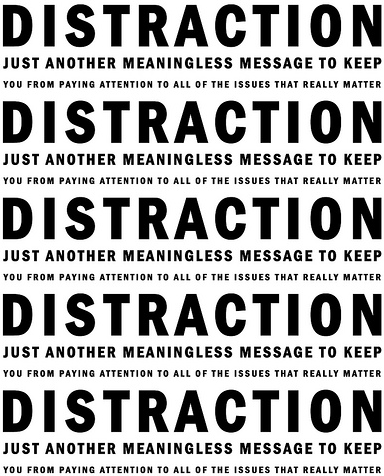
Why this may be good news is that it could be evidence of our collective tiring of the initial Lolcats (distraction web) phase of the web and a move towards us taking more seriously our individual ability to be part of the disruption web.
Perhaps we are now starting to seek something more, something that matters from our connectedness?
Information alone isn't power. It is the inspiration for the action that delivers the things that matter. The action is organisation. The web enables more of us to self organise to act - to be part of the change that matters to us - than has ever been possible before. Power resides in the ability to organise.
That's been the case since the first bulletin boards and has remained the case as waves of the distraction web have come and gone.
The distractions are coming and going faster and faster - becoming more and more disposable.
I draw (something) a line into our immediate future and see a point at which disruption is more Important to more of us than distraction.
And at that point the true value and impact of the web will have arrived.
It's getting closer.
Saturday, April 21, 2012
Tuesday, April 10, 2012
Facebook's journey to monopoly or bust
Not happening though is it?
There’s something fundamentally wrong about a world where we’ll
spend $1bn on an app but not on a way of creating value we can all benefit
from. The key wrong bit is in the allocation of resource.
Projects like kickstarter point the way ahead. Resource
allocation is shifting to the edge. And the edge won’t choose apps – we’ll
choose change.
Which means The edge is unlikely to choose Instagram’s acquirer
Facebook either. Big central blocks of cash might (the institutional investors).
The odd geek shareholder? Perhaps. But for the most part, the edge won’t play.
Facebook paid $1bn for Instagram, not for a company, not for
a business, (there is irony in the fact that Kodak, creators of the Instamatic, are now dead and buried as a business) but for an idea that threatened its dominance of the important
image-storing/sharing sector.
Our concern should be that Facebook appears to be so 'valuable'
now that it can simply buy the next idea that challenges it – at almost any
price. And that’s a significant step on the road to monopoly.
But Facebook only gets to do this based on a valuation of
itself which is in turn based only on the idea that it is valuable.
It’s buying ideas at inflated prices based on the idea that it itself is valuable.
That worries me in a very credit-crunchy kind of way.
When our collective belief in that is diffused by the
realisation that communities don’t function like audiences then that bubble
will deflate.
There is a more hopeful scenario – it is that Zuckerberg has
the foresight to think acquiring creative connectors of the kind who ‘love’
Instagram has a potentially higher value for co-creating outcomes (rather than
'audiences' of folk sitting around waiting to be advertised at). And he can build a new, real, co-created and
sustainable valuation around that idea.
I’m not holding my breath.
I guess it’ll be Pinterest next: $2bn to Google anyone? Seems as good a fit as
any to me.
If my daughter’s use of the web is any guide then Google
needs to get Pinterest-hot at visual search as soon as it can. At 7 and reading
and writing fluently, she continues to
search the web through pictures – just as she has ever since she first started
playing with search. A pointer for the future.
See also: Facebook Should Be Working Harder for its $100b valuation
Tuesday, March 27, 2012
Brand Anarchy - a book launch I really should have been at
I failed to show up at a book launch last night. I had a school governors meeting (on data) I needed to be at.It's not that unusual for me to fail to turn up for something I've been invited to, to be fair. It was only when I realised the content of Stephen Waddington and Steve Earl's Brand Anarchy that I realised I really should have made more of an effort.
Stephen (@wadds) had been kind enough to interview me for the book some months back. And the guys have been even kinder in listing myself alongside a very impressive line up in the Amazon blurb:
"As the media landscape looks increasingly diverse and anarchic,
individuals, organisations and governments should not waste time
wondering whether they have lost control of their reputations. The
simple fact is that they have never had control. The question is what
they can do about it now, and what they need to consider for the future.
"The fragmentation of media and the rise of social media has brought
brand and personal reputational risk into sharp focus like never before.
Disaffected shareholders, customers and staff are voicing their
opinions to a global internet audience. In a brand context it is
reputation anarchy.
"In Brand Anarchy, Steve Earl and Stephen Waddington draw on insight
from opinion-makers and shapers such as Greg Dyke, Alastair Campbell,
Seth Godin, David Cushman and Philip Sheldrake to explore how
reputations can be better managed and the new challenges that the future
of media may bring.
"...This plain-speaking, shrewd book pulls no punches. Its a
survival guide for anyone concerned what others think or say about
them."
So, of course, I'm going to suggest you buy a copy - it has generous helpings of me on Open Business! (Wadds has promised to send me one). If you're tempted, move fast. The first run has already sold out and a 2nd run of 10,000 is on its way. Go guys!
Buy the book.
FasterFuture is regularly updated by David Cushman
Monday, March 19, 2012
Who wins with your social solution?
Domino's have become quite famous for their 'social'. Nice apps. Happy twitter campaigns, gathering Facebook fans.
Which is why I'm so surprised at the weakness of its latest work in Australia.
In short, they are crowd-sourcing the next pizza to go on the menu with Facebook fans.
Which sounds on the face of it ok... until you dig into the benefits for the end user.
This from the blog of Online PR/Social outfit Simply Zesty (it's not them that's the blame, they are just reporting on it):
Now in Australia, they’re ... creating ‘the social pizza’ which will harness their 488,000 Facebook fans in creating the pizza they want to see. Starting March 19th and spanning the next seven days, fans will be able to vote on a wide range of factors such as the type of base used, the sauces used, the toppings and even its name. the most popular choices will be then added onto the new pizza which will be added onto Domino’s.
It’s almost like being able to custom make your own pizza to your taste… no wait… it’s exactly like that except you have to go along with the lowest common denominator verdict.
Hell – at least I’ll feel like it’s my pizza in a way I wouldn’t have done if I’d made all the decisions myself… no wait…
This mass crowd-sourcing only ever delivers a mass production outcome ticking the lowest common denominator boxes.
Individuals are already innovating better-fit solutions each time they customise their toppings and crust choices. The long tail solution already exists. Do it with a friend? That's a half-and-half then.
This social solution smacks of an old broadcast model being forced into a network. Always an uncomfortable fit.
It seems to me more to me about the PR message this will generate and less about a best-fit outcome.
If you're treating customers as partners, would this be the best solution for them? An Open Business approach would ask exactly that. An Open Business approach would ask those partners if this was actually the solution they seek before foisting it on them.
I'm thinking the principles of Open Business did not apply here.
A reminder of those principles:
1. It's not about the tools - it is about Behaviours:
Often social business conversations focus on implementing software. Open Business urges you to think Behaviours first. What are people doing, what can and will they do? If you are starting with tools you'll likely starting in the wrong place.
2. Think less about messages and more about products. Open Business urges you to consider ways of making things with the people for whom they are intended; for the best possible fit with real need; for efficiency; for results people care about. Messages are an outcome of this process - not its purpose. Talk 'social' and all roads will lead you back to messages.
3. Ditch the customer.
No, really. Stop thinking about customers. Customers are people you intend to do things to. Open Business urges you to think about the long-suffering customer as partners to work with instead. It pushes those people deep into the production process - right to the start, to join with and be supported by the org in delivering the things all parties want - all partners want.
In a nutshell, Open Business is the art of making partners of customers.
Which is why I'm so surprised at the weakness of its latest work in Australia.
In short, they are crowd-sourcing the next pizza to go on the menu with Facebook fans.
Which sounds on the face of it ok... until you dig into the benefits for the end user.
This from the blog of Online PR/Social outfit Simply Zesty (it's not them that's the blame, they are just reporting on it):
Now in Australia, they’re ... creating ‘the social pizza’ which will harness their 488,000 Facebook fans in creating the pizza they want to see. Starting March 19th and spanning the next seven days, fans will be able to vote on a wide range of factors such as the type of base used, the sauces used, the toppings and even its name. the most popular choices will be then added onto the new pizza which will be added onto Domino’s.
It’s almost like being able to custom make your own pizza to your taste… no wait… it’s exactly like that except you have to go along with the lowest common denominator verdict.
Hell – at least I’ll feel like it’s my pizza in a way I wouldn’t have done if I’d made all the decisions myself… no wait…
This mass crowd-sourcing only ever delivers a mass production outcome ticking the lowest common denominator boxes.
Individuals are already innovating better-fit solutions each time they customise their toppings and crust choices. The long tail solution already exists. Do it with a friend? That's a half-and-half then.
This social solution smacks of an old broadcast model being forced into a network. Always an uncomfortable fit.
It seems to me more to me about the PR message this will generate and less about a best-fit outcome.
If you're treating customers as partners, would this be the best solution for them? An Open Business approach would ask exactly that. An Open Business approach would ask those partners if this was actually the solution they seek before foisting it on them.
I'm thinking the principles of Open Business did not apply here.
A reminder of those principles:
1. It's not about the tools - it is about Behaviours:
Often social business conversations focus on implementing software. Open Business urges you to think Behaviours first. What are people doing, what can and will they do? If you are starting with tools you'll likely starting in the wrong place.
2. Think less about messages and more about products. Open Business urges you to consider ways of making things with the people for whom they are intended; for the best possible fit with real need; for efficiency; for results people care about. Messages are an outcome of this process - not its purpose. Talk 'social' and all roads will lead you back to messages.
3. Ditch the customer.
No, really. Stop thinking about customers. Customers are people you intend to do things to. Open Business urges you to think about the long-suffering customer as partners to work with instead. It pushes those people deep into the production process - right to the start, to join with and be supported by the org in delivering the things all parties want - all partners want.
In a nutshell, Open Business is the art of making partners of customers.
Sunday, March 11, 2012
Video: Webciety CeBIT keynote: How the web changes the organisation of business
For those of you who weren't at Webciety at CeBIT, Hannover, Germany on Thursday March 8, or weren't able to catch the live webcast of my keynote when it was first broadcast, a recording is now available.

The video lasts almost an hour which includes introduction, my keynote and a panel discussion of the themes it outlines. In summary it explores how the future isn't digital, it is self-organised, how and why the web powers disruption based on this and explores the role of the organisation in a world in which we can organise for ourselves more cheaply and effectively than ever before. It also recognises the challenge of 3D printing in this context - how this reveals where the means of production have always resided and what this tells us about the key tasks that must be taken on by the org of the future.
I've expanded a few more thoughts, specifically in relation to 'Loose Ties and Sufficient Organisation', which are detailed in my blogpost of Saturday March 10, 2012.
I have also updated the slides on slideshare to those I finally presented. I hope you find them useful.
The video lasts almost an hour which includes introduction, my keynote and a panel discussion of the themes it outlines. In summary it explores how the future isn't digital, it is self-organised, how and why the web powers disruption based on this and explores the role of the organisation in a world in which we can organise for ourselves more cheaply and effectively than ever before. It also recognises the challenge of 3D printing in this context - how this reveals where the means of production have always resided and what this tells us about the key tasks that must be taken on by the org of the future.
I've expanded a few more thoughts, specifically in relation to 'Loose Ties and Sufficient Organisation', which are detailed in my blogpost of Saturday March 10, 2012.
I have also updated the slides on slideshare to those I finally presented. I hope you find them useful.
How the web changes the organisation of business and the business of organisation
View more presentations from david cushman.
Related articles
- Loose ties and sufficient organisation (or why start-ups work) (fasterfuture.blogspot.com)
- How the web changes the business of organisation (fasterfuture.blogspot.com)
- We're live from CeBIT 2012 in Hannover, Germany! (engadget.com)
- Twingly Live goes Webciety - again! (twingly.com)
Subscribe to:
Posts (Atom)
FasterFuture.blogspot.com
The rate of change is so rapid it's difficult for one person to keep up to speed. Let's pool our thoughts, share our reactions and, who knows, even reach some shared conclusions worth arriving at?