Showing posts with label customer experience. Show all posts

Saturday, February 15, 2020

Sustainable value propositions demand the integration of PX

Click to enlarge. Feel free to download and share.
Treating the planet with the respect we have come to understand must be accorded to our customers is not only a 'nice to have' - a box to tick in the latest ESG commitment or vision statement - it is a business imperative in the customer relationships of the next 20 years.

Just as great Customer Experience treats the customer as your partner in a relationship of mutual benefit, so Planet Experience elevates the relationship you have with the planet as one of mutual benefit. The purpose of great customer experience is to reduce the cost of customer acquisition (through recommendation, retention, brand extension cross-sale, upsale etc). It ultimately generates a relationship of trust which is the key ingredient in increased Lifetime Value (LTV).

Planet Experience offers a way for us to integrate the increasing concern your customer has for their planet. The planet can't trust you. Your customer can. But unless you integrate PX, they will see you as the enemy - the exploiter of the thing on which their life -and that of their children - depends.

That is a very powerful motivator. And one you should be integrating into your relationship with them right now.

I have shared frameworks to approach this in previous posts. Today I share a simple way to get started on this with Customer Value Propositions (see diagram). We must ensure PX is one of the key constituents.

Customers know the high price of low cost. It's up to you to demonstrate that when they trade with you there is not just reduced damage to the environment vs alternatives. You need to construct value propositions which call out the benefit they deliver for PX as much as they benefit they deliver for the customer.

Good luck - you've got the whole world in your hands.


Monday, January 27, 2020

No Planet B - so we need Planet X

There's no Planet B - but there is Planet X. Planet Experience is the framework through which we can help make our organisations ones we can all live with; as customers, as employees and as participants in a biosphere we all rely on.

In recent and previous posts I have outlined the value of PX as the new business superpower - shaping our overall experience as potential and repeat customers (Customer Experience [CX]), as potential and continuing employees (Employee Experience [EX]), and in shaping the working culture (Workplace Experience [WX]).

PX elevates the status of the planet in our sustainable success - just as CX elevated the status of customers. No longer is the planet something to exploit, it is something to build a relationship of mutual benefit with. Through the PX filter it is something to purposefully design a relationship of mutual benefit with.

I believe this is important because:

1. It is business which can have most impact - since it is business which drives consumption.
2. Increasing transparency is revealing the impact of exploitation; of planet and people.
3. Customers are increasingly coming to care. The web has revealed our connectedness. We want our experience to be great but only if the cost of delivering it is, literally, one we can live with. I get that this is far from the case for all people in all cases - but the number it is true for is rising, and they carry a large amount of economic power.

Those that dismiss point 3 may suppose that the world is not changing around them - that the reality of climate change, reduced biodiversity, water scarcity, dwindling icecaps can be ignored with little impact on how they do business. The same mindset leads to relationships of abuse with customers, employees and society at large. And we now have increasing evidence that does not lead to economic success or business longevity. Ignore PX and you'll be revealing a lot about your opinion of your customers and employees, too.

But when all is said and done, PX is just the latest (but essential to acknowledge) expression of the long-known business fact that building relationships of benefit is the key to sustainable success. This time the planet needs to benefit, too.

I'm making my thinking on this as open as possible, deliberately. I want others to pick it up, fill the gaps, improve on it, share those improvements - for the benefit of us all.

It's too important for IP. What can you share?

Friday, January 24, 2020

Planet Experience - the next business superpower

The winners of the last start-up revolution achieved their success by focusing on experiences.
Their continuing success has built on designing to deliver great customer experiences, expanding, as they have expanded, to also deliver great employee and workplace experiences.

To deliver these require different priorities in everything from ops to marcomms. Having a 'digital'  or data-led business model alone will not and does not cut it.

It's why I believe to deliver a successful digital transformation (ie a modern business) your first principle is to design (everything) around the experiences you want to create. Customers, employees and workplaces experiences have been well considered - and very effectively. Great experiences have been the start-up superpower that drove the best businesses you know.

Now it is for PX - Planet Experience - to serve as your next business superpower.

Good CX has always made customers your partners. It's the trust thing. You want your customer to believe you have their best interests at heart. To do this your business has to generate win-win benefits. A customer win is a business win.

This has driven the whole customer-centricity revolution across business - the rediscovery of the customer as less someone to exploit, more someone to partner with. It has served the winners well. They understand that winning is about serving the needs of customers in a relationship of mutual trust. ie Exploit the customer and you get one big bang pay day, build a relationship of trust with a customer and you may miss out on today's pay day, for a longer term and (here's that word) sustainable relationship generating value for both parties.

Screw your customer - lose your customer.
Love your customer - keep your customer.

Some of you will already have guessed where I am going with this:
Delivering great Planet Experience will treat the planet like we (should) treat a customer - winning is about serving the needs of the planet in a relationship of mutual benefit.
The best businesses have now learned that exploiting their customer is essentially an abuse and a recipe for a short relationship.

Now they are coming to realise that their relationship with the planet requires just as much care.
A new superpower - yes because apply PX at the core of how you change or operate is becoming essential to the total experience the customer has of your brand or product.

If you want to sustain a relationship with the customers and employees who pay your bills, you will need a relationship with the planet that they can (literally) live with. Start designing for a great PX today!

Photo by Guillaume de Germain on Unsplash

Sunday, January 05, 2020

Do Make Me Think

2020 marks 20 years since Steve Krug's Don't Make Me Think ushered in two decades of 'Easy'. The next decade is one in which meeting more than our dumb desire for instant gratification will need to be taken much more seriously.

Easy has been a mantra across web design, UX, c
Work it out for yourself...
ustomer experience, communications strategy and alarmingly, media and political propaganda.

The drive for easy should now be tempered with the need we all have to apply more critical thinking.

Easy underestimates human complexity. It dumbs down. And in so doing it reduces our engagement. In our desire to make so much so frictionless, we have unwittingly shifted consumers (and citizens) toward consumption (and passive acceptance) when the promise at the start of the decade was for ever greater participation - with all the value generation of co-creation and collaboration through communities of purpose - people caring enough to act.

Human needs include and demand much more than instant gratification. Challenge, inspiration, judgment, justice - all these contribute to the self-actualisation through which we derive our meaning.

If the last two decades have all been about easy, the next must build on the benefits that has delivered (essentially making technology invisible - an enabler rather than an end in itself).

Easy has become table stakes.

To win in the next decade will be to understand and respond to more complex needs -unearthed through quality human insight. Businesses will have to deliver against those needs in rapidly shifting contexts - managing the ambiguity that inevitably produces - at speed.

And they will need to do it with products and services which challenge, inspire and encourage participation; whether that be to save the planet, improve the lives of millions or the health of the individuals engaged.

It's time to make them think.

Tuesday, July 17, 2018

The Digital Customer exposes the need for value in all interactions


We already have digital versions of ourselves populating our increasingly digital world: Your Linkedin, Facebook and Twitter profiles, your Amazon and Google footprints are all examples.
For the most part they are not yet autonomous. But it cannot be long before the 'MeBot' - an autonomous and intelligent you - becomes a ubiquitous part of our daily interaction with people, things and data.
All of which strongly suggests that brands and organisations must start developing strategies that place the digital customer at their heart.
Let me be clear, that digital version of you will always be informed by and learning from the real you. But increasingly it will be the digital rather than analogue version of you who will be making the transactions (tilting, as these thing are, to online more heavily by the day).
And if Digital You has got the spends - Digital You is going to be the target.
So what does advertising/targeting/relationship-building/comms/PR/you-name-it look like when it is aimed at our MeBot?
Well - I suspect MeBot's will rapidly learn which lies to ignore, which content sources to trust, which deals are for-real. They may even be less swayed by the Herd mentality humans find it so hard to resist (think of the impact on the Stock Markets...).
This is likely to starkly expose some of the realities and truths of relationships of trust - such as...

  1. Customers are not inhabitants of your omnichannels waiting to be managed from one to the next. They live in a 4D world with limitless touchpoints. The analogue digital combination will evidence that by the truck-load. Map that!
  2. Customers are not waiting to be engaged, made your friend, or have anything else 'done' to them. They need a reason to interact with you... which leads us to point 3.
  3. Customers are not loyal. Forget loyalty - focus on proof of value. Unless you are offering a good enough value proposition your wheels will just keep on spinning.

Tuesday, February 27, 2018

Engines of enhanced customer experience

We have the technology to provide one-to-one intimacy in marketing with engines of enhanced, in context, real-time and predictive customer experiences.
Neuroscience, behavioral economics and psychology combine to make the automated promise of AI one which delivers the truly effective next best offer or action.
The world of one-to-one CRM is here, with the capability to predict your needs and respond to them as they arise. We can apply Robotic Process Automation to deliver this efficiently and at scale.
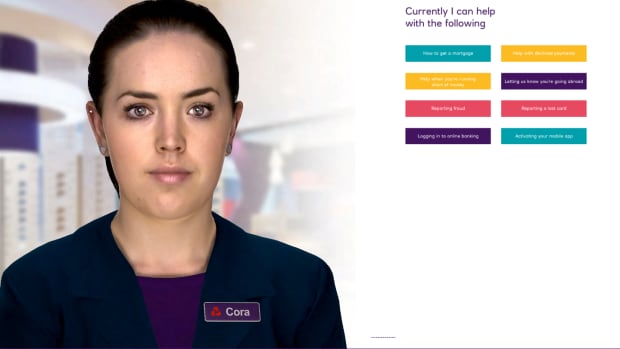
And yet - when NatWest brings us Cora - an AI-driven, human-faced service bot, it creates an experience which could cut down the time required by a teller to serve you. But the upside for the customer is strangely limited. Despite our being able to speak with this voice-recognising screen-based bot, it responds by telling us to log in and complete a form.
It's an early test. I suspect it won't get deployed unless and until the team apply a little human-centred thought. If it recognises voice it could recognise YOUR voice - removing the need for log-in. If it recognises what you are asking, it could understand what of the records it has on you that it needs to access to complete the form for 'I've lost my credit card' or similar.
The same thinking can be applied to the very long queue in my local branch of LLoyds on Saturday morning.
Today's queue at the bank is made up of people who either do not or will not use internet services, and those who need some kind of physical exchange. The other folk in looking for mortgages etc have nice places to sit and wait for their appointments.
There was one teller on duty. Another employee fluttered around the queue asking what we were trying to achieve today, leading some folk off to machines if they found that was relevant - trying to lever some behaviour change into them.
My need was for physical exchange - converting unspent holiday currency into GBP - so I was left in the queue.
The experience illustrated much that is wrong with automating customer experience.
At the counter, I handed over my bank account card and my currency. The teller then had to fill in a form by hand to confirm she was handing over the currency exchanged and I was accepting the rate etc. She got to the point when she asked for a contact number and I was half way through responding when I said - "hang on a minute. You've got my bank account card, surely from that you can tell my name, address, contact number, bank account numbers etc. Why are we filling all that in again now?"
No doubt the poor teller's hand-written form will be typed in to create a digital record at some point further down the line.
If a written record is essential, surely it could be auto-created - saving time for both customer and teller - and cutting that queue. And a little bit of intelligence would identify that I regularly return from a trip with excess currency. Why doesn't my bank - which knows when I am back from my spending patterns - send me an invite with a rate for exchange (which I could compare with others). I could confirm an appointment to make the swift handover with form pre-completed and ready to roll.
Processes like these are easy to set-up in self-learning AI-powered workflow tools. With some platforms the set up work doesn't even require external expertise, the users themselves simply do their job and the AI learns which bits can be automated and/or optimised.
But for all this, unless the creation of value for the end-using human is the focus, each application of our engines of enhanced customer experience will only improve our efficiency at doing the wrong thing.

Wednesday, January 11, 2017

The Internet of Experience - and the role of trust


With the rise of Virtual Reality the value of experience over things increases still further.

Kevin Kelly argues we are headed for a future beyond the internet of things which becomes the internet of experiences. He explains the shift in VR as taking (for example) a gaming experience and shifting it from something we watch to something that happens to us.

Perhaps in a similar way our social platforms will shift from things we contribute to and consume content from into social environments in which experiences happen to us - from a simple conversation with a friend as if they were in the room with us, to the sharing of an immersive experience with others as we try to solve a problem, fix a date for a trip or simply enertain each other with the stories of our experiences.

Given a world of always on tracking and recording - of behaviour and of experiences, we may be able to rely on replaying the actuality of a recent experience rather than retelling the story from our recollections - complete with an overlay of stimuli to share how we felt (who knows, it could even prompt your friends' heart rate and blood pressure to fluctuate as yours had - with suitable medical constraints).

This quickly takes us into the challenges of the Experiencing Self versus the Narrative Self discussed in my recent series of posts on the Four Dimensions of Customer Experience and illustrates once again how much we must catch up in our understanding of experience in order to improve it and select which of our 'selves' we should be designing experiences for.

Even online purchases will become an immersive experience happening to you, shaped specifically for you (probably for the decision-making Narrative Self).
That experience will be available anywhere anytime, just as e-commerce has become available everywhere through the miniaturization of computing to enable access on your mobile and tablet.

VR will follow the same route - starting out as helmets, suits and gloves in specially built rooms to deliver truly immersive experiences - the equivalent of the original warehouse-sized computers of the early 70s. In time VR could be delivered by any connection to the skin - a patch under your watch perhaps - so long as we figure out a way of fooling the body's systems of perception at brain level, who needs the bulky headgear?

Instead of granting an app access to our Facebook profile we may find ourselves being asked for access to our central nervous system. Anyone asking for that is going to have to build up one helluva legacy of trust.

Looks like the Trust-focused output of the 10 Principles of Open Business is going to be relevant for a long time to come...


Wednesday, January 04, 2017

Jobs expressing humanity are safe from AI

There is so much we still have to learn about the workings of our brains (let alone our minds) that I wonder how close we really are to creating a machine capable of learning in quite the way we do.

2017 seems very likely to be the year of AI (though more likely seeing implementations of its less 'intelligent' bed fellow Deep Learning, in platfoms of Cognitive Computing.

Robert Epstein (a senior research psychologist at the American Institute for Behavioral Research and Technology in California). reminds us that throughout history we have tried to understand how we think in the metaphors of the latest technological understanding. The six major ones over the past 2000 years being; spirit, humors, automota, electricity, telecommunication and finally digital.

He argues this final construction, with its language of uploads and storage and informaation processing and retrieval has given rise to an unreal view.

Instead, he states:

"As we navigate through the world, we are changed by a variety of experiences. Of special note are experiences of three types:
(1) we observe what is happening around us (other people behaving, sounds of music, instructions directed at us, words on pages, images on screens);
(2) we are exposed to the pairing of unimportant stimuli (such as sirens) with important stimuli (such as the appearance of police cars);
 
(3) we are punished or rewarded for behaving in certain ways."We become more effective in our lives if we change in ways that are consistent with these experiences – if we can now recite a poem or sing a song, if we are able to follow the instructions we are given, if we respond to the unimportant stimuli more like we do to the important stimuli, if we refrain from behaving in ways that were punished, if we behave more frequently in ways that were rewarded. 
Misleading headlines notwithstanding, no one really has the slightest idea how the brain changes after we have learned to sing a song or recite a poem. But neither the song nor the poem has been ‘stored’ in it. The brain has simply changed in an orderly way that now allows us to sing the song or recite the poem under certain conditions. 
When called on to perform, neither the song nor the poem is in any sense ‘retrieved’ from anywhere in the brain, any more than my finger movements are ‘retrieved’ when I tap my finger on my desk. We simply sing or recite – no retrieval necessary
I am interested in this for two reasons;

1) Professionally. For its impact on the weighting we should give each of The 4 Dimensions of Experience I am working on for deployment in the development of improved Customer Experience.

If we can't be sure of how the brain works we certainly can't be sure of an algorithm gathering such a complete set of data about our preferences and needs that it could make better decisions for us than we could. I don't argue that a technical replication of the brain's functions is impossible but it remains improbable while we don't know what it is we are trying to replicate. We can approximate intelligence in this respect (quite literally developing proxies for it) but we can't create a copy of it functionally.

So what does this mean for the value of the Experiencing Self (The one behind the third of my four dimensions, Sensitivity).

We can argue it remains important because our Sensitivity has been shaped by the total of our experiences (gathered by our Experiencing Self and conceivably far better stored by digital rather than patchy human means).

That Sensitivity - whether we remember how it was derived or not - is our base setting against which our Narrative Self does it's peek-end rule calculations when we recall an experience.

Therefore striving to improve experiences for the Experiencing Self (ie at each step) will still have impact on the overall experience recalled by the Narrative Self - even if the impact may not be as great as changes made at the peek and end points of the experience.

2. Philosophically. I have, for example, argued that should an algorithm be better able to know what is best for us perhaps we should let it vote for us. Or even govern us?

We have to consider what measures should be applied to 'best for us'. Algorithms could manage our calorie intake to match our output and only ever suggest the 'right' thing to do for your safety, longevity and even your sanity, But here I am using right rather than best. What the algorithm can't know - because we don't know how we do this ourselves - is how we acquire tastes and proclivities. Why some love and some hate Marmite, what we find attractive, funny, challenging, boring. An algorithm can copy the outputs but it would struggle to innovate collection of concepts that make us uniquely human.

The algorithm could learn to approximate an understanding of us (eg at its most basic, presented with object A subject 1 did not purchase, therefore offer object B next time) but this is not knowing what is best for us - it's simply learning how we have behaved in the past.

So maybe this gives us a hint about the kind of fulfilling roles which will be left for us humans when the machines are running flat-out to make all the wealth; craft, artisinal manufacture - things with limited but genuine appeal to a few (the adhoc se;f-forming groups of interest the web allows to form globally serves this well, too), art and literature, film and drama, sport and sculpture, fashion,architecture (the interesting bits) and of course the most interesting, inspired and inspiring bits of science, maths, geography, history, economics, politics and more.

Everywhere the expression of what it is to be the human you are offers an advantage, that will remain safe from the algortihm - at least until we really understand how our brains work.

Wednesday, November 23, 2016

The Fourth Dimension of Customer Experience

Image by Salvador Dali
In my last article I discussed the need to better understand what experience is in order to really make advances in how we can improve it.

I arrived at Three Dimensions which I will summarise below – but feel free to refer back to the original for the full story because now I want to move us on to consider a Fourth Dimension:

1. Dimension One: Thoughts.

An experience can be described in terms of the thoughts arising in my mind at any one point in time. Customer Journey Mapping has been relatively successful at grappling with this. This is the realm of:

  • Rational choice.
  • Mapping out what the customer is doing and what the customer is trying to achieve – the process
  • Transaction points

We can streamline it and make it easier and see incremental improvements.

2. Dimension Two: Emotions.
  • Design Thinking is increasingly playing a role in experience design. 
  • Placing yourself in the shoes of the individual helps you understand where they may be driven to anger, what prompts fear, what inspires love. 
3. Dimension Three: Sensitivity.
  • The layer in which we can personalise and contextualize experiences.
  • Responds to the mass of previous experiences that create an individual's Sensitivity.
  • Solves the Trip Advisor problem: Two people have the "exact same experience" but score the same hotel very differently
  • Our sensitivity to the experience is our context. 
This third dimension is rarely called out for separate consideration yet it is where we must focus our efforts if we are to offer truly personalised experiences. This will be the dimension in which Decisioning technologies and the application of Artificial Intelligence will have the greatest impact. Bots are already capable of keeping a record of what they have learned about an individual customer and using that to shape their future interactions with that customer.

Many see a crazy amount of complexity to deal with. Others see the possibilities for AI and the full set of cognitive computing capabilities to make sense (and profit) from unstructured data.

But where to start? Well first, let me add an additional complexity. We like to think about ourselves as a single self – an individual. Yet science (neurological and behavioural) tells us we are really the intertwining of two selves: The Experiencing Self and the Narrating Self. You don’t have to take my word for this. Start with the cannon of work by Economic Nobel Prize winner Daniel Kahneman

The Experiencing Self is the one in the now. It experiences – discomfort in the long queue to see the Princess at Disney. It experiences a sense of fun when it interacts with the smattering of supporting cast found towards the head of the queue. It experience great joy when it gets its brief moment with the Princess herself.

But more often than not the decisions get made by the Narrating Self.

The Narrating Self will evaluate the experiences it has had and generate itself the story of what it has done, from these experiences.

It is the story the Narrating Self tells itself that gives it ammunition to decide whether or not it’s going to endure the misery of the length of queue for the next Disney attraction. It makes its judgment call based on everything the Experiencing Self has gathered – not in aggregate but on average.

So, in the Disney case, if you asked guests to score their experience at each part of that journey (1/10 while I was stuck at the back of the queue, 6/10 when I met the supporting cast, 10/10 when I met the princess) a simple average would give us (1+6+10) /3 ~5.7.

And if we weighted that for time spent in each phase (queue 90% of time, cast 8% of time, princess 2%) then our satisfaction score would collapse to much nearer 1.

Why then do we in fact remember a magical experience and one we rush to repeat?

It is because the Narrating Self – our big decision maker – places a great deal more weight on the end of the experience and completely discounts duration. End on a high.

Disney gets this, It’s why their experiences are structured the way they are. The classic Kahnemann experiment involves volunteers placing their hands in cold water for X time. The same volunteers then place their hands in water of the same temperature for X time + Y time (and during Y the temperature of the water is slightly raised),

When asked which experience they would like to repeat they choose X+Y.

This is because the Narrating Self discounts duration and actually adopts a rule we cannot ignore when designing experience – The Peak-End Rule.

It retells the experience only in terms of how it felt at the peak (and this will usually be a peak of discomfort) and how it felt at the end. It is the average of these that determines how we take decisions. That’s why 2% of the time with the Princess at 10/10 is remembered – and talked about as much as the 90% of the time you spent in the queue.

What are the implications for how we go about our work in Customer Experience?

4. Dimension Four; Narrative.
  • We have seen that duration has little impact on the final story of an experience we tell our Narrative Selves and it is this Narrative Self that will make the decision on which experiences it wants to repeat. It is the story of our experience we share with others, too.
  • We know the Narrative Self uses a Peak-End Rule to evaluate. This means it calculates an average of the worst it felt during the experience and how it felt at the end. The duration of these phases has little or no impact.
  • An experience which offers an improvement in experience at the end versus peak discomfort will be seen more positively even if the period of peak discomfort is considerably longer than the End phase.
This gives us important parameters to work within for improving personalized experience.

Just as with Senstivity, while we may occasionally stumble across and apply elements of the Fourth Dimension of Customer Experience when conducting our work (Leave ‘em on a high, for example!) it is seldom called out as a tool of inquiry and a framework against which experience can and should be assessed and designed.

I am confident that considered one-by-one, the four dimensions will help us design the experience customers will both enjoy in the now and choose to repeat in the future.

Tuesday, November 15, 2016

The third dimension of customer experience

Image via http://elementdigital.co.nz/
Experience is the primary differentiator in the selection of products and services in a post globalisation world. Making it better is at the heart of any digital transformation where humans engage.
There is a reason we value it so highly - in an increasingly humanist world it is replacing religion as our arbitor in gathering ethical knowledge - best described in the phrase "If it feels good it must be right".
Our feelings - built entirely on our own experiences and our experiences of others provide a 21st Centurry equivalent of scripture.
This argument for the primacy of the internal self, that the pursuit of wisdom is the collection of experiences, is well made in Homo Deus - a brief history of tomorrow by Yuval Noah Harari
In the last fear years Customer Experience has become very hot with marketers and technologists, CFOs, CDOs, CTOs amd CEOs.
But few have really stopped to understand what experience actually is - and without doing this we are missing a trick in improving it.
So let's start with the basics:
An experience isn't empirical data. It can't be found in the air around us or in the atoms of the desk in front of us. This is important because so much of experience design has focused on optimising for one generic experience.
Experience is not done to people - it is done by people.
It is subjective. And it has three dimensions.
1. Dimension One: Thoughts.
An experience can be described in terms of the thoughts arising in my mind at any one point in time.
Customer Journey Mapping has been relatively successful at grappling with this part of the mix. This is the realm of rational choice after all. We can map out what the customer is doing and what the customer is trying to achieve and it's all very transactional and rational and we can streamline it and make it easier and see incremental improvements and roll the same journey out on the assumption we are all rational actors (which any regular reader of this blog will understand is very far from the truth).
2. Dimension Two: Emotions.
There has been an emerging focus on emotion in the customer experience world which is to be commended. This is often because Design Thinking has played a role in experience design. Placing yourself in the shoes of the individual helps you understand where they may be driven to anger, what prompts fear, what inspires love. But again there is a one-size-fits all weakness to this which leaves room for improvement.
3. Dimension Three: Sensitivity.
This critical third dimension is the layer in which we can personalise and, very importantly, contextualise experiences to meet the experiential needs of the individual.
We can design for customers based on their past behaviours and (if we can apply AI to the unstructured data of their latest published thoughts) their self-expression of mood. What we have difficulty responding to is the mass of previous experiences that create an individual's Sensitivity.
I call this the Trip Advisor problem. Two people can have what we have come to describe as the "exact same experience" and score the same hotel very differently. Our sensitivity to the experience is our context. As my old friend Alan Moore is always fond of saying, Without Context There Is No Meaning.
Reviewer One may have been spoiled with five star hotels his entire life. His sensitivity to quality is therefore somewhat raised. Reviewer Two may be more used to the Two Star life. When both end up in a four star we may design their experiences to be exactly the same from booking to check-out but their own sensitivity will determine if this is a better than normal experience or a worse one for them.
Sensitivity means paying attention to your sensations, emotions and thoughts - and allowing them to influence you.
Without it we do not experience.
And yet we continue to work on customer experience without giving this third dimension - this dimension of context - due attention. We stumble into it rather than calling it out as a specific area of work to be considered.
I believe by identifying and describing this third dimension of customer experience we can go a long way to greater application of technologies such as Decisioning and Artificial Intelligence to deliver contextualised customer experiences which best fit an individuals sensitivity.

Friday, January 22, 2016

Knock knock - who's there? Your customer experience

John Lewis is no longer the exemplar in UK customer service. Amazon has stolen its place at the top of the list. It is precisely JL's inability to replicate its in store customer experience online which is costing it so dear.

See the top 50 here

In store they can control. Online, they lose control of the last few yards - the delivery. Tesco, it seems, has understood this - investing in training for its delivery van folk. They seem on the whole a cheery bunch (at least where I live), happy to be doing their job and representing the brand with real concern. They have understood where the human touch of brand interaction actually happens in an online transaction - on the doorstep.

Compare and contrast to a John Lewis delivery. Some great - some not. None controlled by the brand. The click and collect system seem to melt down at Christmas (a camera I went to pick up in store never arrived. Hours spent on the phone resulted in it finally being delivered to me at home. That came with a promise of a £20 goodwill refund. Checked my credit card statement only today (nearly a month later) and the refund never was made. Another phone call today should have remedied that - fingers crossed).

Some fragile deliveries have been slung over garden gates.

JL aren't alone in getting the less-the-perfect service from the delivery outfits they employ. But given the very high value they place on service they have to ask themselves if the gap in control of the customer experience they have opened up is too great.

Consistent customer experience has to drive through the entire journey. The last touch-point you can afford to scrimp on is the one where the customer physically interacts with the brand. Often, and increasingly, that's the delivery person.

Is Amazon perfect? No but more of its deliveries go right than anyone else's I try - and that is my experience of the brand and therefore the one I share with my peers.


Friday, November 13, 2015

Three lessons online can learn from offline customer experience

An article on HBR today makes a lot of sense on consistency of customer experience online and off.

And it notes we have different expectations online versus off.

But the question is should we? When we talk about improving customer experience its often, where a business already cares about customer experience, a question of giving it the same emotional feel online as off.

This is difficult stuff. And it needs examples to help us shape a response.

Many years back I recall Doc Searls talking about his wife's annoyance with sign-ins and registrations online - the sort of barriers people seeking to transact in the real world rarely come across. And when we do... "Can I take your postcode please... and the number of the house?..." we feel something unnatural and data capturey is taking place, something we'd rather not soil ourselves with...

Lesson - The best experience requires no sign in and no registration.

And as I noted recently - online we may be cutting organisations more slack than we would in the real world... because no one sees us fail when we try to 'get in' to your online presence. The very human emotion of embarrassment is removed.

Lesson - Dance like no one is watching, by all means, but Test your online customer journeys like someone is watching.

Imagine you are a retailer who has built a reputation on no quibble returns - money back immediately? How can you replicate online the satisfaction provided by handing over the faulty item in person in the store and getting credited back immediately on the card you paid with (usually prompting an instant repurchase from stock).  If my transaction is recorded and available in all channels then this can be used to verify I do possess the product in question. In selecting to send it back, generating a postage paid printout address, or even a label to attach to it for pick up from home, I should be granted an instant refund - before the item is even boxed up to be sent back.

Why - because this shows me the retailer trusts me (and trust is reciprocal) and I am much more likely to repurchase from the same retailer, right now, to replace my faulty item - a loyal customer ready to tell friends all about my great experience.

If I fail to send the faulty item back what's the worst that happens? The retailer loses the full value of the item and the consumer gets blacklisted (but only after a period of reminder communications, of course).

Fearful retailers could trial limiting the value available to do this online, and/or providing vouchers which can only be spent with the same store. But I suspect the more trust you offer, the more you get back.

Lesson: Don't forget the core emotions you are trying to generate online. If you've built your reputation on no quibble in the real world, how do you remove all the quibble when online?


Tuesday, November 03, 2015

A stitch in time...

A stitch in time, if you aren't familiar with the phrase, is not the most recent Dr Who episode. It is an ancient phrase which carries with it some ancient wisdom.
It means deal with the small problem now before it becomes a larger one: a small hole may require one stitch. Leave it and, as the idiom continues, you 'll end up with a hole requiring nine stitches (A Stitch In Time Saves Nine).

There is a lesson in this for those engaged in customer experience. If you can identify where customer's emotions are at their most intense in their journey and apply your efforts in real time at that point, you'll make the biggest difference. The effort required may be quite small - provided it is 'in time'.

This was evidenced to me last week in an experience with a leading online travel booking service. I'm not going to name them because even though I remained unsatisfied by the outcome I was impressed by the personal efforts of the CEO & President and hope he'll be taking on board the advice I am sharing now.

In May my wife booked our family a half-term break in Morocco. With less than 24 hours before our flight last week, the hotel sent us a confusing email which we took to mean they were shut and couldn't accommodate us. I informed the online booking service who we had used, who went off to find an alternative. But it didn't suit us. The long and short of it was I spent all day trying to find and book an alternative and sort transfers - all of which was last minute stress and actions no one wants and indeed most people expect all that stuff to be sorted by their agents with significant upgrading involved.

With an hour of the business day remaining I finally got booked and it took a series of emails into the evening (we were getting up at 1:30am) to confirm a transfer would be waiting for us when we landed the next morning.

I had asked The booking service to book and pay for the transfer. They told me they could not but if I kept a receipt they would meet the cost.

And so they are doing. But my level of stress when trying to get the transfers booked means that this 45 Euro 'apology' feels little more than a sop. Had they had the ability to book and pay for the transfer and simply tell me it was all sorted at the time I was in emotional flux, the impact could have been much more significant. That is, if they had done what I could do, what any human could do, but apparently not what this company's policies allowed, I think I would have felt much better.

In the cold light of day, after the emotional challenges, after the holiday, 45 euros just looks like money. It could have been a problem solved. It could have been the stitch that saved nine...

Being able to take real and meaningful action at the point of emotion is a critical part of the customer experience journey today. Too few businesses have enabled or trusted their Customer Service teams to think fast - to act like their CEO, to apply a stitch in time (one example is in my book The 10 Principles of Open Business)

The resulting costs in terms of additional customer support time, lost goodwill, damage to brand reputation and lost customers is worth considering by anyone at the helm.


Thursday, August 20, 2015

Going Postal

I tried to track a recorded delivery on the Post Office website today.
When you Google 'Post Office' Track & Trace comes back as one of the four most important returns, as selected by Google, relating to the term Post Office.
On the Post Office site it is one of five (and listed at No4) of the Post Office Essentials.
Bear with me...
These to me are indicators of how important both the Post Office and its online customers view the Track & Trace function of the site.
So if you were looking after the Post Office twitter account you may think it worthwhile to stay abreast of its state of functionality - or at least have routes to hand to find out what the issues may be and the fix times estimated?
Or then again... you could regard it as someone else's problem.

This afternoon I tried to track a parcel and got the message that the system was down.
It gave no clue as to when it may return.
So I tweeted the Post Office.

This is how it played out:

  1. how long is your Track & Trace site going to be down for?

Track and Trace is powered by you may wish to tweet them about this. ~ Luke
It's on the PO site - one of the main links offered when 'post office' is googled. Perhaps in your interest to know?

That part is powered by Royal Mail, it would need to be investigated by them as it's their service.
Ah thanks. Does that get ticked as a customer issue resolved then?


In the mean time, I'd tested it for myself - and it was back online. I do wonder why 'Luke' hadn't found the time - I guess he was busy gathering evidence that my problem was nothing to do with him.
I was after a relatively simple answer to a relatively simple question. In return I was getting a lesson in organisational structure.
I'm sorry, but I do find this buck passing at the front line frustrating.
The Post Office and those representing it really can't take so little responsibility for what is clearly an important piece of real estate on their website - and a significant driver of traffic. Who cares who it's powered by - certainly not Post Office or Royal Mail customers.
Here's my advice for a quick fix: 1. Move the Powered By graphic above the fold (old newspaper folk will know what that means, it means in this case you shouldn't have to scroll down the page to discover the Powered By secret... 2. Add a link to Royal Mail customer service, if that's where you would like to point the traffic (aka blame).
Here's my advice for the right fix: Reorganise the business around putting your customer first, but I realise that may be a very large ask for a Thursday afternoon.

Saturday, October 18, 2014

To the head of customer experience, Marks & Spencer

There's work to be done on Customer Experience here...
Marks & Spencer were once known as the no quibble returns people. Got a problem, you could take it back. In the land of physical stores that was just fine.
But the game changed. And Marks & Spencer didn't.
They left their customer experience back in the 20th century while the rest of us (their customers included) came to expect more. They came to expect customer-led experiences - those that seek to resolve a customer's issue, that understand the value of that customer, that know who that customer is at each touch point.
I hadn't had a good run with M&S. Three successive fails across different parts of their business (poor flowers, dodgy suit, terrible food) had led me to making a make or break call with their executive office. It was very difficult to raise a complaint in the first place because I tried to do it on an iPad. Their model is still PC first. oh dear.
But I don't want to bang on about that. When I told them this was their last chance to retain me (after multiple calls and channel switches) they sent me a £50 gift voucher.
It worked.
I went back to shopping in my nearest store for food on a Saturday.
And then I made the mistake of ordering some clothes online.
The first package came. On time. Trouble was a pair of jeans among the items had the security tag still attached - you know, the sort that covers your world in dye if you try to remove it with the wrong equipment.
So I fired off a complaint (via a pc, lesson learned) and pointed out that the reason I shopped online is that I don't have time to visit the nearest clothes store (30 miles from my home) so can you please try to resolve this without me having to attend? Maybe you could send someone round when doing deliveries with a security tag remover, I reasoned?
The computer said no. They offered me (seriously) a £5 gift token. I told them this is not about money, this is about serving customer need. By not bothering to check that they had removed the security tag, no doubt their deliveries were a tiny bit more efficient. The cost of that 'improvement' had been passed on to me. The cost of fixing their failing (my time and travel) was entirely to be borne by the customer (sans £5 gift voucher).
I'm lucky enough to be paid a tad more than £5 an hour (which is the minimum my resolving the issue would cost) so I didn't think this a good trade off.
Scarily, I had also ordered a new suit from M&S (yes I know...) and said in my last comms to M&S customer service that I was seriously worried about how the suit may turn up now...
You know what I'm going to say next, right? The suit arrived the next day, complete with... you've guessed it... security tag on the jacket!
I started the inevitable and painful complaint process again... They were sorry. This time a £10 gift voucher.

It really isn't about the money. I just want the product I have paid for in a fit-for-purpose-state without the need for me to expend any additional time and money of my own in resolving what is properly the company's issue to fix, not mine!

Isn't that how we all feel now? Isn't that what we all expect?
A series of further exchanges have followed with offers of next day delivery but a continued insistence that I must send the items back before they will send replacements. Well (I have pointed out) I'm sorry but I need the suit for a wedding next Saturday. If I keep hold of it I can (as a last resort) drive to my nearest store and get them to remove the tag). If I send it back I have absolutely zero evidence that M&S is capable of sending me the item in time - and crucially - without a bloody security tag attached. In fact, all my personal experience points to the fact that at least one item per package will have a security tag attached.
The bottom line here is that M&S is using cash to pay off annoyed customers rather than investing in building a customer-centric and device agnostic approach to customer experience.
Now - let me go seek out the head of customer experience and point them this way...

UPDATE October 23, 2014: Tracked down the relevant person on Linkedin who responded swiftly to tell me they'd be picking this up at work.

Given how short I was on time now, I drove 30 miles to my nearest clothing store on Sunday to get the tags removed. This I felt compelled to do despite it being the day of my daughter's birthday party. Parents will understand how little time I had to spare - but thanks to M&S fails I had to spend 90 minutes of the little I had fixing their screw up.
The people in the store were kind and listened. They couldn't understand how the items came to be tagged. Indeed in the case of the jeans, they don't tag them in store, let alone in distribution warehouses.
They wanted to offer me something (yes, vouchers) but I declined because I have now raised this with someone at HQ...
However, I have still not heard anything further from M&S, three business days on.

I will keep you all posted.

BTW - a general rule I think customer experience should apply - Resolution at the point of transaction should always be offered. If it was delivered to my home, you should resolve the issue at my home.

UPDATE October 24, 2014. A letter arrives from M&S Head of Customer Services. It is detailed and lengthy. It accepts there were failings that should not have happened and which were inexcusable. It promises better inter-departmental communications and to consider enabling the online team to send out replacements in advance of receiving unfit for purpose products back. The letter thanks me for bringing all this to their attention.

All in all a very reasonable response. If only it had actually included a resolution of my issue...

I'm left feeling like I've done M&S a number of favours - from resolving the issue myself to giving them big clues about how to improve their offering and reduce their fail rate.

I am left assuming that karma will provide my reward...


Monday, September 08, 2014

The Amazonisation of Everything

The hard-to-say-but-easy-to-understand term 'Amazonisation' is proving very useful to me in conversations with business leaders.

But how do you understand it - and how can it be delivered?

Don't expect all the answers in the body of this blogpost by the way. That's the point of blogging (something I've been doing way too little of recently). So, I'm reminding myself: It's a conversation starter - an opportunity to think out-loud (and have others join in - that's your role).
Transformer. Wouldn't be complete without Perfect Day...
What makes Amazon special?
Amazon's ambition is to become the most customer-centric business on earth which means eveything they do is focused on better serving the customer. And what we mean by that is that they are driven by a desire to provide an ever more excellent customer experience.

Note - this is not just about how they respond when things go wrong; it is about knowing enough about you that mistakes aren't made in the first place. No one wants great customer service, they want great customer experiences.

In previous posts and discussions I have talked about the top down and bottom up creation of trust (trust defined as knowing that the other party has your best interests at heart).

The bottom-up version is illustrated by moments of over delivery against expectation, delivered by real live humans: The guy in the Disney store who takes back the obviously dropped and broken salt and pepper shaker with the words "Gee, I'm sorry, I didn't wrap that well enough"; The bespoke booking service a car rental company delivers in response to expressed need on twitter. These are the moments that wow us and inspire us to become advocates to our peers (the most powerful marketing there is|).

Amazon delivers its wow at scale by knowing us. That's the data. That's delivered by systems of Enterprise Data Management (EDM) and Customer Relationship Management (CRM). But crucially it required Amazon to be customer-led in all its business processes (and management thereof - BPM) to deliver the experience so many now aspire to.

I say customer-led because 'centricity' implies they want to do something to the customer, led means they work in partnership with the customer, and that is the real key to building trust. Partners have each other's best interests at heart.
It's not just about the data (not even just the social data), it's not just about the CRM, it's not just about the EDM. It's not even just about the BPM. And this, I think, is critical for our understanding: A business that wants the advantages of Amazonsation (the almost psychic ability to match supply with demand, to anticipate need, to build a relationship of trust with its customers, to populate the world with wow-moment stories) requires a piece of big picture, vision-led thinking.
Of course firms need help to work out how best to fix the problems they have. But they don't just want a repair. They want to be taken to the next level - beyond what the best delivers today. That's just hygiene in a world operating at the pace we see around us. So if you find yourself moving to solutions; listing out the tactics to deploy, pause and ask if you've spent enough time working out if this is the right problem to solve.
Those of us engaged in trying to build a better future know that this is not just to fix the problems we see around us now, it is also to provide a vision of what's that better future looks like.
No senior exec buys a CRM program or invests in BPM. They buy a better company. They care more what that better company looks like than about the tactical and technical tools you will use to deliver it.
So assuming we can take all that as read it seems to me we should be spendng more time helping create visions of the perfect customer (or other stakeholder) experience, their perfect day, and only then starting work on the tools and processes which take us there.

FasterFuture.blogspot.com

The rate of change is so rapid it's difficult for one person to keep up to speed. Let's pool our thoughts, share our reactions and, who knows, even reach some shared conclusions worth arriving at?