Showing posts with label customers. Show all posts

Wednesday, February 07, 2018

The problem with loyalty

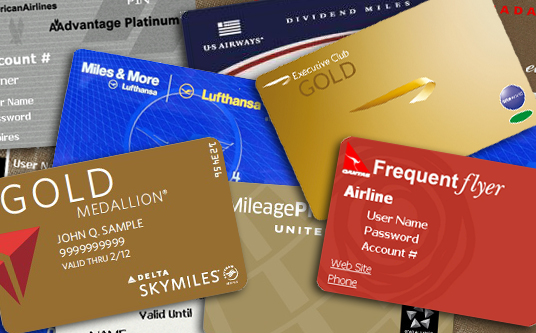
Imge from AirlineRatings.com

The problem with most loyalty programs is that they equate frequency with loyalty.
These are two very different things in customers' heads - and need treating and responding to very differently.
This becomes abundantly apparent if you take the time and trouble to contextualise your relationship with customers - but is easily missed if you charge head long towards one-size fits all operations in which the customer is simply the cash output device.
Let me give you an example. Imagine I have a strong affinity with an airline brand. Imagine that every time I fly long haul I choose them over all rivals. I'll even happily pay more for brand satisfaction I get from the reassurance of my choice.
But I'm not a frequent flyer.
In loyalty scheme terms I struggle to get off base.
But in actual loyalty - I'm the one who will be thrilled with the upgrade, I'm the one who will advocate to my peers how great the brand is and why they should follow my lead.
The frequent flyer has a sense of entitlement. Typically she is flying at least every week on business. If 30 per cent of those flights are with 'my; brand, the airline will see her as more deserving of special treatment - even though she doesn't see the treatment as in any way special.
She is in no way loyal - playing the varying airline loyalty status cards to get her the best deals. She cares much less which airline, more which rewards she can muster.
In summary; the frequent flyer doesn't care about your brand, expects you to go above and beyond for her (and will share negatively with her peers when you don't) and is not making you her default choice when flying. Yet these are your focus?
The loyal consumer chooses you by default every time they get to choose. They advocate for you. Going the extra mile for them creates massive value for them thatt they will talk about.
So isn't it time Loyaty grew up a bit and started recognising where rewards really create value. Lifetime Value has to factor for advocacy, for a real relatonship with the brand - one which runs far deeper than promiscuous frequency.

Tuesday, April 01, 2014

Customers know each other better than our data does

Yesterday I was served a 'promoted tweet' which suggested I might like to plan my own death. Today I have received an email inviting me to audition for a youth production of The Wiz.
Neither are relevant.
Listening to social and focusing on CRV closes the data gap
So - for all the advances in targeting and retargeting some are taking advantage of, it's clear that the one-size-fits-all approach is still being deployed at the bleeding edge of technology. Which is insane in 2014. Wastefully, expensively, customer-annoyingly, relationship-destroyingly insane.
The reality is that customers know each other better than our synthesis of all the data we have on them. If we don't make them, and their peer-to-peer advocacy, partners in our best relationship building efforts we will continue to fail to serve their needs accurately.
Partnership builds better relationships. Relationships are essential in building success in today's Open Economy.

Thursday, November 10, 2011

Ditch the customer if you want to transform business

At FT Innovate in Londom this week much of the conversation was about the role of social media in innovation.
Martha Lane Fox advocated business leaders get themselves involved in social media in her keynote.
But it was clear that for most the best this means is the opportunity to get an ever-better understanding of the customer.
Which sounds on the face of it a very excellent thing - a step up from social as 'earned media' or attempting to use people as your choice of broadcast channel.
But there's something missing. And the missing bit is one of the three quick indicators of the difference between what gets referred to as 'social business' and what I urge you to consider instead, Open Business.
Open Businesses are purpose-led platform-thinking organisations. They use their available resources to discover people who care about the same things the org does, bringing them together to surface their concerns and working with them to support them in resolving those concerns. It means outcomes which are a better fit with the real needs of those for whom they are intended.
There's little wrong with social business and much that is good. But it rarely inspires business leaders. In fact I know a very senior business journalist who has never even heard the term.
And when I was invited in to IBM to talk about Social Business in London last week I made the point that few CEOs will feel comfortable with turning their business into a social one. The term creates unhelpful mental blocks. IBM folk reported similar concerns.
Why make life more difficult when what we all want is change for the better?
So what's the difference between Social and Open Business?
Here's three distinctions I see:

1. It's not about the tools - it is about Behaviours:
Often social business conversations focus on implementing software. Open Business urges you to think Behaviours first. What are people doing, what can and will they do? If you are starting with tools you'll likely starting in the wrong place.

2. Think less about messages and more about products. Open Business urges you to consider ways of making things with the people for whom they are intended; for the best possible fit with real need; for efficiency; for results people care about. Messages are an outcome of this process - not its purpose. Talk 'social' and all roads will lead you back to messages.

3. Ditch the customer.
No, really. Stop thinking about customers. Customers are people you intend to do things to. Open Business urges you to think about the long-suffering customer as partners to work with instead. It pushes those people deep into the production process - right to the start, to join with and be supported by the org in delivering the things all parties want - all partners want.

Tools/Behaviours
Messages/Products
Customers/Partners

There are differences: Critical ones in transforming how business is done.


- Posted using BlogPress from my iPad
Enhanced by Zemanta

Thursday, July 17, 2008

Mobile operators. Take a seat before you read this

The VRM project had a bit of a bash this week.
The key learnings from it are brilliantly summed up by Chris Carfi at the Social Customer Manifesto in The Principles of VRM

Among the implications of these Doc Searls pointed out is:
"A free customer is more valuable than a captive one".

What's your relationship like with your customer? Do you like to think in terms of capture, lock-in, owning relationships?

Take a look.
Mobile Operators (among others) are advised to sit down first.

Doc speaks:

FasterFuture.blogspot.com

The rate of change is so rapid it's difficult for one person to keep up to speed. Let's pool our thoughts, share our reactions and, who knows, even reach some shared conclusions worth arriving at?