The phrase 'Content is King' has a long history. Its origination is usually ascribed to one Bill Gates from a 1996 article. Smart dude.
But I suspect it goes back rather longer. Those of us with a traditional media background always knew it was the content people bought our stuff for, for example.
Then there was the build - that not Content, but Conversation is King. Cory Doctorow memorably put it that "Conversation is King... Content is just something to talk about."
Content is pointless without conversation. Conversation needs 'something to talk about'.
Neither is king. It's the interaction of people and ideas that drives us to action. The web has lowered the barrier for millions to interact with ideas.
And no one is describing what they are interacting with as 'content'. In fact 'content' has some rather unhelpful connotations in the context of what the web is best at enabling - ie adhoc self-forming groups of purpose.
Content implies constraint; An idea boxed and kept within - a thing inside with limitations.
This isn't how people behave with ideas. We take, shape, add, delete, remodel - hack ideas in our every interaction. And the web is a splendid evolutionary environment for them.
So I'm going to suggest Concepts Are King is a better 'catch-all' for what is really important in connecting folk. I can take your boxed up piece of content and share it, of course. That's old-style viral. Pass it on unmolestered. Don't expect evolution.
Or I can connect with and play with a concept. We can.
And in so doing we add value - not mere distribution. Image attribution: By Enoch Lau (Own work (photo)) [GFDL (http://www.gnu.org/copyleft/fdl.html), CC-BY-SA-3.0 (http://creativecommons.org/licenses/by-sa/3.0/) or CC-BY-SA-2.5-2.0-1.0 (http://creativecommons.org/licenses/by-sa/2.5-2.0-1.0)], via Wikimedia Commons
While at iStrategy in Amsterdam last week I saw a ‘top tweet’
that suggested that those fixated on the viral campaign (that stuff we were
writing about in 2007)
should expect to spend 20% on making the viral and 80% on promoting it.
And I thought... what business do these folk think they
are in? When you’re stuck spending more on promoting the thing than you did on
making it there’s a problem.
It means you haven’t made it with the people for whom it was
intended in the first place.
The answer of course is to push the ‘customer’ deeper and
deeper into the process until they are alongside you as a partner from the word
go – a partner in making the better thing, the better outcome, that you all
want. Then they’ll share it. With people who want it. Because they want to.
Because it matters to them. The guts of Open Business is right there – people want
to make your stuff better because it matters to them.
Your job is to have something that matters.
Reminds me of some thoughts I had about the ‘social media awards’
which break out like Swine Flu at this time of year.
They have a horrible tendency to reinforce the ‘spend 80% on
promoting it’ status quo. (Image courtesy (Glen McBethlaw via Flickr)
Perhaps instead of asking how well targeted (laser, usually)
the ‘campaign’ was or how great its ‘reach’ (and mine will always extend your
grasp, thank you), judges could consider criteria such as: How has this project
improved the lives of those involved?
Rocket science it is not, 2012 it nearly is... no, really,
it is.
I will be sharing video from the Open Business Workshop Ninety10Group presented at iStrategy as soon as an edit is available, of course.
Much time, effort and money is spent on 'making things go viral' - often without making much beyond a ripple on the web's vast ocean. And that's ok. Really useful things - things that are a really good fit, are a fit for long-tail-like-low numbers by virtue of their true relevance to those who find them useful.
But many a marketing director still dreams of the kind of mass numbers of mass broadcast. They want their mass cake and eat their niche one too.
The envious eyes hungrily watched the growth of #welovethenhs on Twitter.
An aside on that: This very regular transfer of twittered tales to mainstream media is all a little odd.
1. It seems wise enough of the press to report on how people are talking about stuff. Before social media journalists did vox pops or listened in pubs. We (us people, not them journos) always were the content. But back then we weren't publishers or distributors. Social media allows us to fulfill all three roles now. Which I guess is why the press reporting what we had already thought, published and distributed makes them seem a little like the proverbial spare apendage at a house of ill-repute...
2. Reporting that people are organising to show how much they are prepared to fight to defend the NHS is a huge story politically. Yet the press continues to report on the tools (Twitter) rather than the action. Like I keep saying, we're trying to change the world - not report on it.
Anyway. Back to the matter in hand. Why did #welovethenhs grow so fast and wide?
Here are my best guesses. Feel free to add your own to the comments.
1. It was NOT directed from the centre. This is no Government-organised PR stunt. As far as I can work out some graduates in Edinburgh started the ball rolling (update: Dan at Twibbon, started the twibbon - which is going wildy well - comment from him below. He also tells me the instigator of the hashtag is Graham Linehan, best known as the writer of Father Ted.
2. It is a belief which people can share, rally to and advocate.
3. It is a belief that was there already. The #welovethenhs became a tool those who shared the belief could use to find one another.
4. It's emotional. So are we. One tweet I saw summed it up. 'everyone has someone in their family who owes their life to the NHS'.
5. Someone threatened the thing we all believe in. Hello Sarah Palin and the American right. Her description of the NHS as evil not only revealed how slippery her grasp on reality must be, it got our backs up - making us more ready to act.
6. The tools were easy to use and perfectly adapted for peer to peer transmission in the wonderfully viral conditions of Twitter. ie twitter's hashtags and trends.
7. Influencers got a simple way of wearing a badge to support the campaign in every conversation they had - the simple but effective twibbon.
Almost a year ago I wrote a post that called on those who would 'do viral' to remember who actually 'does' viral: The humans doing the interacting with one another.
And to that end attempts at 'viral' work which enables co-creation gives you both engagement and relevance.
One example I remember well from a previous life was an excellent and funny video - expensively made with high production values too. It was on topic. The seeding strategy was sound.
But it was essentially broadcast, broadcast which USED the user as the distribution channel.
So the message couldn't be adapted by the receiver. There was no room for their input. No adaption = low adoption. And if I don't adopt, I'm not going to pass it on; as simply illustrated as I can, here.
The quality was high. But the relevance was low. And relevance, as I so often say, beats quality every single time.
Allowing people to put a little of themselves into 'your' viral makes it 'their' viral.
And as Alan Moore - and by osmosis I, am so fond of saying: "That which we create, we embrace."
It allows us to work with the user rather than targeting them, based on the understanding that the User Is The Destination Now.
It makes it their message, not yours.
So I was delighted to walk into my new job this morning to be met with this new piece of work from Brando-Digital (yep, that's where I'm working now).
(By the way, we're so new the company site is nothing but a holding page right now. If you'd like to know more about us, drop me an email at david AT brando-world.com )
Despite the he-would-say-that-wouldn't-he inevitable in this; I think it's pretty cool. It allows the adaption of the message which will encourage that adoption.
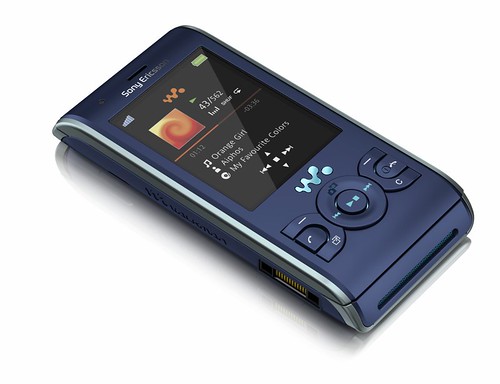
It's promoting a new phone, the Sony-Ericsson W595 - so the youtube element is not only relevant (you can upload direct to youtube from the W595) it's also a helpful viral aside.
Technically, some may be interested to know the creation of this effort has involved mashing-up apisfrom youtube, googlemaps AND facebook.
And importantly, it uses not only the silo'd social networks (in this case facebook) but also email - the most ubiquitous of all the social connectors.
Yeah, yeah, yeah but it's also a bit of fun people can have together at Halloween. We've given people, as Mark Earls would say, something they can do together - we've made the human interaction element the important element.
Have fun with it. Pass it on if you think its cool and think someone else will do to. Here's mine, below.
BTW I'm not 43 - yet! But I am odd.
A smile is among the most rapidly transmitted things I know. Laugh and the world laughs with you... smile and people smile back (they can't help themselves, as Herdmeister would aver). We're monkey-see-monkey-do critters. Homo Mimicus. Things spread because we copy the monkey next to us. So spread with a smile? One example HERD brings us of human-to-human transmission is the roadside floral tributes to road crash victims we now see so many of. I spotted a varient in New York last month: The bicycle the victim died on chained to a post on Broadway (I took a picture, right). Now I read that the idea is being copied by fellow apes across the UK. They have been dubbed, Ghost Bikes. This kind of spreading is very easy to spot (it's hard to miss a bike chained to a lamppost, hence the reporting in the mainstream press). The idea is being easily and relatively rapidly copied. It is easy to understand the idea, and easy to create our own versions of it. (nb: The moment the Government makes a standard white replica bike to distribute to local authorities to attach to lampposts at accident black spots, the idea will be finished). But perhaps there is already a brake on the pace at which ghost bikes can spread.
There's nothing funny about them. Nothing at all.
The things that get rapidly shared are not only those which can be easily copied and adapted (co-created) to suit the community we each interact with, they are also funny.
Smiling spreads fast. Laughter too. It's why the watching-tv-at-home belly laugh is a rare thing but the laughs-out-loud are two-a-penny when you're in a comedy club audience.
Bit if I think it's cool and funny stuff spreads way faster.
Perhaps it is simply because there are now three possible groups you will share with: 1. those you define as likely to think what you pass on is cool, 2. those you define as likely to think what you pass on is funny and finally, 3. those you define as likely to find it both cool and funny.
I'm guessing group three are the most likely to pass it on?
There's a darker flip: Fear and panic spreads rapidly through groups, too...
Now footy fans can not only show their support for their team, they'll also act as walking brand advocate - thanks to a QR code which any suitably equipped mobile phone can 'read' linking you directly to a mobile website or potentially activating something to be sent to your mobile.
Footy shirts have always been the sartorial equivalent of music videos - ads that fans are prepared to pay good money for, but this just takes that a step further. All branded clothing could follow. Hang on a minute. All branded products could follow.
"Love my pikolinos? Take a snap with your phone and find out more." You get pointed at a site to buy from - you might even get a voucher. I get a cut - or a big discount on my next pair of shoes.
That would be perfectly possible if each item had a different QR code, so the vendor could track the most viral of their purchasers in the real world and respond accordingly.
Real world interactions between people account for 80 per cent of all conversations about products, after all.
Dave Balter at bzzagent.com... got the cogs whirring?
Once upon a time if you put together a nice little video (brim full of TV envy) of sufficient quality and (usually subversive) humour you'd get a nice little pass-on rate. I think of those old Ford Ka ads.
These were essentially broadcast. They relied on a different 'distribution model' (that'd be us then) than the 30-second slot, but that was all. And the marketing world slapped itself on the back. For we have invented pull... ish (at least in the sense that those who were amused by the ad would forward it to others who they thought would be amused, and along the way the sender would accrue some kudos for showing a side to his own sense of humour, and for being first (among his peers) with the gag.
And let's not discount that. It was a decent leap forward. But it was one with a one leg tied behind us. More a stuttering hop then.
They were a hop forward in another way too - they got closer to the true voice of the brand. Instead of a sanitised made-for-TV version of their voice, this one dared to speak something approximating the truth.
For example, a few years back one bike manufacturer showed an awesome video of one of its new bikes being thrashed through early morning city streets. It was great to watch - accompanied by banging music. But it was only for consumption within the exhibition it was being shown at (on a small screen on its own stand). It was kind of semi-public. I was the editor of motorcyclenews.com at the time. We thought it was great and wanted to show it on our site. The manufacturer daren't share it officially.
But in the hyperlinked world of the web, the truth will out. We found a site showing the video and linked to it. It didn't last long (the site got taken down pretty rapidly and this was a world pre the ubiquity of Youtube.)... but the video was out. The voice was heard. That video said what the people who worked for that manufacturer really thought about bikes and this bike in particular. And that was extremely refreshing. It carried the authentic voice of people passionate about two-wheels - about people who cared more about that truth than about PR, the risk of offending a handful, of being accused of inciting bad behaviour etc etc.
This is one of the things that good viral does. It does what is not allowed by the carefully constructed PR-riven world of brand 'management'. It subverts The Message, to reveal the true voice - the real conversation happening in an organisation. It closes the gap between those who craft and those who market.
Another example is rattling around the web right now. It isn't an 'advert' at all - but advertisers and marketing teams could learn an awful lot from it.
I'm thinking of this:
I've been sent a link to the clip above by two of my peers. That's pretty damn viral then. It's been viewed 1.9m times (as of Dec 19, 2007), it has hundreds (400+) comments on YouTube. It's been favourited 5000 times.
Outcome: When I saw it I thought... actually I'd rather like to a) buy an Eddie Izzard live DVD b) see Eddie Izzard doing live stand-up. And there may be nearly 2m more just like me.
But where's the hard sell? Where's the link to buy? Where's the professionally produced, slick high-production-values? Where's the TV envy? Where's the end credits with a url?
There are none of these. Is it more effective for it? It feels that way to me. It's made by a fan (there's even a helpful rumour doing the rounds that Eddie makes them himself - which would be great if it were true, because it would be an example of closing the gap between creator and marketing still further) - not a corporation aiming to make bucks out of Eddie.
Imagine the 'viral' ad that most agencies would have put together in a bid to achieve the same outcome? I don't think Lego or stop-motion would have been involved. Relevance over quality - comes up again and again...
So viral needs to tell the truth of a product/service... whatever, in the authentic voice of those who create it. Their passion should shape it. If Eddie didn't make this video a fan did - and that's as close as it gets to being part of 'Eddie Izzard Corp'.
The Izzard example illustrates another requirement of great viral. It's mashable. And that means you can create a personal outcome, as Chris Cunningham spoke about at Widgety Goodness. You get a version for yourself to co-create.
And since you create it, you will embrace it, it becomes relevant to you and your friends. And that relevance becomes more important than any amount of shine, spin (quality) you can put on it.
Trouble is, the Eddie case comes with some tough technical barriers to overcome... I have to save off the soundtrack, then go create my own video version, then upload to youtube et al, then share with my good buddies...
So here's an example that makes the point rather better, because it lowers the technical barriers very well (and rids itself of the TV envy in the process). I was pointed at this by David Armano at Logic + Emotion.
What we have here is a promo for Pampers in which you can make your kids the stars - and then who wouldn't want to share it with their nearest and dearest? And they'll have friends they'll want to share the idea with etc etc.
If given tools to create your own version of something you can create something which is relevant to you, and which you will embrace. And now that there's no space between us (thanks to the web) you can share your joy with your friends really fast.
So, here are the lessons I draw from these examples. If you spot more (or think I'm making assumptions that need challenging) please join the conversation by commenting.
1. Speak in an authentic voice (close the gap between creation and marketing) 2. Lose the TV envy (think relevance over quality) 3. Give people tools to make it their own (that which we create, we embrace) 4. Don't bother with urls, links or 'brand messages'. (We don't do spin) If people are interested they will search. Buy the keywords if you want to make it easier for them.
Facebook's SocialAds have great promise. But I hope for their sake they have overcome an issue that seems part of the fabric of this particualar social network.
The default mode of every application I use on Facebook is that as soon as I sample it I am presented with a pre-filled series of tickboxes against my friends - whom it's all to easy to infect with whatever I fancy. It is this which has played a huge part in driving facebook's exponential growth.
This is all good for SocialAds when/if I am selective. But the default is not to be. In other words the balance is in favour of spamming all my friends. SocialAds will be making a dangerous assumption if it believes all my friends want the same things.
Spam is initially ignored, moves on to annoy, and ultimately inspires an angry backlash. So the very thing that has driven the exponential growth for Facebook is exactly what could crush its potential for financial success - indeed kill it as a platform. Look at the growing annoyance with vampires and zombies on facebook, for example.
Of course, we have to assume that facebook have worked this out and that the touch will be lighter, that segmentation will be driven by friend interactions and selections. But there are signs the viral imperative is endemic in facebook's build.
For example, I sent a message to the Friends of Faster Future group on facebook yesterday. And then I had to send another - apologising. It seems many of the group received my first message five times - an error entirely created by the facebook machine (update - I note my facebook ID stopped working this morning [10.10am], turning the friend badge on this blog into a simple link to facebook - and preventing me from accessing my facebook account altogether - not a good time for the tech to go belly up is it Mr Z?). Annoying enough if it's from a friend and relevant to you. Imagine if either of those conditions isn't met?
Did Facebook open the viral throttle only so it could grow to this commercially viable scale and is now ready to close it in the interests of actual commercial success? The balance between the needs of its users and the needs of its commercial partners will be a tricky one to maintain.
Anyone who has read the Tipping Point will recall how there's a frightening permissive viral effect to suicide.
There are many recorded cases of suicides coming in batches - and in particular areas. Several in one school, endemic in some polynesian societies etc, surges after the widely publcised suicide of a famous person.
Staggering to think that the most important of all decisions in our lives (or deaths) are so easily 'tipped' by the choices of others around us.
My parents once told me they got married, because all their friends seemed to be getting married too (how romantic...)
I'm pretty convinced divorce may be viral, too. If one of your circle of friends succumbs, the chances increase for others in that group.
Essentially the same is true in each of these examples: Permission has been granted for this to be an acceptable course of action/conduct/behaviour in your particular community (or shared interest group).
And if such permission-based influence can act so virally in such very important parts of our lives it follows (surely) that this must have real power in driving our behaviour in other community contexts. Imagine the potential marketing power, for example.
Take facebook (again!?) if one of your friends leaves a group do you stop to consider whether or not you should? Do you think, hmm maybe I'm in too many groups and I should have a bit of a cull? The reverse is true of course. See a friend join a group and if it meets your interests you are in like flyn!
In this context some people hold more viral sway than others. People who have lots of friends and do lots of things on facebook have more influence.
And I'd contend the same is true in real life. It's not necessarily the most dominant person (ie, most looked up to, the leader, the coolest) in a community who has the most power to effect change. It's more likely to be that active person with multiple light social touches. These people need persuading - then the rest will feel they have permission to change.
This is a lesson learned by the likes of Xtract in Finland and captured in their concept of the alpha user.
It's a lesson anyone considering social media has to learn, too.
(Excuse the lack of caps but due to my wrist injury, I’m trying not to strain my remaining good hand)
Sony has really scored an own goal with their new attempt at promoting the psp. Creating a fake blog was bad enough, but they've even accelerated into the car crash by doing it badly, and moderating comments in such an obvious way.
The rate of change is so rapid it's difficult for one person to keep up to speed. Let's pool our thoughts, share our reactions and, who knows, even reach some shared conclusions worth arriving at?


![Reblog this post [with Zemanta]](http://img.zemanta.com/reblog_e.png?x-id=b8e6a146-0948-448d-966a-4f78022caeaf)
![Reblog this post [with Zemanta]](http://img.zemanta.com/reblog_e.png?x-id=da8fc6cf-3e8f-4910-af6f-d9ecbcc4f2c8)