Snapchat
has just been valued at $12bn. PRISM and other forms of state surveillance of
our social communications are driving a retreat to privacy.
The omnipresence of
brands in our social streams is pushing some folk to do the equivalent of hitting
the mute button when the ads are on TV – they are looking for ways NOT to be
interrupted - not to be targeted or otherwise 'engaged' by ham-fisted, dads-dancing-at-weddings brands.
This
preference for the private, for the small social groups of communication – six-person
social networks, sms-based one-to-few interactions, all of these is piling on
the agony for mass communication.
How does an
advertiser slap banner ads into our private conversations – by their very
nature we want to switch off anything that might reveal our preferences (key
word matching of ad to content of conversation, in the style of G-mail or
twitter ads, for example, even this will be unwanted by those headed for the
small-private-network future).
It’s a
fear-led place. It’s not something I want to see. But (and I say this is an As-Well
rather than Instead Of scenario, it may be the dawning of a cultural lock-down.
Sharing for some folk is less caring, more scaring.
Facebook
active use is actually down at the end of this year (by 0.5% over all granted,
though much more pronounced among younger segments) The way people are using it
is changing too – much more voyeurism, much less sharing of their own input (images,
video etc).
And the
problem for mass comms? How to get your message into those private conversations when they don’t want you to know anything about them.
Relationship
marketing remains the key. Create an easy and ‘right’ experience and the result
isn’t a banner ad – it’s a heart won and a mind
made up. We may want to switch
off anything that would give an advertiser a clue when we go micro-social, but
try as we might we won’t switch our beliefs off when we make our private
connections.
You’ll
recommend based on your experience just as heartily in private (perhaps more
so) than you would have done in public.
This of
course means the building of advocacy is even more important. It’s pretty much
all that can work in this emerging micro-social world.
The challenge
facing digital marketers now then is, how can you apply the rules of advocacy
creation to any marketing activities beyond that delivered by their one-to-one-
social media activities. And if you can't, where should you focus your spend instead?
This charge to privacy is, in my view, a road bump on the journey to Open (as in The 10 Principles of Open Business) which I think we will come to look back on as the time when a lot of people came to the realisation that they didn't NEED control from the centre.
It's an important learning, but something of a cul-de-sac in my view unless the outputs for all improve (and that is a road that always leads us back to collaboration, an Open road).
But for all that - it is happening - and marketeers must adapt to cope.
Facebook's valuation is - apparently - justified by how much more accurately it will be able to target folk for 'conversion' very soon.
Not a religious thing, but that greater than ever ability to spot you and sell to you that you've been waiting for (ah hem).
Hmmm.
Our pension fund holders are really going to pile into Facebook based on last-century's ad model?
Let's review for a moment.
Facebook is not an audience. It is an aggregation of small groups of people who care about each other (mostly) and a few that circulate around brands (mostly as a badging excercise or in hope of being thrown a fish or two).
I don't know of any groups that formed to be marketed to (either on Facebook or elsewhere). Facebook could test this by setting up the 'I signed up in order to be better targeted by advertising' group and counting the likes...
It's a shame that Facebook's share of the big brains can't be refocused, that Facebook can't take the opportunity to build new relationships between brands and their customers, to help shape alternatives that do fit the networked model.
Where is Facebook's product suite for innovating with customers - for making customers partners with brands in pursuit of things they both care about, for example?
I thought we'd all established we don't want to be targeted, we don't want to be marketed to, we want to join in, we want to market with.
We don't want better messages - we want better things.
Of course, we've said all this before (see below). I guess it wasn't a £100bn question last time.
Listening always beats asking. Asking questions demands and shapes response.
And people, good, kind, back-scratching people, will often tell you what you want to hear.
Taken to extremes you get your LinkedIn recommendations. (Compare that to what your colleagues may say if you're out of the room...)
Less dramatically, ask people and you guide their thoughts.
Market Research companies are painfully aware of this skew. No question is entirely without motive. None comes without an agenda - an agenda proposed by the questioner.
But listening, passive listening, can teach you much.
Wise orgs and brands are doing more of this. It's often a bit of a revelation for them that they can do it relatively easily online.
But anything I publish on any open forum, blog, tweet, is recorded, is searchable, is discoverable. As is anything you say. Or your friends. And their friends ad infinitum.
Right now and for the mid-term (I'm assuming) we feel what we hear is pure, unsullied, honest, unskewed people saying what they really mean to their peers. With caveats around axe grinders and power relationships, of course.
But could it be we will begin to change what we say on the assumption that brands are listening? Will it lead to a layer of artifice?
I guess it's a little like CCTV surveillance. Britains 'know' they are the most filmed people on Earth. The emergence of hoodie culture - hiding your face from the prying eyes - is the most visible change to behaviour.
For the most part we act as if the cameras aren't there. (image courtesy)
But perhaps this is because the implications haven't sunk in yet?
And with the notion that brands and orgs can pick up on our every digital utterance still very new, who knows how this fact will end up modifying our online behaviour as we become more familiar with it.
Will we update our notions of privacy and private space as we embrace the digital?
Will we find greater value in expressing ourselves freely because that expression can connect us with others trying to solve the same problems we are (communities of purpose)?
Or will silos around our private lives remain strictly maintained?
Will we feel the need for them in a world in which you can be overheard by anyone else.
And what happens when those doing the surveillance speak back - in real time. I recall the experiment in which CCTV operators added a speaker to their cameras and started berating people they spotted dropping litter. Out loud and in public. That shocked.
So if a representative of a brand responds to your complaint in real time on Twitter (for example) are you shocked? Angered? Or pleased?
I'm guessing pleased? You aren't being told off. You are being helped at just the point at which you expressed the need for help.
Does knowing they are there (lurking/ready to help depending on your pov) make a difference? Do we change if they start openly responding?
Are we thinking outloud to impress the infinite unknown audience?
What I publish is not only shared right now with those who directly choose to receive it, it is here for all time, for all people. Ever.
Dr Mike Wesch talks about the moment of context collapse we face when staring into a webcam to share on the web - that we know not to whom we are speaking.
The same must be true of any kind of utterance which can for ever be discoverable.
When you realise just how long and loud your voice may echo through the ages does it make you want to shout a little louder. Or clam up?
The dilemma is one that has always faced publishers. We're all publishers now - with greater reach than ever before - it faces us all.
It has the potential to change the meaning and value of everything we share online.
Neil Perkin has just announced his short-list for post of the month and among them is my little project to test the social media response times of a handful of leading brands.
By way of an update; Qik won the race to be fastest re social media response. Ford was our honourable runner-up and taking the third place on the podium... well, we're still waiting.
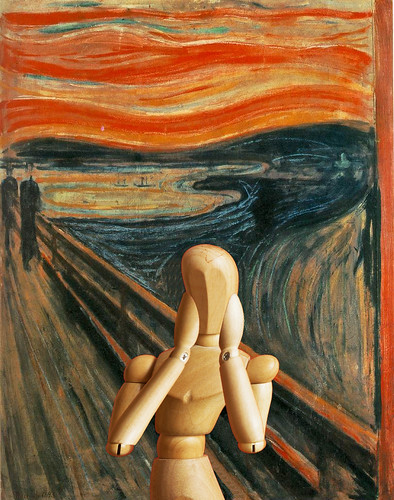
It appears that in social media, the majority of brands, at least, can't hear you scream.
Brando Social's Winning with Social Media event (at the Soho Hotel on Feb 26) was aimed at informing and exciting people about the revolution that is the peer-to-peerpower of the network.
And we hope we did a good job of that. (yes folks, I do work for Brando Social!)
If you weren't there - you can download/watch/share any of the useful bits and pieces including:]
MD Jamie Burke wrapped the morning up by introducing Brando Social Consult - our team of social media consultants with deep experience and a wide range of specialities - and telling those assembled about other services Brando Social offers. Watch the video and see the slides below.
Cutting brands out of the conversation is not a wise business strategy. It is is limiting and potentially damaging for all concerned.
I’ve used Flickr for many years – as have many of my colleagues.
I’ve even used Flickr for ‘Branded’ functions – setting up accounts in the name of brands, using its functionality to upload and display to those brands' own websites etc.
So when we thought of running a competition using the group functionality of Flickr no one thought – STOP surely this is all nasty commercial stuff Flickr won’t accept.
So it came as something of a surprise when we discovered that a competition group associated with a brand runs the risk of being closed down because it contravenes Flickr’s commercial use terms and conditions.
Let’s consider the landscape here for a moment. We’re told by Flickr that groups don’t support competitions. We found 3600+ running when we last looked. Image courtesy
A vast proportion of the users of Flickr are promoting their photographic wares, from just displaying the quality of their work right up to (and including) people selling T-shirts and mugs with their images on them.
Huge numbers of groups are brand-related. From the obvious (Canon and Nikon users) to the might-as-well-be-an-advert of group’s extolling the virtues of one of Ford’s trucks.
None of these have links to buy stuff (though, hang on a minute, many of the groups do, it turns out).
Seems even if your group has zero links to external sites, no calls to action to buy – in other words is less commercial than most, you’re still not welcome if you come attached to a brand.
It seems a little unfair that because you organise a group FOR a brand Flickr will take exception but if users of brands (and how can you tell the difference in most cases) create a group, all is well.
Not exactly encouraging transparency now, is it?
Is this a case of ‘if it’s from the edge its ok, if it’s from the centre, it isn’t’. A big principled philosophical stand?
Nah. It’s all about the money. Any brand can PAY for a sponsored group, which Flickr will then happily spam its users with by pasting it all over the homepage with no regard for that user’s interests. There is no moral high-ground in that.
Good brands don’t use social media, they participate in it. At least, their representatives do.
They go to the trouble of reaching out to people who care about a particular competition, theme or idea - to join in. And they ask them to bring others – more people to Flickr in this case – more of the people who make Flickr.
Flickr is the provider of tools and a platform. The community that emerges is not Flickr's, it's simply enabled by those tools.
Good examples make Flickr more useful for all those concerned. Users end up uploading and sharing more images, and forging more connections. And each new node on the network doubles its value.
We didn’t intend to give Flickr money. We did intend to give it more people and something useful those people could do together.
We usually charge for this service…
I suspect those at the top in Flickr get all this. But those charged with hitting short-term commercial targets don’t.
So, a little advice for the commercial strategists at Flickr. Nose off grind-stone a minute. Look around you.
Facebook. More images than you. More people than you. Treats brands just the same as it treats users. There I can set up a fan page, share functionality etc, as a brand or as a user. Perhaps they’ve noticed brands are made up of people (you can but hope…)
Whatever the case, Facebook’s treatment of brands is welcoming. Come and play. Join in. Learn from the networked world.
Consider Youtube. Brands can create channels, profiles, upload content. They are treated like users. Join in: Brand or user.
Consider Blogger. Brands can create blogs and have them hosted by google. All at no cost. Join in: Brand or user.
Consider Twitter. Brands can create a profile and interact just as much as any individual user. Join in: Brand or user.
These, and the vast majority of communities, see the bigger picture. They are not the owners of a community. They are the owners of a set of tools for the community to do with as they will. And the communities include people who happen to work for brands.
Flickr, and communities like it, are made up of people who have to create part to take part. Brands are one of the things they want to create around and interact around – just try some searches to see. Creation and interaction is what makes community valuable.
My best advice: Don’t stand in the way of this.
Youtube, Facebook, Blogger, twitter are all applying the principles of the because effect – when something that was once scarce becomes abundant you can no longer make money with it, you have to try to make money because of it.
The classic model is music. Now that digital music is everywhere and all-but free you can’t make money charging for it (selling cds) but you can make money because of your music (ie concert tickets –things that are scarce).
Youtube made uploading, sharing and broadcasting video abundant. They realized therefore they couldn’t make money from that. They have focused on making money from what has resulted from that (because of that) – their place as one of the biggest sites on the planet with huge, huge audiences and increasingly clever in context ads.
We appreciate these are difficult times for commercial considerations. We appreciate the lines are blurring.
But Flickr and other social networks have lessons to learn if they want to connect properly with brands as they adapt to the networked world.
Social Glue has a plan to open debate around this and get the social networks (yes Flickr dudes, you included), users and brand-promoting folks to join in and establish some new ways of doing business in this networked world - ways which will be to all parties' advantage - particularly for the communities we're all trying to serve.
Today I'm pleased to share part III of my interview with Here Comes Everybody author Clay Shirky (recorded in London on September 30 at the offices of Incisive Media).
It is part of a 35min interview.
In part three Clay discusses the different qualities of interaction required to humanise brands - and how creatives can welcome collaboration rather than seal it out.
As Clay puts it: "Brands aren't people. They don't interact. People do."
And he warns creatives who seek perfection in their campaigns: "Something cleaned up right to the edges has no room for me. Perfection says, you don't belong here."
Clay's contention is messiness is human and acts as a welcome matt for interaction.
Watch the video below:
See him in person here. Buy his book, here.
Noah Brier's fabulous Brand Tags project has been recreated in a UK version. Now you can bitch about Bernard Matthews. Brand Tags shows you brand logos then asks you to type in the first word or phrase that springs to mind. The resulting tag cloud reveals the crowd-sourced version of what the brand means to the people who are meant to be consuming it (in theory, at least). Wonder if I can get a few of our own included?
Brand Tags, where consumers tag brands with the first words that come into their heads.
Look at the size of 'British' in the BMW tag cloud. Or 'assholes' for that matter. 'classy' and 'engineering' are just as big, of course. Dominos Pizzas, Barbi, Bank of America... most will make you laugh outloud. Not funny for those trying to 'control' brands though. Not funny, but extremely informative. Look, listen, learn.
What does your brand mean? What people say it does.
The relationship is not between the brand and the consumer. The relationship is between people. What people do to each other is more important than what you try to do to them. Stop trying to understand the individual (own their data) and watch the dynamics between people. Brands as social lubricant, as Mark Earls puts it. The Herdmeister speaks. Thanks to Peter for the link from comments here.
If the news that the community of users owns your brand is only just sinking in, try this for a size. Google is now going to allow other people (rivals) to bid on 'your' brand's key words in the UK. Via WebWire According to the report anyone will be able to bid on trademarked names (just as has been the case in the US since 2004). There's a bit of a panic being raised over on this story about it. Most of the concern is about how this will add complexity to the seo sales world. My heart bleeds. What about the poor old consumer - looks to me like this carries the risk of creating yet another hurdle between us and getting the return we actually want. If I search for Nike I'm not looking for Adidas.
Now footy fans can not only show their support for their team, they'll also act as walking brand advocate - thanks to a QR code which any suitably equipped mobile phone can 'read' linking you directly to a mobile website or potentially activating something to be sent to your mobile.
Footy shirts have always been the sartorial equivalent of music videos - ads that fans are prepared to pay good money for, but this just takes that a step further. All branded clothing could follow. Hang on a minute. All branded products could follow.
"Love my pikolinos? Take a snap with your phone and find out more." You get pointed at a site to buy from - you might even get a voucher. I get a cut - or a big discount on my next pair of shoes.
That would be perfectly possible if each item had a different QR code, so the vendor could track the most viral of their purchasers in the real world and respond accordingly.
Real world interactions between people account for 80 per cent of all conversations about products, after all.
Dave Balter at bzzagent.com... got the cogs whirring?
Hard on the heels of all that Blue Peter cat naming chaos, dodgy phone votes and competitions, comes news that Maxim (in the US) has published a review of a CD its reviewer hadn't actually listened to (via the BBC... careful now, people in glasshouses etc etc).
Media brands have long known that trust is among our most precious possessions. At least we say we do - and then keep doing things like the above. Yet there are still those who struggle to understand how inevitable the decline of mass media becomes in these circumstances.
In specialist, consumer media (my world - and that of Maxim) we like to believe that our experts have something more to offer than our communities. Often that comes down to access. That's what makes the Maxim thing so wrong - it faked the access. They pretended they had got to hear the new Black Crowes album before you did. And they hadn't. And as a result the opinion was fake. It was a lie. Even the position of authority Maxim could claim from getting this access was bogus - because the access was never there.
THIS UPDATE:(made me laugh outloud!)."Rapper Nas, whose hits include Hip Hop Is Dead and If I Ruled The World, told the New York Post that he was surprised that Maxim had reviewed his album - because he hadn't finished recording it yet. The magazine called his album "radio friendly" and gave it a rating of 2.5 stars out of five."
Guess what all this does to trust...
No wonder people are making use of the power of the network to create their own networks of trust and to set their own definitions of quality (step forward tripadvisor et al). Relevance over quality folks. Live (or die) by it.
There is still a (potentially lucrative) role for trusted reviewers to give you a tip in the right direction, to start a marketing ball rolling in a believable direction. Trust them and you start to believe the reviewer even without direct experience of the product yourself (it's a core part of Dave Balter's thinking, an idea which permeates his book Grapevine, and the activities of his word-of-mouth marketing company BzzAgent).
I'll be keen to hear what Dave thinks about the regularity with which 'expert' opinion is being revealed as untrustworthy when we meet for lunch in London next month, and the impact of trust being created by networks rather than from the centre.
Drawing a few threads together I'm proposing an updated definition of what a media brand is - and offering a suggestion about what a media brand should do:
A media brand is a platform for a community with shared interests.
Focused on the interests of this community, we should aggregate content and offer services.
Services are best delivered at the point they are needed – and that is always, always mobile!
Note the reference to the 'aggregation' of content, rather than the 'creation of'. I'm not suggesting media companies should not bother with the creation of content. I am suggesting it's no longer our primary function.
Our legacy of content creation can get in the way of putting the community first. We can't resist the urge to broadcast - to select what the audience is offered and spin it to our tastes.
This often reveals itself in the way we display content. Media brands put the content they create first, tip their hats at some user-generated content (always given second billing) and actively prevent the sharing of other sources of content the community might actually prefer.
A blank sheet of paper approach would open our eyes to simple facts such as:
The best content for the community is welcome - be it our own, rival media brand owners', or user generated content.
The community should judge what content gets highest prominence - and which gets booted into touch.
Groups should be allowed to form which set their own parameters for what equals interesting and 'good'.
This requires some bravery on the part of the media brand owner. It means that only if our own content is good enough/a good enough fit with the community will it score the highest ratings and get top billing.
What lessons are there in this that you aren't prepared to learn?
I'm intrigued to see what the wider world make of my most recent post on The Way of the Web. My views on how editorial sites will be fuelled by user generated content have become more coherent over recent weeks. Certainly when it comes to text submissions, there seems to be a lot that suggests the new editorial model for many publications will in fact be very similar to the current set-up. Anyway, I'd be very interested in hearing some more points of view, so get yourself over to The Way of the Web
It occurs to me that optimising your website for mobile NOW has to offer significant strategic advantage.
Since mobile will become the primary access point for the internet within two years (probably less post 3's announcement of fixed-price 3G internet access last week) then it follows that those users arriving on the mobile web will prefer (and fall in long term love with) the first sites they find on the subjects they are interested in AND which are best optimised for the mobile user experience.
Brand will give you a head start - but if you offer a poor user experience (by not being optimised for mobile) then bye bye! Your user is off to find someone offering what you've got - on a mobile-optimised site.
We are in an internet ground zero situation.
Imagine being able to be at the start of the internet revolution knowing all that you know now. You are in that position now - if you recognise the mobile internet opportunity and move fast.
The alternative is to repeat the mistakes of sitting, watching, and following too late. The alternative is unthinkable.
Angus Farquhar points us at the videos you'll find here at DigitalHollywood "All the top names in the industry discussing most of the stuff we are all currently talking about using in both advertising and consumer stuff," he tells us.
Subjects included in the conference videos include:
Hollywood and the Digital Consumer: How Technology, Content and Services Establish the Next Level of Consumer Entertainment Experience
Programmable Web, Podcasting & Blogging - is Transforming and Disassembling the World of Traditional Media, Communications & Advertising
Digital Music & its Transformation: Downloads and Subscriptions in Mobile, Broadband, Pods & Digital and Internet Radio
Strategies in Wireless Devices and Services - from Audio & Video to Downloads: How Innovation Drives Avenues for Subscriber and Revenue Expansion
Game Power - Entertainment as Franchise - Crossover into Music, TV, Cable, Movie, Mobile, Advertainment & Custom Branded Experience
TV & Interactivity: Evolving Content & Business Models: Content, Commerce and Branded Entertainment
Branded Media Marketing - TV, Film, Broadband, Podcasting & Blogging, Mobile, Music and Games – Reinventing the Commerce & Media Model
Internet Video, Advertising & Marketing: The Next Generation of Consumer Reach
Entertainment Expands the Digital Home: Networking, Sharing and Protecting
etc etc,
I'll no doubt have more to say once I've had a chance to watch them! If you get a chance to see them before me (or after, for that matter), by all means have your say by posting below!
C0-creation of content is a running theme in every digital plan today. But (and this is where I might finally be getting a handle on Communities Dominate Brands'use of culture instead of content as one of their 4 Cs) how will you allow your community to create its culture - and then embrace the results?
In simple terms, is your digital offering allowing communities to do what they want, rather than what you want them to do? Allowing them to 'create their own culture' by what they do with it may even reveal new ways of transacting.
Let's say your community hates 'ads' but is quite prepared to create a wish-list, or actively pull suppliers to them (by their own rss or similar). Suppliers may have to bid to provide that service to them (there are similar ideas already out there).
But this is where the culture your community co-creates comes in to play. Perhaps you don't charge either party - you allow them to contribute what they think is fair. The culture within that community will create its own pressures for users to conform. Perhaps suppliers pay to subscribe to feeds? I don't have the answer I'm afraid - I'm just keen to raise the question!
And while I was thinking about this stuff it occurred to me, the internet used to be awash with this kind of thing: Join a group buy to get a discount. But I don't come across them so much these days.
Perhaps, with the rise of 4C, systems like this will get a new lease of life. Imagine, for example, that you could join a group to not only get a discount, but create something with shared specification you all agreed on - a car, a computer?
It's now possible on a global scale for enough people to come together through digital means and say what they actually want and have a facilitator tool up and make it.
The rate of change is so rapid it's difficult for one person to keep up to speed. Let's pool our thoughts, share our reactions and, who knows, even reach some shared conclusions worth arriving at?


![Reblog this post [with Zemanta]](http://img.zemanta.com/reblog_e.png?x-id=5bbdfc99-8f08-42e4-9c04-64c4fe1bc743)
![Reblog this post [with Zemanta]](http://img.zemanta.com/reblog_e.png?x-id=ca8ebf9f-a6cd-4209-a5bb-86fa8bb7947c)

![Reblog this post [with Zemanta]](http://img.zemanta.com/reblog_e.png?x-id=d070b9b3-b6fe-4c48-ba34-39c30089e760)

![Reblog this post [with Zemanta]](http://img.zemanta.com/reblog_e.png?x-id=5e6dbb9d-92f9-42c5-b487-b4934cd4e3cd)