Showing posts with label Future Technologies Conference. Show all posts

Sunday, May 29, 2011

Be part of lowering the cost of action - or be history

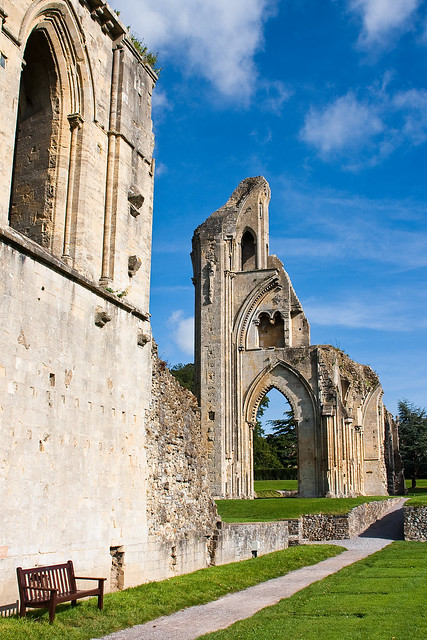
Glastonbury Abbey - ( http://www.flickr.com/photos/lordspudz/)
I've long been baffled by those that think the future is digital. Those who believe this seem fixated on the idea that it is the technology that makes change, rather than what people do with it.
When the technology of the printing press arrived, the end of the story wasn't the development of the book. It was what people did with books that counted - how they spread ideas.
And in the printing press model, the changes to the way society organised echoed the mass production centralised way of doing things that the printing press - and later more forms or mass production - represented.
No, the future now isn't digital, it is self-organised (as I have suggested before). The web's role is to enable adhoc self-forming groups of purpose to form more effectively than at any time in history. And since communities of this kind reduce the cost of action - they cut the cost of achieving what more of us want, more effectively, than at any time past. The future that delivers is emerging and accelerating towards us now.
So what does that mean for the world we know? For your business? For your political party? Your form of government?
Well perhaps it's wise to reflect on what survived from the feudal world to the capitalist one? How many of the richest families in Britain were among the richest in Britain on both sides of the divide? And if there are any that survived, were they among the first to adopt capitalist principles of organisation - of both capital and labour?
What of our God and King? In Feudal times the Church sat alongside the King - in terms of power; and always well ahead in terms of wealth. Both saw their places tumble in the age of capital. Today they are at the peripherary: Pomp and splendour - about as relevant as the role of hand illluminator of Bibles.
God and King were superceded by Parliament (democratic legislatures) and the Law.
The question facing all who would mediate, all who would organise from the centre, all who would impose one size-fits-all-solutions on a fragmented fitness landscape, is: are you prepared to adapt to the looming self-organised future, to survive?
Are you prepared to start listening, start adapting to real time need, start opening up, start thinking like a platform to make change with the people who want the same as you (both inside and outside your org)...

If you aren't, then expect the rest of us to be self-organising to answer the question of what replaces you any day now.

Enhanced by Zemanta

Tuesday, October 30, 2007

Never underestimate the future... or how hard it is to predict


Stumbled on this while scouting for images...
Claims to be how scientists at RAND in 1954 predicted home computers might look in the year 2004.
UPDATE: But it is (I'm informed in the comments below) a fake. Despite (pity!) I'll still leave the final question. See end of this post!

The text is a little hard to make out. It reads: "Scientists from RAND Corporation have created this model to illustrate how a "home computer" could look like in the year 2004. However the needed technology will not be economically feasible for the average home. Also the scientists readily admit that the computer will require not-yet invented technology to actually work. But 50 years from now scientific progress is expected t solve these problems. With teletype interface and the Fortran language, the computer will be easy to use."

Anyone fancy lashing up a model of the equivalent 50 years from now?

Monday, April 16, 2007

Forum Oxford: Future Technologies Conference

I attended the best conference I've ever been to, on Friday 13th - ForumOxford: Future Technologies Conference. It gathered some of the biggest brains in mobile tech, convergence, mobile internet (etc) from across the planet - at Oxford University.

Conferences can often be wasteful affairs if your thinking is anywhere close to the curve. You pay a fortune and sit listening to speakers telling you (being broadcast at) what you already knew - a year ago.

But this was something different. Not only was it fabulous value for money it was also in the 2.0 mode - sharing, interacting, challenging and igniting ideas.

It has to be the most profitable day I've spent in the last 365.

Some personal highlights: (podcasts etc are going to follow, so there may be more detail to come...)
1. Google presenting on their absolute commitment to the mobile internet - and its perfect fit with their mission statement (organising the world's information and making it accessible to all). Their promotion of the value of the long tail on mobile, too.
2. The clarification of the value of widgets/applications which mean you only update what you need when accessing the mobile internet (ie google maps for mobile). (google/symbian/Jeff Sonstein etc)
3. Google is making London its global hub for 'huge' mobile investment.
4. The emerging theme that even the mobile operators (at high levels) now 'get' the value of group forming network theory (Reed's law)- and why that means the walls not only have to come down but that they should to increase value for all parties. (3, Vodafone)
5. A stat quietly slipped in by (I think Russell Buckley at Admob) that 34% of UK mobile users now use the mobile web.
6. Prof William Webb's 'Wireless' predictions for the next 10-20 years. Brave man.
7. Vladimir Dimitroff reminding us of yet another convergence going on: in the realm of UGC the consumer and the employee are converging (expect to see this in co-creation of all kinds).
7. Personally getting name-checked three times from the stage - in a room of people of this calibre, that was a real jaw-dropper - many thanks to Tomi and Ajit.
8. Meeting some brilliant people both on the night before and at the conference itself - Hello Martin Davis, Jeremy Kloubec, Cameron Doherty, Tomi Ahonen, Ajit Joaker, Jim O'Reilly, Krzysztof Proczka, Eduardo Cruz, Jeff Sonstein, and everyone else I was lucky enough to spend time with.

and so much more... If you're at all interested in mobile/internet/world2.0 you should be at the next one: Try here for more.

It's also worth noting what a fantastic job Tomi and Ajit (the co-founders) have done at creating a truly vibrant, activated community which organises itself around a shared common interest. There's many a media company which could learn a lesson or two. Brilliant work, gentlemen.

FasterFuture.blogspot.com

The rate of change is so rapid it's difficult for one person to keep up to speed. Let's pool our thoughts, share our reactions and, who knows, even reach some shared conclusions worth arriving at?