Showing posts with label self-organised. Show all posts

Sunday, May 29, 2011

Be part of lowering the cost of action - or be history

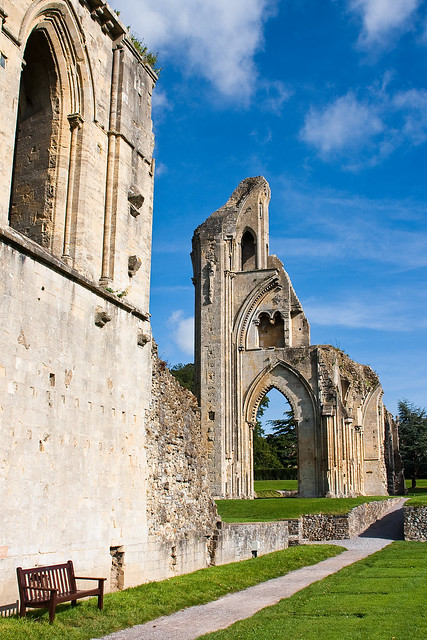
Glastonbury Abbey - ( http://www.flickr.com/photos/lordspudz/)
I've long been baffled by those that think the future is digital. Those who believe this seem fixated on the idea that it is the technology that makes change, rather than what people do with it.
When the technology of the printing press arrived, the end of the story wasn't the development of the book. It was what people did with books that counted - how they spread ideas.
And in the printing press model, the changes to the way society organised echoed the mass production centralised way of doing things that the printing press - and later more forms or mass production - represented.
No, the future now isn't digital, it is self-organised (as I have suggested before). The web's role is to enable adhoc self-forming groups of purpose to form more effectively than at any time in history. And since communities of this kind reduce the cost of action - they cut the cost of achieving what more of us want, more effectively, than at any time past. The future that delivers is emerging and accelerating towards us now.
So what does that mean for the world we know? For your business? For your political party? Your form of government?
Well perhaps it's wise to reflect on what survived from the feudal world to the capitalist one? How many of the richest families in Britain were among the richest in Britain on both sides of the divide? And if there are any that survived, were they among the first to adopt capitalist principles of organisation - of both capital and labour?
What of our God and King? In Feudal times the Church sat alongside the King - in terms of power; and always well ahead in terms of wealth. Both saw their places tumble in the age of capital. Today they are at the peripherary: Pomp and splendour - about as relevant as the role of hand illluminator of Bibles.
God and King were superceded by Parliament (democratic legislatures) and the Law.
The question facing all who would mediate, all who would organise from the centre, all who would impose one size-fits-all-solutions on a fragmented fitness landscape, is: are you prepared to adapt to the looming self-organised future, to survive?
Are you prepared to start listening, start adapting to real time need, start opening up, start thinking like a platform to make change with the people who want the same as you (both inside and outside your org)...

If you aren't, then expect the rest of us to be self-organising to answer the question of what replaces you any day now.

Enhanced by Zemanta

Wednesday, October 20, 2010

Cuts this deep require model change - and a platform approach

There is much talk within UK Government of using digital means to reduce costs. Reducing costs is what this government does. Or at least attempts to.

When the discussion is about the use of digital means the focus is usually on delivery of existing (or reduced) services or benefits - providing a replacement, lower cost customer interface when compared with bricks and mortar offices. (Image courtesy sjsharktank)

Essentially what they are seeking to do is deliver the same old same old at a lower cost. Efficiencies. Hopefully.

But as those with long expertise and experience in business will tell you, the kind of cuts, the kind of savings our current Government is trying to make don't happen without a significant change to the model, too.

So it's time they stopped looking at driving people online to do what they used to do in offices and instead use the advantages of online to develop new models in keeping with the network.

A great example. Fellow Twitter user @siliconglen and I were discussing 'the cuts' this morning when he suggested there should be some kind of site where the 500,000 public sector people who will be put out of work by these cuts could be helped - where they could pool resources and skills.

This is a very different kind of digital thinking than applied by the Government in its channel management focus. This is platform thinking.

Imagine a site where users register their all important meta data - ie their skills, their interests, their location, their resources - where users pitch ideas to each other, aggregating support, pulling together teams with the right key sets and who, thanks to redundancy payments, may even be able to provide seed funding for the idea. Augtomated cross matching could bring together new groups focused around their shared purpose.

Self-organised, self-starting, highly-motivated businesses launched from the ashes of job cuts - perhaps supported with matching funds by the Government for those ideas reaching a critical level of support. People building things they believe in - and which others believe in, too.

Yes, I appreciate there are elements of this model distributed here and there throughout the web. Places where seed investors are matched with entrepreneurs. Places where ideas are pitched and communities vote. Places where people log their interests and skills. Places where their assets are listed.

What may be necessary is a selection of the essential elements and a distillation into one functioning whole. Hell, some of those cast aside in the spending review could probably do the build. People could share skills and retrain each other through it, too.

With a relatively small investment and a grip on the realities of our self-forming future, the Government could inspire a new self-organising style of entrepreneurial business - contributing to the economy, creating new things and new value - matching real needs. Instead of standing by and keeping fingers crossed that the existing private sector will take up the slack - or even watching helplessly as the unemployed become a long term cost.

Of course this would become valuable not just to the 500,000 public sector folk at risk - but also to all those whose jobs may tumble in the cascade around those public services. In fact, any one could join.

That's Big Society, Dave. Writ large
As I've often said, the future isn't digital - it is self-organised.

Enhanced by Zemanta

FasterFuture.blogspot.com

The rate of change is so rapid it's difficult for one person to keep up to speed. Let's pool our thoughts, share our reactions and, who knows, even reach some shared conclusions worth arriving at?