Showing posts with label customer relationships. Show all posts

Monday, September 29, 2008

How to kill a £10K per year relationship

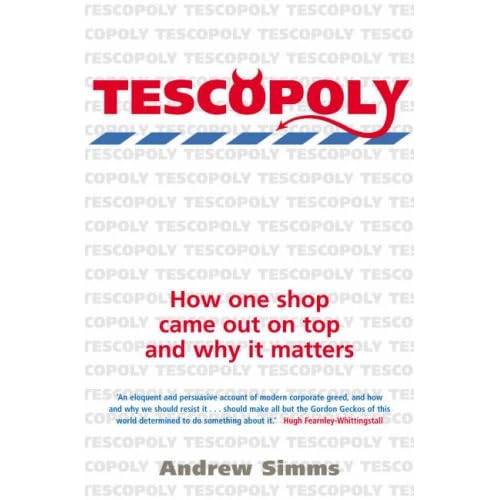
Tesco. Love it or loathe it, if you live in the UK chances are you line their pockets. Big time.

If you do a £100 weekly grocery shop you spend around £5K each year. If you get your petrol there too, you're likely up to £10K - and that's without the occasional bit of electrical, homeware, clothes or even mobile phone or car insurance payments.

So you, as a customer, are clearly very valuable to them indeed. But only for your money.
It seems to me their customer-handling has all but forgotten that the gullet that consumes is attached to a human being.

A friend of mine recently received a polite but threatening letter from Tesco because she had parked in the car park at their aircraft-hangar-of-a-superstore at Barhill, near Cambridge, for more than the time Tesco had calculated it was reasonable to shop (I think their limit was/is 4 hours).

This is a car park that's shared with other retailers, by the way.

Let's think about that for a moment. Tesco used a camera to record her arrival and departure from this car park, a camera with numberplate recognition - and one which is presumably connected to a computer which can both generate nasty automated letters AND find your home address, based only on your registration number, to send the nasty letter to.

Did you know Tesco had the right to your address simply because you choose to drive into their car park? Neither did I.

Ok, so that's shocking enough. But given how hi-tech this process is, and given Tesco's famous clubcard scheme and all the information it records about your shopping habits, then the only excuse for the automation of a snotty letter is pure profit-motivated laziness.

How so? Well, first, let's consider things from Tesco's perspective for a moment. Why do they want to limit your car parking time to 4hrs? Perhaps they have an issue with commuters parking their cars at the superstore and hopping on a bus into Cambridge. It wouldn't surprise me.

So, first of all, the people it should be targeting are those who are NOT coming into the store and ARE repeating the behaviour of parking for entire days, day after day.

Both of these behaviours are discoverable through Tesco's electronic surveillance.

Had the system been written to check for repeat behaviour (that's an IF THEN line even in Basic!) then it would not be writing a snotty letter to my friend. This was the first time she'd ever been there for more than 4 hours.

Had the code been written to query transactions in the store (again, it's a simple IF THEN) then it would also have known she had made two transactions in the store that day, one before lunch and one after. Again - don't send the letter.

My friend was shopping for a kids birthday party, had a break for lunch (in the Tesco restaurant!) and a shop in one or two of the other stores sharing the the same car park. That's how 4+ hours fly by Tesco dudes - at least they do for your 'valuable' customers - ones spending money.

This system would be so easy to put right - even as an automated one.

But here's my suggestion Tesco: Since the average family is spending £10-£15K with you each year - and each one of these sent-in-error automated letters could cost you a customer each time - wouldn't you be wiser employing say, just one customer services advisor to speak human-to-human to those you fear may be abusing your free parking?

A little conversation would soon reveal the true circumstances. And you'd be much more likely to keep your customers.

Every time you send one of these letters without understanding the circumstances you risk losing that customer's £10-£15K a year - for ever.

And they are telling their friends...

Monday, July 14, 2008

Two pictures of customer service

Right: At Terminal 5, Heathrow


Left: Sign in the window of the Grand India Restaurant, London.


It's not what you say... it's what you do.

Thursday, March 06, 2008

Who wants to sell me a Toyota Yaris? (Part II)

My little experiment in VRM has become a little more pressing. Just to recap:

"I'm in the UK.
"I want a low mileage Toyota Yaris in either T3 or TR spec, registered late 2006 onwards (new shape one). Must have aircon of some form. Ideally 1.3 petrol but will consider 1.0. Probably go for the five door. My wife prefers silver (and it will be her car). Ex-demo would be ideal. Will consider new if you can do the kind of deal that makes me accept the ludicrous VAT costs involved.
"Don't need to do part-ex."

It's more pressing because the car it's replacing is now sold.

So it's just as well this blog (and my tweets) is not the only place sharing this story.
Chris Carfi at the Social Customer Manifesto has picked it up and done a great job on it, and that in turn has been picked up by Topix

By the way, the man whose garage has serviced it and carried out the MoTs for the past five years has bought it for his partner. That speaks volumes for his faith in his own work, don't you think. So here's the recommendation for you: Serviceman in Huntingdon, Cambs.

View Larger Map


Tuesday, October 30, 2007

Social Customer Manifesto backs the Call Centre Customer Manifesto

Great to see that Christopher Carfi at the Social Customer Manifesto has given his support to the Call Centre Customer Manifesto we've launched on this blog and as a facebook group "No More Call Centre Monkeys"

The group is ticking along, 40-odd faces signed up. But we need more. The corporates like (hate?) big numbers. So please, if you're already a subscriber, share the word with anyone you think might want to help us make a difference.

If you blog, please post about it, too. If you hang out on consumer forums - likewise.

If I can read only 100 blogs, which should I read to be most up to date?

BTW, big Congrats to Chris for making the top 100 blogs you must read to be first with the news in the blogosphere. A great one-hit for your RSS reader!

Monday, October 22, 2007

The call centre customer manifesto

I've just started a facebook group called: "No More Call Centre Monkeys!"

I urge you to join - and tell your friends. Maybe a bit of pressure will force the centralised management structures of these organisations to listen. Listening, incidentally, is exactly NOT what they are allowing their employees (those on the edge of their networks, those interfacing with their revenue streams, ie their customers) to do.

So, with apologies to Christopher Carfi at The Social Customer Manifesto (see recommended blogs, left)... here's my Call Centre Customer Manifesto. Feel free to add and adapt!

The Call Centre Customer Manifesto

  • I want to talk to someone who is listening to me - not reading a script from a computer screen.
  • I want to talk to someone with the power to do something about my problem.
  • I want to talk to someone who knows how to get round the moment when 'the computer says no'
  • I want to talk to someone for whom reason is allowed to mean something.
  • I don't want to input my account number on my phone - then have to tell three more people what it is during the same call.
  • I want a full response to my complaints.

When we call, we want to talk to a human empowered to actually do something about the thing we've called about: not someone reading off a screen.

We understand the drive for efficiency that call centres represent BUT we're fed up with your poorly-executed "customer relationship mechanisms" which present us - YOUR REVENUE STREAMS - with the shitty end of the stick.

We urge these companies to stop insulting the intelligence of both their customers AND their employees. Giving the poor saps on the end of the phone a script they must stick to effectively turns them into a computer. We don't want to talk to a computer.

We think it is grossly unfair on call centre staff - the very people charged with dealing direct with your customers - to leave them with no power to think or act for themselves. It leads to depression for them - frustration for the customer.

Senior managers - do something about it. Or start answering the phones yourselves.

Monday, October 01, 2007

BT: Another example of companies from Mars, customers from Venus.

When will they learn? When we we learn?
I've just had the joy of a bill from BT (who provide my phone and broadband access at home).
It's another cracking example of the dehumanising of customer relationships that's going on at large 'scale efficencies' companies. Perhaps they are being infected by the logic of customer relationship mechanisms. Perhaps they have to think less digitally about this (by which I mean on-off) more organically (allowing choices to develop).
Here's the issue this time:
BT sends me a bill. The front page says I have a credit balance of £250 (approx). It also says that I need take no action.
I pay my bill by direct debit.
The next page shows the same £250 amount as a minus figure. Confused? Yep, me too.
And those of you who have read previous posts about the confusion companies seem to revel in creating in their customers (Dehumanising customer relationships, Sprint Nextel, and When is a Free Download not a Free Download) will know I'm not a big fan.
So I rang up. I felt the customer did need to take some action. Lucky I did.
My question was a simple one: "Please can you tell me what 'credit balance' means".
This simple question, rephrased also, for absolute clarity to: "does it mean I owe you money or that you owe me money?" was evaded a total of seven times until I asked if the person I was speaking to couldn't answer it perhaps they could pass me to someone who could?
Answers every time included a by-rote explanation of how the billing system works. That's what I mean by the digital approach.
In other words I ask a question which includes certain terms 'credit, balance' and the computer at the other end - pardon me - the human being at the other end - starts to reel off the customer script.
Turns out (after some persistance on my part) that BT owe me £250, that I am paying twice as much a month as a I should be, and that the amount they owe me is rising by the day.
I suggested that perhaps this was cause for the customer to take some action. Actually - if your customer is out of pocket to the tune of £250 and you are rifling through his pockets to get even more of his cash that you don't need on a daily basis, you might think it incumbant on the company to take some action.
'The customer relationship mechanism' clearly isn't up to dealing with customers. What it is very good at piling extra cash, that isn't BTs, into its coffers.
Not good.
I noted that the call was recorded. I thanked the person who dealt with me and asked that BT do two things (I should say, they had already by this stage agreed to refund my overpayment immediately and to cut my monthly direct debit in half... maybe I should have asked for an interest payment?)

1. State on your bills YOU OWE US "£x" or "WE OWE YOU "£X".
2. Don't tell someone you owe money - and will owe even more on a daily basis if no action is taken, that no action is required. To continue with this policy is at best a dereliction of duty.

Big business is headed in the wrong direction. As I've said before, just as their customers are finding their power at the edge, want to control from the edge, companies are centralising theirs. They are going to the centre, we are going to the edge.

Where the customer is in contact with your company you must allow them to have conversations with empowered people - not people whose only response is one governed by answering questions by rote - dictated by a CRM.

When they do this they don't listen. When they don't listen a conversation is very hard. Every market is a conversation.

There are enough clues there for BT. I'll send you my bill - see if you can work out what it means.

(The title for this post is taken from the chapter in Communities Dominate Brands, see recommended blogs, left).

Wednesday, July 11, 2007

Sprint Nextel reject customer feedback - and customers

When is feedback of negative value?

You know the right answer. US mobile operator Sprint Nextel does not.

This from Communities Dominate Brands:
"CNN has just a few moment ago reported that Sprint Nextel, in its infinite wisdom, has sent 1,000 of its customers a letter informing them that because they have placed too many calls to the calling center asking for help or complaining about the Sprint/Nextel services, they are terminating the customer relationship."

So if you have had an issue that's unresolved - and you keep on calling because they still haven't resolved it - ta ta!

Sprint Nextel could have saved themselves a lot of time and trouble by cutting to the chase - and sending every customer a letter saying: "We don't care what you think. If that bothers you f**k off now."

Other end of the telescope? If Sprint Nextel regarded itself of part of the community of Sprint Nextel users, what would it have done?

There is an argument that if these particular 1000 customers were having a disruptive and damaging influence on the community as a whole there should be some form of sanction - and ultimately exclusion.

But I'm told these are good customers, fully paid up etc. So what if you have an issue with Sprint Nextel? Are you meant to consider carefully whether or not you should share that with them?

"I'm sorry to trouble you, master, but is there any chance you could take your foot off my head?"

It's the best way I can think of to prevent two-way flow. No dialogue. No debate.

No customer relationship = no customers.

See also:

Thursday, June 14, 2007

Dehumanising customer relationships

Anyone spotting a theme here? over the last few days I've been angered by humans acting like computers at 3 over my bill dispute (see previous post today).
I'm now dreadiing opening each bill from a large company because each time I seem to discover another example of a company trying to screw its customer - and then employing humans to act as machines when challenged.
Tonight's example comes from the Halifax. My payment for my credit card bill had, apparently arrived a day late.
I pay the bill with onine banking from an account with another bank. I had set up the instruction to give it the requisite four days to travel through the banking system (and will someone, somewhere please explain to me why that's still necessary when all that's being transferred is a notional value carried in digital form?).
A Bank Holiday screwed up the calculation. The punishment for my crime was to be charged a £12 'late fee'.
I called to object, pointing out I've been a model customer for them for many long years and had made every effort to pay on time on this occasion.
No joy. The poor employee - reading out the script - is clearly told they must stick to the line no matter what the logic of the argument they are met with, no matter what the quality of the customer.
It's their customer policy not to refund late fees.
Let me tell you. it's not a customer policy at all. I asked how much my late payment had actually
cost. Couldn't answer.
I guessed in the region of a couple of quid. And for this, you are willing to end your relationship with a model customer? How much more is it going to cost you to recruit the next one? Staggering!
But this is the state of customer 'relations' in large companies today. Essentially they are automated. When you want to talk to a person, their response is automated too (they have to stick to their line). The very people who are best positioned to maintain the relationship with the customer have no power to respond to the customers needs.
In other words, companies no longer have ANY relationship worthy of the word with their customers.

On this occasion, a right-thinking manager over-ruled the person I originally spoke to. My penalty fee is going to be refunded.

But I am left with a bad taste.

How much better if the CRM they employed in the first place actually referred to my record with them before instantly landing me with a penalty? How much better if someone had called to discuss before doing it rather than slamming me with the bill and forcing me to call them?

How much better if the person I had to complain to could actually act with some autonomy.

These companies are centralising control just at the time the rest of the world is decentralising it

No wonder they are rubbing their 'customers' up the wrong way.

FasterFuture.blogspot.com

The rate of change is so rapid it's difficult for one person to keep up to speed. Let's pool our thoughts, share our reactions and, who knows, even reach some shared conclusions worth arriving at?