I quite often hear of organisations which take the quite deliberate action of ignoring what their customers say about them online.
They reason that either:
1) They tried engaging and a group of antis came to dominate the conversation, (many brands gather themselves some long-term enemies)
2) There are only ever negative comments - and they 'already know' what customers don't like (think utilities - stuff that you take for granted until something goes wrong).
Both of the above represent a door closed on innovation.
Imagine, if you will, that all those complaining about your org or brand are in reception at HQ. In their hundreds or thousands. Would you ignore them, their feedback and their ideas?
Why then, when they have taken the time and trouble to tell you (and their peers) what they think of your products and services, would you ignore this crowd at your online door?
If thousands of newspapers and magazines had published negative comments, would you ignore them? Why ignore all those published online - collectively delivering huge reach and much greater trust.
And if a cohort of angry antis seek to dominate the conversation, think again about their concerns. Why are they so angry? How has your connection with your customer broken down so badly? Could you fix the damage of decades of mass broadcast comms with some human-scale peer to peer conversation? Could you show a brand is just a representation of the activities of people? Good interactions with people shift perceptions about brands.
It may be tempting to ignore the lone-but-noisey anti-fan - but something makes that person do what they do. No one sets up websites, twitter accounts etc and keeps building them over sustained periods without a pretty strong set of reasons. Are they reasons that matter? You'd best find out.
Further - disengaging with all your online customers as a result harms you, not them. All you leave behind is anger and a record revealing your ignorance which remains unchallenged and which stays on record for ever.
3) The third group who ignore are those who believe they know better than their customers. Some luxury brands take this view.
It comes from the belief that super premium brands are there to lead, not follow.
Those that believe this should take a look at their company history and ask themselves if they haven't at any point changed their products, servicing or marketing in response to customer usage, perception or complaint. Social media monitoring just writes that process fast and large.
In short I don't see a case for ignoring your customer. When you do so you are saying:
We know better than our customers - all of them, always.
And not even Steve Jobs would claim that.
- Posted using BlogPress from my iPhone so I may have to tidy it up later ;-)
Showing posts with label listening. Show all posts
Monday, January 17, 2011
Wednesday, September 16, 2009
20 per cent of tweets are brand-related
Brands play a huge part in our everyday conversations, we are always querying each other about the products and services we buy or should consider buying.
So it should come as little surprise that 20% of tweets are brand-related. That's what the academics at PennState discovered and reveal in this report.
Send an email to a company and it's usually a long wait before you get a response. Shout out load on twitter and wise brands get back to you real fast.
It's because it's an open network. The fact that no email comes back for hours is between you and the company. When you follow up the email, when your expressions of angst deepen and colour, it all remains between you and the company.
But when no one answers your cries on twitter, all your followers (and anyone else who conducts a relevant search) gets to see your increasing anger and frustration - the negative customer experience transmits so much faster.
The wisest people always were the best listeners...
So it should come as little surprise that 20% of tweets are brand-related. That's what the academics at PennState discovered and reveal in this report.
Twenty per cent of the tweets contain requests for product information or responses to the requests, according to Jim Jansen, associate professor of information science and technology in the College of Information Sciences and Technology (IST) at Penn State.
"Tweets are about as close as one can get to the customer point of purchase for products and services," adds Jansen.So true. And my best bet is that both the volume and percentage of this will only rise and rise.
Send an email to a company and it's usually a long wait before you get a response. Shout out load on twitter and wise brands get back to you real fast.
It's because it's an open network. The fact that no email comes back for hours is between you and the company. When you follow up the email, when your expressions of angst deepen and colour, it all remains between you and the company.
But when no one answers your cries on twitter, all your followers (and anyone else who conducts a relevant search) gets to see your increasing anger and frustration - the negative customer experience transmits so much faster.
The wisest people always were the best listeners...
Thursday, July 16, 2009
Overheard: Everything
Listening always beats asking. Asking questions demands and shapes response.
And people, good, kind, back-scratching people, will often tell you what you want to hear.
Taken to extremes you get your LinkedIn recommendations. (Compare that to what your colleagues may say if you're out of the room...)
Less dramatically, ask people and you guide their thoughts.
Market Research companies are painfully aware of this skew. No question is entirely without motive. None comes without an agenda - an agenda proposed by the questioner.
But listening, passive listening, can teach you much.
Wise orgs and brands are doing more of this. It's often a bit of a revelation for them that they can do it relatively easily online.
But anything I publish on any open forum, blog, tweet, is recorded, is searchable, is discoverable. As is anything you say. Or your friends. And their friends ad infinitum.
Right now and for the mid-term (I'm assuming) we feel what we hear is pure, unsullied, honest, unskewed people saying what they really mean to their peers. With caveats around axe grinders and power relationships, of course.
But could it be we will begin to change what we say on the assumption that brands are listening? Will it lead to a layer of artifice?
I guess it's a little like CCTV surveillance. Britains 'know' they are the most filmed people on Earth. The emergence of hoodie culture - hiding your face from the prying eyes - is the most visible change to behaviour.
For the most part we act as if the cameras aren't there. (image courtesy)
But perhaps this is because the implications haven't sunk in yet?
And with the notion that brands and orgs can pick up on our every digital utterance still very new, who knows how this fact will end up modifying our online behaviour as we become more familiar with it.
Will we update our notions of privacy and private space as we embrace the digital?
Will we find greater value in expressing ourselves freely because that expression can connect us with others trying to solve the same problems we are (communities of purpose)?
Or will silos around our private lives remain strictly maintained?
And what happens when those doing the surveillance speak back - in real time. I recall the experiment in which CCTV operators added a speaker to their cameras and started berating people they spotted dropping litter. Out loud and in public. That shocked.
So if a representative of a brand responds to your complaint in real time on Twitter (for example) are you shocked? Angered? Or pleased?
I'm guessing pleased? You aren't being told off. You are being helped at just the point at which you expressed the need for help.
Generally we are so starved of human contact with large orgs that we're left beaming by an encounter that takes us beyond the corporate artifice to the humans inside.
Does knowing they are there (lurking/ready to help depending on your pov) make a difference? Do we change if they start openly responding?
Are we thinking outloud to impress the infinite unknown audience?
What I publish is not only shared right now with those who directly choose to receive it, it is here for all time, for all people. Ever.
Dr Mike Wesch talks about the moment of context collapse we face when staring into a webcam to share on the web - that we know not to whom we are speaking.
The same must be true of any kind of utterance which can for ever be discoverable.
When you realise just how long and loud your voice may echo through the ages does it make you want to shout a little louder. Or clam up?
The dilemma is one that has always faced publishers. We're all publishers now - with greater reach than ever before - it faces us all.
It has the potential to change the meaning and value of everything we share online.
And people, good, kind, back-scratching people, will often tell you what you want to hear.
Taken to extremes you get your LinkedIn recommendations. (Compare that to what your colleagues may say if you're out of the room...)
Less dramatically, ask people and you guide their thoughts.
Market Research companies are painfully aware of this skew. No question is entirely without motive. None comes without an agenda - an agenda proposed by the questioner.
But listening, passive listening, can teach you much.
Wise orgs and brands are doing more of this. It's often a bit of a revelation for them that they can do it relatively easily online.
But anything I publish on any open forum, blog, tweet, is recorded, is searchable, is discoverable. As is anything you say. Or your friends. And their friends ad infinitum.
Right now and for the mid-term (I'm assuming) we feel what we hear is pure, unsullied, honest, unskewed people saying what they really mean to their peers. With caveats around axe grinders and power relationships, of course.
But could it be we will begin to change what we say on the assumption that brands are listening? Will it lead to a layer of artifice?
I guess it's a little like CCTV surveillance. Britains 'know' they are the most filmed people on Earth. The emergence of hoodie culture - hiding your face from the prying eyes - is the most visible change to behaviour.
For the most part we act as if the cameras aren't there. (image courtesy)
But perhaps this is because the implications haven't sunk in yet?
And with the notion that brands and orgs can pick up on our every digital utterance still very new, who knows how this fact will end up modifying our online behaviour as we become more familiar with it.
Will we update our notions of privacy and private space as we embrace the digital?
Will we find greater value in expressing ourselves freely because that expression can connect us with others trying to solve the same problems we are (communities of purpose)?
Or will silos around our private lives remain strictly maintained?
Will we feel the need for them in a world in which you can be overheard by anyone else.
And what happens when those doing the surveillance speak back - in real time. I recall the experiment in which CCTV operators added a speaker to their cameras and started berating people they spotted dropping litter. Out loud and in public. That shocked.
So if a representative of a brand responds to your complaint in real time on Twitter (for example) are you shocked? Angered? Or pleased?
I'm guessing pleased? You aren't being told off. You are being helped at just the point at which you expressed the need for help.
Generally we are so starved of human contact with large orgs that we're left beaming by an encounter that takes us beyond the corporate artifice to the humans inside.
Does knowing they are there (lurking/ready to help depending on your pov) make a difference? Do we change if they start openly responding?
Are we thinking outloud to impress the infinite unknown audience?
What I publish is not only shared right now with those who directly choose to receive it, it is here for all time, for all people. Ever.
Dr Mike Wesch talks about the moment of context collapse we face when staring into a webcam to share on the web - that we know not to whom we are speaking.
The same must be true of any kind of utterance which can for ever be discoverable.
When you realise just how long and loud your voice may echo through the ages does it make you want to shout a little louder. Or clam up?
The dilemma is one that has always faced publishers. We're all publishers now - with greater reach than ever before - it faces us all.
It has the potential to change the meaning and value of everything we share online.
Wednesday, July 08, 2009
Brands are failing the social media response test
Neil Perkin has just announced his short-list for post of the month and among them is my little project to test the social media response times of a handful of leading brands.
You may recall we set them a little test in the post What Does It Take To Get Some Service Around Here?
Would be wonderful if you popped over to see the other posts Neil has assembled on that short list.
Of course it would be very cool of you if you happened to vote for What Does It Take To Get Some Service Round Here? while you are there, but I'd recommend a visit in any event - because Neil's assembled a whole heap of blogging wonderfulness to dine on. Tuck in.
By way of an update; Qik won the race to be fastest re social media response. Ford was our honourable runner-up and taking the third place on the podium... well, we're still waiting.
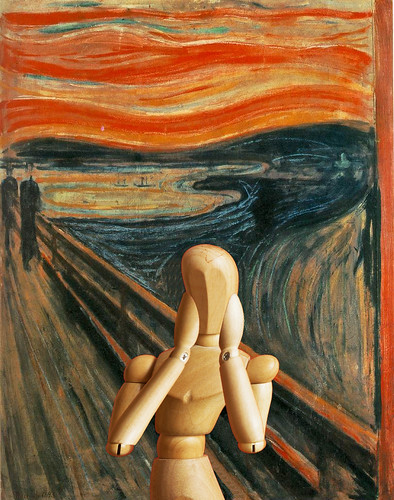
It appears that in social media, the majority of brands, at least, can't hear you scream.
Shame for them that everyone else can....
(image courtesy)
You may recall we set them a little test in the post What Does It Take To Get Some Service Around Here?
Would be wonderful if you popped over to see the other posts Neil has assembled on that short list.
Of course it would be very cool of you if you happened to vote for What Does It Take To Get Some Service Round Here? while you are there, but I'd recommend a visit in any event - because Neil's assembled a whole heap of blogging wonderfulness to dine on. Tuck in.
By way of an update; Qik won the race to be fastest re social media response. Ford was our honourable runner-up and taking the third place on the podium... well, we're still waiting.
It appears that in social media, the majority of brands, at least, can't hear you scream.
Shame for them that everyone else can....
(image courtesy)
Thursday, December 11, 2008
To lead is to listen
Seth Godin interviews Richard Branson about the value of listening for innovation and leadership. You can spare 1min 15 for that, can't you?Listen - and listen aggressively!
As Branson says, your customers have got more and often bigger brains than you have. And they'll tell you what they want - for free. (Image courtesy)
Watch it here.
BTW American Express, while you're listening... we prefer portable video (ie a code snippet which makes it playable here a la Youtube) not a fixed location we must point at. Just so's you know.
Tuesday, September 23, 2008
Another small step/giant leap...
Just added a post to /message (first for a while, sorry Stowe!) about SocialMention. Read it?
Subscribe to:
Posts (Atom)
FasterFuture.blogspot.com
The rate of change is so rapid it's difficult for one person to keep up to speed. Let's pool our thoughts, share our reactions and, who knows, even reach some shared conclusions worth arriving at?

![Reblog this post [with Zemanta]](http://img.zemanta.com/reblog_e.png?x-id=f1703082-1d7d-4f18-aa66-45cc4834e732)

![Reblog this post [with Zemanta]](http://img.zemanta.com/reblog_e.png?x-id=5bbdfc99-8f08-42e4-9c04-64c4fe1bc743)
![Reblog this post [with Zemanta]](http://img.zemanta.com/reblog_e.png?x-id=ca8ebf9f-a6cd-4209-a5bb-86fa8bb7947c)