Showing posts with label social object. Show all posts

Tuesday, September 14, 2010

Beware the survey of the thing they haven't experienced yet

People are notoriously bad at telling you what they want when they haven't yet experienced the thing you think they might like. Apple's Steve Jobs is always banging on about it. It's summed up as 'people don't know what they want.'

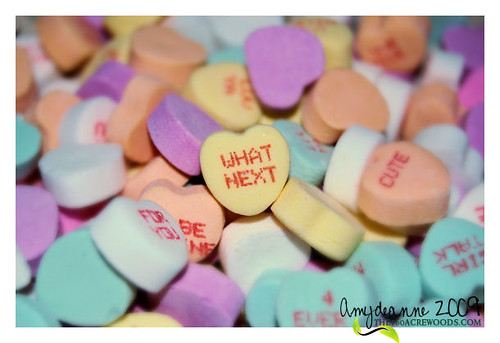
Which always sounds, well, insulting and patronising. (image courtesy amydeanne)

This (from December 2007) illustrates the point:
"Am I missing something? The headlines (Consumers Prefer GPS over Mobile Internet/GPS edges out internet as desired mobile feature - study) tell us US mobile phone users would rather have a GPS-enabled phone than a mobile-internet enabled one.

Translation: I'd rather have a sat-nav than be a live, real-time connected node on the network.
What kind of questions resulted in that?
Q"Would you like to know where you are? Or would you like to know any and everything?"
A"Oh, I'll take where I am thanks."
Uh?
But people are exceptionally good at shaping a concept to fit their fitness landscape. In fact, they always place a higher value on something they have had input in creating (which brings oodles of peer-to-peer marketing value).

In order to engage them you have to provide the 'thing' to talk about. That becomes the social object; an integral part of the platform-thinking approach. (discover/bring together/surface/work together to fix).

Give them something that interests them, that engages them. Then they'll help shape it. And if you can give them something to experience - then the 'survey' of their feedback will be all the more effective.

That thing could be a workshop in an interesting location, with physical interaction and decisions made, or a beta site with direct links to the developers, or prototypes to add to and delete from, or....

As long as it's something around which discussion-leading-to-change can happen, the social object will be doing its job. And the discussion is key - the process must be social not silo'd.
Enhanced by Zemanta

Monday, July 20, 2009

Open (White)house


As we tucked into fish and chips on the beach in Aldeburgh, Suffolk, UK, a good friend of mine told me excitedly about what had recently happened to his 11-year-old niece. We'll call her Bea.

His sister had moved to the US more than a decade earlier. Which is why, like thousands of other American school children, Bea had received a letter from the President of the United States; Barack Obama. (image courtesy)

That letter included what may have been construed as a bit of a throwaway line: Something to the effect of 'if you're ever in Washington, do drop by to say Hi at the Whitehouse'.

Well Bea's mum and dad thought they'd chance their arm. They don't live sooo far from DC.

And they rocked up at The Whitehouse, handed over the letter and were ushered into a room. Just them. Not a crowd. No appointment. No allotted time.

And after a few minutes?

Barack Obama strode into the room. Chatted, relaxed and unhurried.

Signed autographs. Had his picture taken with Bea (steadfastly NOT with parents, this was all about Bea) and eventually, with no sign of rush, left them in a puff of awe.

Heartwarming?

Charming?

Oh yes. And, I'd hazard a guess, life changing too.

You see my first (self-obsessed?) reaction was to think 'I got invited to No10. Twice. Once by Blair. Second time by Brown.

But the invites weren't random with the seeming generosity of spirit of Obama's.

No, my invitations came because of who I was and the mass media influence-from-the-centre I apparently had at my disposal as a member of the British Society of Magazine Editors.

A broadcast approach to meet-the-people.

Obama's open door policy is different - but arguably more effective in a networked world.

Rather than heap privilege on yet another journalist or broadcaster, Obama has time in his diary to connect with people, any people.

In a networked world, in most parts of the US at least, all nodes are pretty much connected with all nodes. All people with all people.

Obama meets Bea: Not to win her vote (she'll only be 16 the only time he'd need it) but to win the votes of those their meeting will influence.

The Obama/Bea summit becomes a huge social object in Bea's life, and therefore in the lives of all those around her.

Bea will update Facebook (etc), she will share her story where-ever life takes her. Her parents will tell everyone they know and love.

Blown away by their enthusiasm for the story, their friends and family will tell their friends and family.

Some of them will share online, some offline. But share and share they will.
This story has already travelled from Washington to a beach on the easy coast of England.

From DC to DC :-)

And now it has reached you. I hope it still has value for you. The kind you'll want to pass on.

Imagine instead Obama had spent the same amount of time with yet another grumpy journalist. He'd have got some column inches. He'd have had his thoughts edited, packaged, span. And there wouldn't have been a lot of love going round.

No lives would have been changed.

This story puts me in the room with Obama in a way no media interview can touch.

Of course, the old guard will say Obama is wasting his time with 11-year-olds while the NYT is on hold.

But Obama knows, in a networked world, winning one heart beats stealing a million eyeballs.

Reblog this post [with Zemanta]

FasterFuture.blogspot.com

The rate of change is so rapid it's difficult for one person to keep up to speed. Let's pool our thoughts, share our reactions and, who knows, even reach some shared conclusions worth arriving at?