Showing posts with label business innovation. Show all posts

Thursday, August 06, 2020

Innovators think differently - deal with it

To innovate is to be creative. Innovators are natural open thinkers. The kind of people who make connections - exploring the consequences of the consequences.

We revel in the navigation of the ambiguous. We are comfortable - almost certain - that the shortest route is rarely the fastest. We think organically, not in straight lines.

We reframe, looking at problems from new angles, we synthesise adjacent scenarios, we turn things on their head and shake them. We go off on tangents, journeys of discovery. Sometimes we have to retrace our steps. Sometimes we make huge leaps. 

Sometimes you will wonder where we are going. Sometimes you will struggle to keep up.

We thrive in complex and chaotic times - where cause and effect is often unclear. 

We have the mindsets and approaches to discover and support emergent and novel practice. This is essential now that the 'best' and 'good practice' of what we thought we knew, no longer helps.

The industrial mindset struggles with this. It wants clarity and certainty. It wants expertise - where there can be none (how can you be expert in the new?).

Design Thinking provides something of an interface between the innovator and the industrialist. It offers the tools to open up the more convergent thinkers, while providing the frameworks to constrain the most butterfly of brains toward the task at hand. 

Lean Start-up brings an even harder focus on value and on following the insight - with its introduction of Pivot. 

And Agile (at least in its approach to small pieces of work in small teams in rapid sprints of work) offers a way of working beyond the prototype that maintains the focus on insight and end-user value.

I have applied all of the above in varying combinations to product and service design. I have applied them to strategy, too. For years.

The problem for some organisations needing to make their leap right now is that there are still gatekeepers who retain the industrial mindset. It's the mindset that seeks efficiency first. They want the one-pager, the certainty of the business plan, the easy of A follows B. It is how they are used to consuming information. Documents not conversations. Boxes to tick.

And that's a problem - because that's not how the world works and it makes them less able to recognise or trust in the value of the organic, systems thinking, lateral excursions of just the people they need. 

The obvious and easy world is gone. It's hard to acknowledge and deal with that change. Humans like easy. Change, learning new things, doing different things - all take much more brain energy and effort. It's much harder to explore than to travel the same route you have a thousand times before.

But Covid19 gave us a Context Shock revealing this trend away from the obvious and easy towards complexity and challenge.This trend - and its inherent demand for the innovation mindset - has been accelerating since the dawn of digital.

It's time to encourage and welcome the explorers. 

Start with yourself.


Photo by Jiroe on Unsplash


Monday, February 14, 2011

Scaling Passive and Active Customer-Centric Innovation

Those familiar with my approach to 'social media' will know I think the marcomms element is a happy outcome rather than a primary objective.

The marcomms-first approach - best characterised by the phrase 'using the channel of social media' puts the cart very much before the horse, in my view.
You get efficient, contagious and joined-in with marcomms as an outcome of the really juicy value creation bit of our digitally enabled socially connected lives.
But the juicy bit is better-fitting innovations. (Image courtesy RachelVoorhees)

If you involve the people for whom the product or service is intended you get a product or service which is a better fit with their needs. And that's customer-centric innovation.
The outcome is better for the customer and since better fit equals more sales that means better for the producer (assuming you can maintain margins, of course).

Working with small groups of customers to co-create is not new. Scaling that is.

For example just three or so years ago no one would have written a blogpost to tell the world they were having a cup of tea. Too much effort to go to.
Now, with tumbling technical barriers to entry for anyone to publish their thoughts (no matter how 'trivial' when viewed by traditional criteria) 135k conversations about tea are published in a single month in the UK alone.

All those tweets and Facebook status updates, (forums and blogposts too) reveal how people are using a product, why, where and when, and what they do and don't like about it. And how they'd make it better - if only you gave them a chance.

Gathering what they have to say, analysing it and sharing the resulting data and strategic insight with the right part of any organisation (for action) can be described as Passive Customer Centric Innovation.
You ask no questions. You require nothing more of your customers and potential customers. But from their open publication to their peers and the world, they provide you a low-cost fast track to innovation to mutual advantage.

The second, Active Customer Centric Innovation, takes the same gathered data, identifies (through nodal network analysis) the most appropriate members of communities and invites them into a process of co-creation with key stakeholders. This requires their active engagement; and rewards for their skills and knowledge.

In both cases the key outcome is a better product - one your customers like more.
The marcomms benefits are a happy bonus - and all the better for being derived this way.


- Posted using BlogPress from my iPhone so I may have to tidy it up later ;-)
Enhanced by Zemanta

Tuesday, September 14, 2010

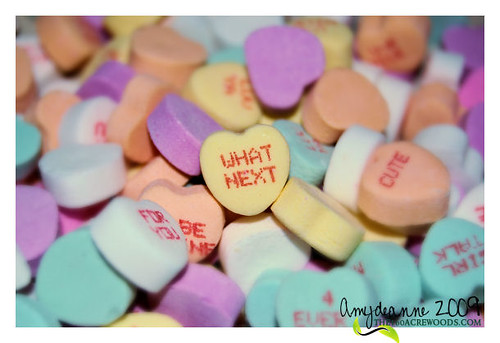
Beware the survey of the thing they haven't experienced yet

People are notoriously bad at telling you what they want when they haven't yet experienced the thing you think they might like. Apple's Steve Jobs is always banging on about it. It's summed up as 'people don't know what they want.'

Which always sounds, well, insulting and patronising. (image courtesy amydeanne)

This (from December 2007) illustrates the point:
"Am I missing something? The headlines (Consumers Prefer GPS over Mobile Internet/GPS edges out internet as desired mobile feature - study) tell us US mobile phone users would rather have a GPS-enabled phone than a mobile-internet enabled one.

Translation: I'd rather have a sat-nav than be a live, real-time connected node on the network.
What kind of questions resulted in that?
Q"Would you like to know where you are? Or would you like to know any and everything?"
A"Oh, I'll take where I am thanks."
Uh?
But people are exceptionally good at shaping a concept to fit their fitness landscape. In fact, they always place a higher value on something they have had input in creating (which brings oodles of peer-to-peer marketing value).

In order to engage them you have to provide the 'thing' to talk about. That becomes the social object; an integral part of the platform-thinking approach. (discover/bring together/surface/work together to fix).

Give them something that interests them, that engages them. Then they'll help shape it. And if you can give them something to experience - then the 'survey' of their feedback will be all the more effective.

That thing could be a workshop in an interesting location, with physical interaction and decisions made, or a beta site with direct links to the developers, or prototypes to add to and delete from, or....

As long as it's something around which discussion-leading-to-change can happen, the social object will be doing its job. And the discussion is key - the process must be social not silo'd.
Enhanced by Zemanta

Thursday, March 25, 2010

Plug collaboration into your business


Bringing communities together, co-creating, collaboration, open source... open ended?

The whole notion of businesses without walls can be very difficult for those embedded in traditional organisations to imagine. Where to start? Where does it end?

So at (disclosure, I work there) 90:10 we have been working on a whole series of products to help those organisations benefit from the value created by co-creation in a rapid, outcome-oriented way. First, clear, effective action-oriented steps.

They each have deliverables and outcomes, fixed and short timescales (from 1 week to 3 months) and fixed prices to go with them.

The following slidedeck reveals our approach. If you're interested in the products themselves and how they can create value for your organisation - let me know.

Reblog this post [with Zemanta]

Wednesday, March 03, 2010

Can you help design the future?

I've been lucky enough to bag myself a place at the SOMESSO / Headshift Social Business Summit in London on March 18.
Places are limited to 100 and keynote speakers include Jeff Dachis and JP Rangaswami. It's very much not just a passive consumption event though. Attendees are expected to help design the future.
If you'd like to join us, I do have a limited number of discount codes available to distribute.
To get one, drop me an email (davidpcushman AT gmail DOT com) and - if you don't feel I know you already - outline why you think you should be there.
See you on March 18.

If you're US-based, can I point you at an event which Ninety Ten (the company I work for) is supporting in New York on April 19: Social Business Edge. It's run by 90:10 collaborator Stowe Boyd.

And if you've got your social biz thinking cap on, please consider submitting a nominee for the latest round of the Social Business Innovation Awards. Thanks.

FasterFuture.blogspot.com

The rate of change is so rapid it's difficult for one person to keep up to speed. Let's pool our thoughts, share our reactions and, who knows, even reach some shared conclusions worth arriving at?