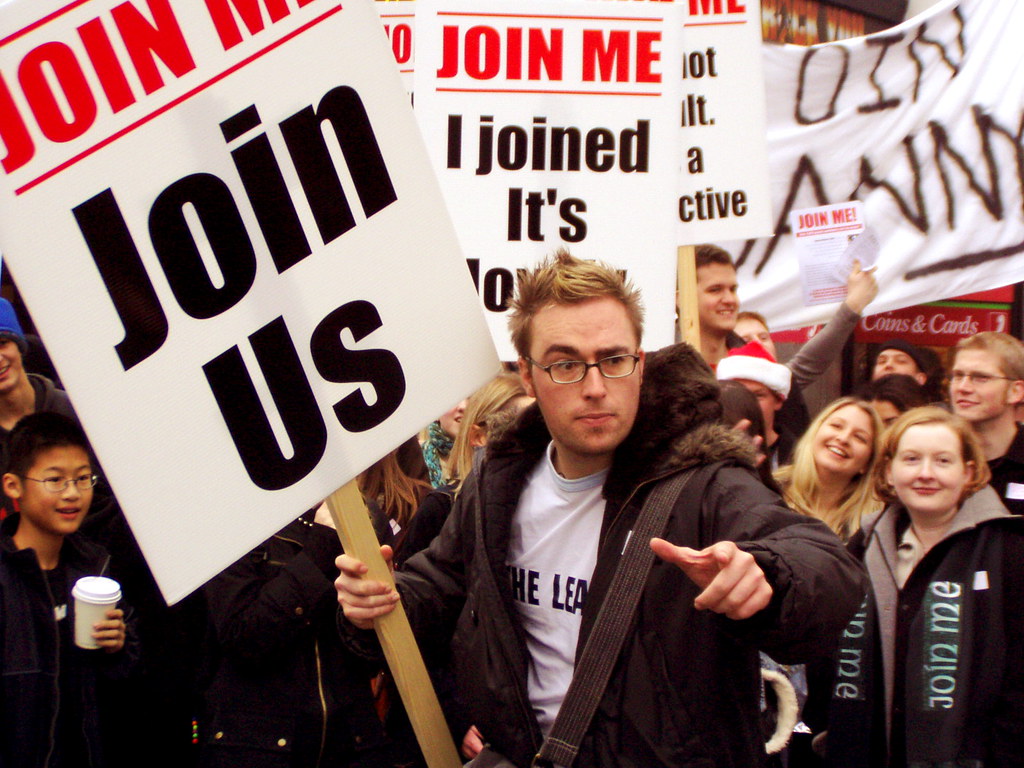
I am continually amazed by the number of people who still seem to think 'social media' is all about content and the distribution of messaging.
Their end game is to persuade you, via the gift of influence, to do stuff. This is the exact same model as old school PR and Advertising: Pay us money, we'll persuade folk to do what you want them to do.
Social Media is not a 'do to' medium. It is a 'do with' medium.
Yet few in the persuasion camp will even open the door to allowing their campaign of doing to to be done with the people for whom it is intended. The lip service to peer to peer participation usually paid is simply to use you and I as a channel to distribute.
This is to treat the peer to peer networked environment as if it were simply another broadcast medium - which is to misunderstand the difference between a network of nodes and a centre-out broadcast mechanic.
The web creates greatest value when it is understood as the best available way for groups (communities of purpose) to self form. Our sharing of messages, perhaps better understood as our expression of metadata, is our way of reaching out to connect with other people who want to solve the same problems we do, right now.
Bringing together people who care about the same things, self forming into groups, is how the energy to make change is generated.
Bring together people who really care about something and they will help you improve it, making it a better fit for themselves. They'll help you make products and services which work better for them, because they matter to them. They'll do with... you.
It's social, its participatory, it's niche, and it's where the purpose of messages (metadata) is to connect us rather than to persuade us.
If you want an illustration of the fruitlessness, and indeed illusion, of control from the centre, just follow what happens with the whole wikileaks witch hunt as it plays out.
Some of the traditional corporations, legislatures and judiciaries (and more corporate dependent denizens of the web) have rapidly folded to demands from the centre (the US and other Western governments) as that centre lashes out against wikileaks sharing information the centre feels the rest of us have no right to.
I'm not here to argue the rights or wrongs of that, by the way, many others follow the intricacies more closely and are better able to comment on that than I.
What I do know is that when Mastercard, Paypal and even Amazon pull the plug on wikileaks you know it is because they have come under pressure from the centre. And that's hard to resist when you rely on the corporate norm for your paycheck.
Tonight the ante was raised as Twitter started suspending accounts and - remarkably - removed wikileaks from the trending topics.
Suddenly those for freedom feel even the open web and its uberlords are cowtowing.
Panic not. And don't blame Twitter, Facebook or any other pressured party.
I'm pretty damn sure the guys at Twitter et al are wise enough to the self organising nature of the internet to know that a blockage here and a restriction there is soon worked around. Intelligent networks have ways of reforming.
The internet was developed to survive nuclear war. I'm sure it'll survive the best efforts of even the most zealous of politicians.
Central control is not an option. Never was.
So if the guys at Twitter or elsewhere throw the hapless politicos a sop here and there - don't blame them. They'll be doing it with fingers crossed behind their back and in the full knowledge that it'll make little difference in the very near term - that the network will reorganise and self-organise around whatever restrictions it faces.
Despite all the excitement for publishers over the iPad (and no doubt the excitement to come over the iPhone4 - well the screen resolution should improve the reading experience) I remain sceptical about the long term benefit for publishers - particularly publishers of 'news'.
In fact you could make the case that by encouraging them not to adapt, it puts their survival at greater risk.
The issue is that news - at least what we understand as news in the current lexicon - is not a best fit with the networked world.
It's lowest common denominator - the fat end of the long tail. And we all know more value exists in the long, long, skinny end - and that the fat end seems to keep on getting smaller.
That approach to news suits a broadcast world. If you can only make one TV news show, with a limited amount of items, then you'd best try include news that appeals to as many people as you can muster.
It has always been the fact that more people weren't interested in each item than were (fact - more people won't watch the World Cup this month than will - you'd be hard pushed to believe that if your guide was traditional broadcast news and programming).
But until recent times there was no alternative to this model. They'd have had to broadcast a million versions of the TV news with a never-ending range of news items to meet the needs of all the people who weren't interested in the main agenda.
Now of course that's pretty much exactly what does happen and is possible. Say hello YouTube.
In a networked world we produce for niches (for ourselves), distribute peer-to-peer and get value from relevance rather than quality (we like both, but we'll always take relevance over quality).
News, as I have often said, is now less about when it happens and more about when it's relevant (matters) to you.
So, back to that iPad and iPhone4. Too many traditional news vendors, it seems to me, see Apple's open hand as a way of reformatting/repackaging exactly what they've already done on the assumption that the reason we have been buying less newsprint is because it wasn't available in a beautiful digital format.
That doesn't make sense to me. I don't sit on the train each morning pining for a copy of the Guardian to read. I get on with participation and interacting with other people discussing stuff that's way more relevant to me than the vast majority of stuff in ANY newspaper. At least any they've come up with yet. Yes, some of it comes from newspapers. Shotguns hit targets, too.
Even the personalised rejigging of the content they have, to respond on individual use patterns, only delivers the more relevant stuff from their pile of 'not-quite-the-right-fit-with-me'. And it's individual. We are social.
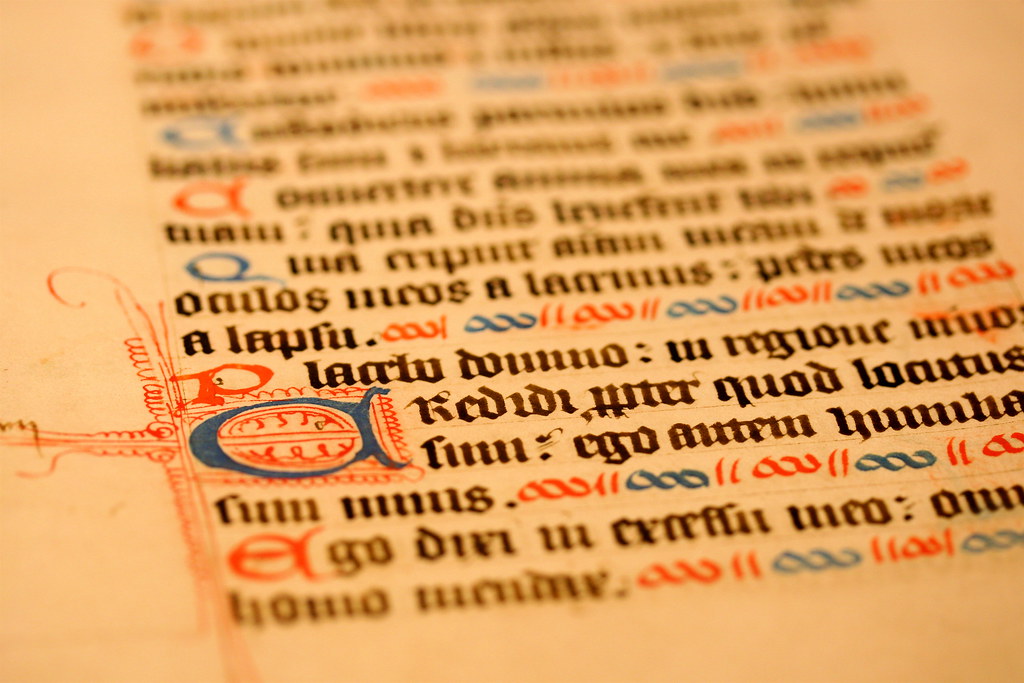
There are two options. Invest like crazy in quality rather than scale. Think less mass and more about serving a niche of people who value the specific and otherwise unattainable. There are, after all, still people who will hand illuminate a leather bound Bible for you some many centuries since the invention of the printing press.
The other is to be the filter; the curator for specific niches. Prove you are a better filter of what's valuable to me than my peers and you win that game.
That is no easy task - and one that's a million miles away from decanting your current offering into the latest digital formats.
The networked world demands new models, new approaches - not just new technologies.
Former accidental economist turned accidental technologist JP Rangaswami was at his engaging best when he gave a keynote at the first European Social Business Summit in London yesterday.
Yesterday he turned his attention to what it takes to be a business in the networked world.
Economists will know that the purpose of a company is to reduce transaction costs.
Starting from that view point, JP outlined three key elements that must be designed into a business from the word go to succeed in the networked economy.
There is much resonance with the platform thinking approach I advocate:
In a nutshell, organisations should use their resources to discover and bring together people who care about solving the same issues they do and support them in resolving those issues (reducing the transaction costs for all).
This platform approach means the company (the org) doesn't end at the edge of your premises, or at the firewall... and certainly not at those listed on the payroll. It's the Ninety10 way
JP's three tips for building a business for the networked world were these:
1. Design for sharing;
2. Design for scale through participation,
3. Design to take advantage of the synchronicity/asynchronicity the web enables.
Design for sharing: JP gave a neat example of how the ability to benefit from the value creation of sharing has to be part of the structure of the organisation: Food. (image courtesy Photo Mind)
He noted how in India he could always bring a few extra people home for dinner with him. It was never an issue. In England it is much harder to be as spontaneous because our food is structured differently. You may have four steaks ready at home to feed four people. If another three turn up, sharing becomes awkward.
Indian food is more granular, easier to redistribute. It is structured for sharing.
And it's this kind of thinking you have to embed in the structure of the networked org.
People aren't for doing stuff to, they are for doing stuff with Design for scale through participation: The likes of wikipedia, facebook, twitter have hundreds of employees - millions of willing participants. They were designed from the off as a participatory business. If no one outside participates, they fail. Those outside aren't seen as people to do stuff to, they are seen as people to do stuff with. They are essential and integral. To pick up on JP's food metaphor - think about a pic-nic. A pic-nic is a meal in which everyone attending contributes something. That can scale from 2 to a million or more.
Design for the Synchronous/Asynchronous: JP says: "Things that were previously synchronous, like voice communications, can now be asynchronous, and things that were previously asynchronous [like knowing people, status, location or current work] can be synchronous." In the industrial era people and resources had to be brought together not only physically, but also temporally, to create an outcome. In the networked world this is no longer the case. People all around the world, and at all different times, can contribute. Design this into the structure of your org.
I'm hoping that I've captured the key elements of JP's points here. And I'm sure that if I haven't he will be willing to clarify and/or expand. (UPDATE - JP has added to this in a comment below; with reference to reducing the transaction cost of information for an organisation through search - and the value of social search).
His approach gives an interesting check list for those of us building businesses, or attempting to make existing ones better adapted to the networked world.
And there isn't anyone in any business or organisation anywhere who shouldn't include themselves in that number.
After all, as JP put it: "Trying to create an industrial era firm in a network age is plain blind stupidity."
I like FourSquare. As a predominantly iPhone-using mobilist I find it user friendly and quite compelling.
The fact that colleague Laurence Borel is (was, heh heh) Mayor of 90:10 at 17 Percy St provides a great location-based nudge, for example (the more you check in at a location, the more points you accrue - you may even get to be Mayor... ah hem, I guess you have to be there).
I like the way tips can be delivered with both positive and negative power:
'ask for Joe he makes a mean cocktail' 'avoid the soup - it tastes like dishwater'
And I think there's a further two potentials likely to emerge. The first is for a wikifixing of venues and locations: A kind of brand tags.net for shops, bars, restaurants, offices, airports etc. (image via handmaps.org)
The second is an extraordinary potential to redraw the WHOLE map niche by niche (by each niche and for each niche) wresting control from the centre to the edge. It's our world, we should map it.
By following the emerging folksonomies FourSquare and those that will follow it (right up to and including ubiquitous augmented reality - Minority Report all around us) have the potential to disrupt the mass production version of the world - the one with a shared taxonomy on a centrally quality-assured (agreed) map.
These are two quite distinct plays: The brandtags version allows people to name a venue based on how they feel about it. The number of people who check into that location under its new title will indicate how much others agree. In brandtags, consumers share keyterms for how they would describe a brand. On Foursquare if I label London's Kings Cross Railway Station, with, 'The Slough of Despond' it's likely a number long suffering commuters will check into The Slough. A restaurant which serves bad food could get renamed by disgruntled diners and if others agree, the check-ins at Chez Crap will rise.
That's the crowd wikifixing individual locations then.
Then there's the greater opportunity of the long tail of mapping OUR multiple niche realities.
The maps we are used to are a view from the centre. They are an iconic example of a world view literally (super)imposed on us.
Buildings get given their official names - not the ones we use. I wonder if you can find Big Ben or The Pineapple on an OS map of London?
And those are just folksonomy terms everyone uses. How would the people in your office direct you to a nearby Thai restaurant? In the way a sat-nav would? Or like a human - 'just past the sandwich shop, opposite the pub and left past the bank' Couldn't this kind of folksonomy be built in to deliver a world view (map) of shared usefulness to your particular niche? We would create maps of relevance with our own naming conventions and iconography.
Relevance always beats quality. You can have the most 'correct' map in the world, but if its icons and taxonomies mean little to me then I can't use it. We create meaning through our use in communities of purpose and in the context of our communities of purpose.
Great location based services and geolocation will enhance our experience of the physical world. Making our understanding of it more relevant for each community of purpose.
It's an important and symbolic example of the network disrupting anything that functions from the centre, out.
Now you can not only have your own world view, you can draw it and put a name to it.
Today I can finally announce I've embarked on a new journey - as Managing Director and co-founder of a new business: 90:10.
It's a journey that emphasises a meme close observers will have seen emerging in my work for quite some time (it's described in my Communities of Purpose paper written in March 08).
That is, that in order to truly benefit from the power of the network we must think less about media (social or otherwise) and more about how and why people organise to get things done.
90:10 takes that to its logical business-oriented change-empowering conclusion. 90:10 is aimed at enabling efficiency, innovation and transformation through social technologies.
Efficiency - the big why
Efficiency is important to us not just for the obvious reason (the payback to the benefitting business's bottom line) but for the same kind of reason that quality is important to outdoor clothing maker Howies.
Howies believes in quality (read Mark Earls' Herd for the full story) because it makes their stuff last longer. If it needs replacing less often less resources are required to keep Howies fans clothed. It's better for the environment, better for all.
Efficiency is important to 90:10 because when people connect to wikifix or co-create something new we do so because we want that thing to exist. We want the outcome.
This closes the gap between supply and demand. In its final iteration, as a planet, we will only create what we need - with zero waste and zero need to 'create' demand.
In a world of limited resource plundering the things we have in abundance, to make the most of the things we don't, has to be the right thing to do.
Our creativity, our desire and ability to connect, to be social beings, these we have in abundance. Tapping them is both exciting in its potential and wise as a strategy for success. It is what 90:10 does.
It ultimately means there will be more of what all of us need. All of us.
Efficiency that is better for all. Efficiency for a bigger reason. That's why we believe in efficiency. Driven by innovation - leading to transformation.
It's not about the tech, it's about the people
We understand the tech doesn't perform the magic. People do.
The tech is simply the tools through which the business of new business (and new organisation) is done. It is the tools the crowd, this we species of ours, the edglings, us, are using to build our self-organised tomorrow.
I don't want to build the next Twitter, Facebook or Google (though I'll happily consult on how they could and should monetise) - I'm interested in what emerges from them and what comes after them - what communities of purpose can and will do with these tools.
Connecting people who care about the same stuff gets that stuff done better. It innovates best-fit solutions and gets to those best-fit solutions faster and cheaper.
It's Wikifixing. It's global. And it's because people give a damn - if only you'll let them.
That is, publishing without being open to contribution, is the wrong model for the networked world.
There is a version for business - in fact for all organisations:
'A business that operates without a comment box, operates broken'.
That is, a business that fails to open up to the riches it could share in through the feedback loops, real-time co-creation and wikifixing of the power of the network is a business that is in peril - at risk of being disrupted and defeated by those that are.
Next to those from the self-organised, open future, it is broken.
90:10 is all about fixing that - becoming truly and effectively Open For Business.
1. Businesses insisting on massaging (messaging?) the humanity out of their best efforts to communicate with humans. There's a kind of insanity in that which is beyond grotesque.
2. The desparation for certainty. The world has always been adhoc, hard to measure and unwilling to yield to your command and control simplicity. Learn to love the opportunity within the cloud of 'vague'.
3. The allure 'mass' still has despite our niche know-how and why. Twitter trends; 'ooh I'm on the tele', 'I've got more friends/followers than you' - you know it doesn't make sense. Just let go.
4. Those who think they can 'use' us (that's me and you, kid) as a channel.
5. Anyone who thinks the conversation is trivial. They belittle what it is to be human and the value we place on relationships. Their loss.
Here's a monumental post from change management consultant Si Alhir synthesising many great and powerful concepts including Seth's Tribes and my own Communities of Purpose, among others.
The Purposeful Enterprise also includes links to a great deal of valuable background reading.
The diagram here gives you a taste. It's from si's original post. Click to enlarge it.
Worth a read for anyone contemplating the role, form and function of organisations in the networked world.
It's a decision they've taken entirely off their own backs and without cost to me (though Amazon does take its pound of flesh in this bargain, which is layered on top of the usual selling price via lulu.).
I hope it'll share the ideas contained to a wider audience - all content remains completely shareable under a Creative Commons licence.
Big thanks to everyone who has bought it either as a download or in physical form so far - it's your action that has readied the Power of the Network for this new launch pad.
And, BTW, would very much welcome your reviews on Amazon :-)
It's not social media if it doesn't change your business - to borrow and adapt from my good friend Ted Shelton (his line, for the record, is 'it's not marketing if it doesn't change your business').
It's a description, a rallying cry - and a warning.
It explains and encapsulates a fundamental truth for any business which has traditionally made its money from mediation. I mean (though certainly not exclusively) those in the media, advertising, marketing and marcomms of all hues (ultimately any middlemen in any supply chain, but that's another story).
Some believe the exodus of attention from mainstream to social media means the peer-to-peer realm of social networks must be the new place to go fire messages at people.
But those who consider what is happening to be just a new channel are at a disadvantage.
They attempt to layer the 'use' of social media on top of what they already do - without allowing it to change what they do.
It's a kind of thin icing on an unpalatable cake. It may make it look better, but it won't make it better. (image courtesy)
This approach creates the single biggest risk to their (and as often their client's) futures.
Media is seeing a decline in fortune for a relatively simple though structural reason: In a world where we can organise for ourselves in webs of co-operation (communities of purpose) there is less and less demand for mediation.
Our increasingly relentless expression of self through digital data (the metadata of ourselves) outpourings via facebook, twitter, blogs, forums etc etc puts the formation of communities of purpose in our hands in real time.
Our peers have become our trusted filters of introductions to things and people we didn't know we needed to know. As we get together we talk, and our talk leads to action. Value created.
In this world there is less need of mediation, less demand for mediation - less value placed on mediation.
So what future for media?
Evolution into social media equals becoming a change agent. Big time.
The value social media brings to the table - if it's done right, if everyone is listening, and if everyone is prepared to change - is not just to reach people where they've gone. It is to adapt your business to the networked world.
And what does that really mean?
At it's cold, hard, business logic (planet saving) guts? Efficiency.
An organisation which adapts to the networked world is co-creating itself and the value it can share in with the people it would otherwise be seeking out (at high cost) researching their desires (at high cost ) trying to second guess how those desires translate into products (at high cost) advertising the results (at high cost) providing customer service to (at high cost) etc etc.
It will join with the people who care about the same things it does to create things they all care about together. They will join together in marketing, advertising, evangelising. They will create what is needed - together.
The people who can make the biggest difference to your company don't work for it. Adapting to the network means they can.
Solutions driven by an adhoc group-forming, peer-to-peer approach
It's born of his discoveries on his own journey to the networked world, from his own heartfelt and passionate beliefs - and from a real sense of what is wrong with what he encounters.
Righteous and right.
I don't oftern quote big chunks, but on this occasion...
-Branding exercises, no matter how much money you throw at them can’t hide that what you say you believe in and what you do don’t marry.
-The only awards worth winning are sales. Clever creative advertising just makes people talk about how clever the ad was and how great your ad agency is and not your product. Just because it’s a clever ‘viral’ ad where people were the channel you broadcast through doesn’t mean the same does not apply.
-Agencies that fail to enforce the required changes on their clients thinking just to protect old margins or be safe in meeting old KPI’s should also be held to account. As a purest it is my duty to show up these failings. If you are wasting 99.96% of your client’s budget you should not have a job. A conversion rate of 0.04% is literally just that. If you need you client to spend millions on getting people to engage with your mechanic they are paying for your incompetencies.
-Client: If your agency isn’t challenging you on a daily basis with these different rules you need to find a new one. The world is changing dramatically why aren’t your KPIs.
-If advertising bridges the gap between supply and demand. What happens when there is no gap?
-When you are left only with your naked product. What happens if it’s not the best one?
-Why isn’t it the best one when social media offers the market research nirvana of non-interruptive voyeurism? Listen.
-If you have to spend millions on trying to convince the consumer its what they need it obviously isn’t.
-Don’t be so afraid of being seen to be real people? I can trust a fallible person far more than an apparently infallible one. Even if they were infallible how could I, a fallible one, ever connect with them? People buy people.
-Closed models of any sort won’t save you. The only restrictions and limitations you are imposing are on your own business.
-The only way most shareholders will realise this is when all that they possess has been stripped of any or all value.
-Marketing in social media is only just a bit better than marketing any where else because marketing treats things as ‘channels’.
-Business leaders that neglect the opportunities that the network presents to their company should be held responsible for gross misconduct. Even if their limited view of it is as a market condition they still failed to account for it.
The only thing I'd add to his list is Generosity: Before you can take, you have to give.
Go give him your support or shoot him down in flames here.
Alan Moore - one of the most influential people on my own journey to the networked world - tells us about his journey.
Blown away to be able to say Alan has joined me in a network of the very best consultants - people who all have a deep understanding of the power of the network - which I'm putting together at BrandoSocial.
Nice message from Cisco - I don't often repeat ads here, but this one speaks to The Power of the Network - that the internet is about connecting people. We start with our social graph (our friends, family, peers) and through them discover people who interest us, people we come to trust and through them we discover content they trust and people they trust. And the less silo'd the metadata (the more easily and readily we share) the easier it becomes to connect with our communities of purpose - groups of people who care about what we care about right now. That's what I'm thinking when I'm watching this. How about you?
Dr Chris Thorpe has seen me present a couple times - once in New York and on another occasion in London.
We've got to know each other somewhat. In fact we've got to trust each other, so much so that he's agreed to join a network of consultants I'm bringing together who share a vision of the networked world.
"His insight into the current landscape... is fantastic and from it he provides a stunning vantage point into the networked world which is building minute by minute, connection by connection, conversation by conversation around us. For people outside of this networked world this vantage point could quite easily be daunting, even vertiginous. However through examples, quotes from other thought leaders and a very good and not overdone smattering of illustrative case studies he makes things simple. This is done without making things over simplified though, and the book can almost be seen as a way of talking someone from old marketing/advertising off the ledge they may currently be finding themselves on."
Chris has also identified some of the poetry that I've strived for in my writing from time to time.
"Themes running throughout the book often have a recurring linguistic motif... This makes the book almost like a piece of music where themes will come in and out of focus but remind you of their presence... it feels very well structured although in essence it is a collection of semi-connected essays."
It's something the thoroughly excellent Ted Shelton, also referred to when we met earlier this week.
And that's very interesting to me - and I hope to you.
But what you may find even more interesting is his discussion of the merits of reading the same words you can discover digitally, on this blog, in the context of a printed book - and how the print experience compares with the audio one (in Seth Godin's Tribe download).
Those who would replace our libraries with e-readers and kindles may do well to note.
Someone has to come up with a list of blogs which deal with convergence of marketing/advertising/pr/editorial/production.... er the power of the network and it's impact. Ok, that may be something of a niche...
It's getting nice and simple. You can judge if its getting clearer for that.
I've got a few broadbrush questions to throw into the pot. I have in mind some answers - but I'd rather raise them first before joining in with my own responses.
Here's some things we might consider:
Let's think about the actions in each case. Perhaps this will help clarify the language? What is it that must be done to make the strategy reality - element by element?
And to help that, let's maybe consider the Purpose of this project. Why are we doing this? What wrong are we trying to correct? Are we fed up of the smoke and mirrors and misdirection that many are using in the name of social media? Are we attempting to invent a language to describe a new set of actions?
I thought it may be interesting to look at jobs, terms and processes which emerged as a result of the printing press (for a revolution of similar scale to the arrival of the networked world) and map that on to this project? (image courtesy)
For example there were scribes before and printers after. How would those people have started describing what they had to do to fulfil the strategic change? You'll be able to think of numerous other post-printing press roles and processesn - and results of these. How could that approach apply to mapping social media strategy?
Biggest question really is, 'the why,' though.
For example, if this is a project to reassure frightened people the result will be very different from one which is about evangelizing the truth - and different again from one driven by a desire to provide a toolkit for those ready to make fundamental change.
And then there's the scope.
Is this a 6-24month transitional model (to help broadcast mindset businesses make their move to the networked world) or a 2-100 year transformational model taking account of the fact that the network will disrupt where-ever it touches and that the eighth mass media is upon us?
Big questions. And perhaps only answered by more than one model?
The P2PR community we've started over here is all about changing the way things are done - shifting broadcast modes of thought, delivery and measurement to networked ones.
This is why I think changing the way things are measured is so critical to success:
This man'swriting changed my life. Now he's turned his attention to changing Microsoft's perception of mobile in The Glittering Allure of the Mobile Society.
That power is there for anyone to discover. But is only truly appreciated by those who participate.
This is a key distinction. There are those who believe they can use social media and those who understand they can participate in it.
The first group, the users, stand back from it. And from afar they order its deployment. These are the people who - no matter how much they may protest - do not really understand it. (Picture courtesy)
This first group see social media as just another channel. They see it as another way to extend reach, to gather eyeballs. They like their measures in the thousands and millions.
They neglect a simple truth. The only measure that really counts is the action that results; a sale, a new believer, a new organisation, a better mousetrap. .
Theirs is the world of never mind the quality, feel the bandwidth.
You'll know you are in group 1 if you blog but don't allow comments, if you broadcast an rss feed into Twitter but follow no one, if you stuff videos on to Youtube but don't respond to comments or video responses. If you spam 'your friends' on Facebook.
Sure, you're using social media. You're not participating in it though.
The second group are those who genuinely benefit from social media.
They learn as they do.
Where group 1 says Use Social Media, we say Participate.
Where group 1 asks how many were exposed to a message, we ask what action resulted ( how was a community of purpose galvanized to act?)
Where group 1 stands back to witness the power of the network, group 2 is partipating in it.
Those who would only witness are missing out on learning so much.
They aren't taking part in a conversation.
As I've said before, the act of participating raises and answers questions about control and ownership - a process which makes brands and orgs better adapted to the connected world.
This does not happen if you and your people simply stand back and count the beans.
This time, you really do have to be in it to win it.
One extra person added to a network doubles its value. That's a truth revealed by Reed's Law; group forming network theory.
I also find that inspiring. It means if I ever feel like I'm wading through a quagmire of resistance to change, I know that adding one more connection can literally redouble my network's efforts and effectiveness.
We are all made greater by the sum of our connections - all of us. Even the newest, loosest connection.
So, with all that in mind, who would you like to introduce to this network WE share?
Who doesn't yet know they they need to know us?
I'd love to hear your suggestions - either privately via email or publicly by posting below.
Ideally it'll be someone you know because the best five suggestions will be rewarded with two copies of my book The Power of the Network.
The idea is you get to keep one for yourself and one to pass on to the person you've suggested needs connecting to our network.
If you've already got The Power of the Network, great (and thanks!) you'll have two copies to pass one.
I hope handing over a tangible real-world book will act as a physical conversation starter for you - a social object around which your introduction to the network can begin.
Maybe you'll see this as something interesting we can do together? I hope so. And if so, please share.
The closing date for this is December 31, 2008.
By the way, I'm presenting at Mobile Content in London today - talking about Mobile's role in the eighth mass media at 9am (The Big Question slot) and on a panel in the afternoon at 4.10p. Come and say hi if you get the chance.
The rate of change is so rapid it's difficult for one person to keep up to speed. Let's pool our thoughts, share our reactions and, who knows, even reach some shared conclusions worth arriving at?




![Reblog this post [with Zemanta]](http://img.zemanta.com/reblog_e.png?x-id=2b1f9070-1394-439e-b984-2b6216d3f744)


![Reblog this post [with Zemanta]](http://img.zemanta.com/reblog_e.png?x-id=aea20bec-8ac4-4ddc-b743-9003c1fc2e4d)

![Reblog this post [with Zemanta]](http://img.zemanta.com/reblog_e.png?x-id=1ed21a63-5b63-40f5-a03d-a8e44384797c)

![Reblog this post [with Zemanta]](http://img.zemanta.com/reblog_e.png?x-id=7d8f2266-4e39-424d-a77f-f4475bd7295f)

![Reblog this post [with Zemanta]](http://img.zemanta.com/reblog_e.png?x-id=c9a3f12d-8a6f-4542-b80b-0f7fa0bd9188)

![Reblog this post [with Zemanta]](http://img.zemanta.com/reblog_e.png?x-id=aa2b5b93-7c24-41b5-9b92-5eadaab894c5)

![Reblog this post [with Zemanta]](http://img.zemanta.com/reblog_e.png?x-id=5c648a27-d014-4fab-bf6e-f13b2eb5b6c0)

![Reblog this post [with Zemanta]](http://img.zemanta.com/reblog_e.png?x-id=32409c55-a2c5-47c4-8383-64de4f6fb613)
![Reblog this post [with Zemanta]](http://img.zemanta.com/reblog_e.png?x-id=b3cdff81-c705-4b90-b4f0-510b8b644fc7)
![Reblog this post [with Zemanta]](http://img.zemanta.com/reblog_e.png?x-id=f8087b6c-4cf1-47ba-bed4-5c8e5985e586)
![Reblog this post [with Zemanta]](http://img.zemanta.com/reblog_e.png?x-id=eaea4935-a2fe-4698-9086-4ec0c05e9884)

![Reblog this post [with Zemanta]](http://img.zemanta.com/reblog_e.png?x-id=472ca2bc-18e7-4e89-bb64-0b2c1be61030)


![Reblog this post [with Zemanta]](http://img.zemanta.com/reblog_e.png?x-id=f8b2d368-5bb4-4d11-90c1-18aa79ce39ab)